India’s Fossil Fuel Import Bill Rises By USD 22.5 Billion Amid Hormuz Crisis: CREA
Updated: Aug 27, 2026 12:35:33pm

India’s Fossil Fuel Import Bill Rises By USD 22.5 Billion Amid Hormuz Crisis: CREA
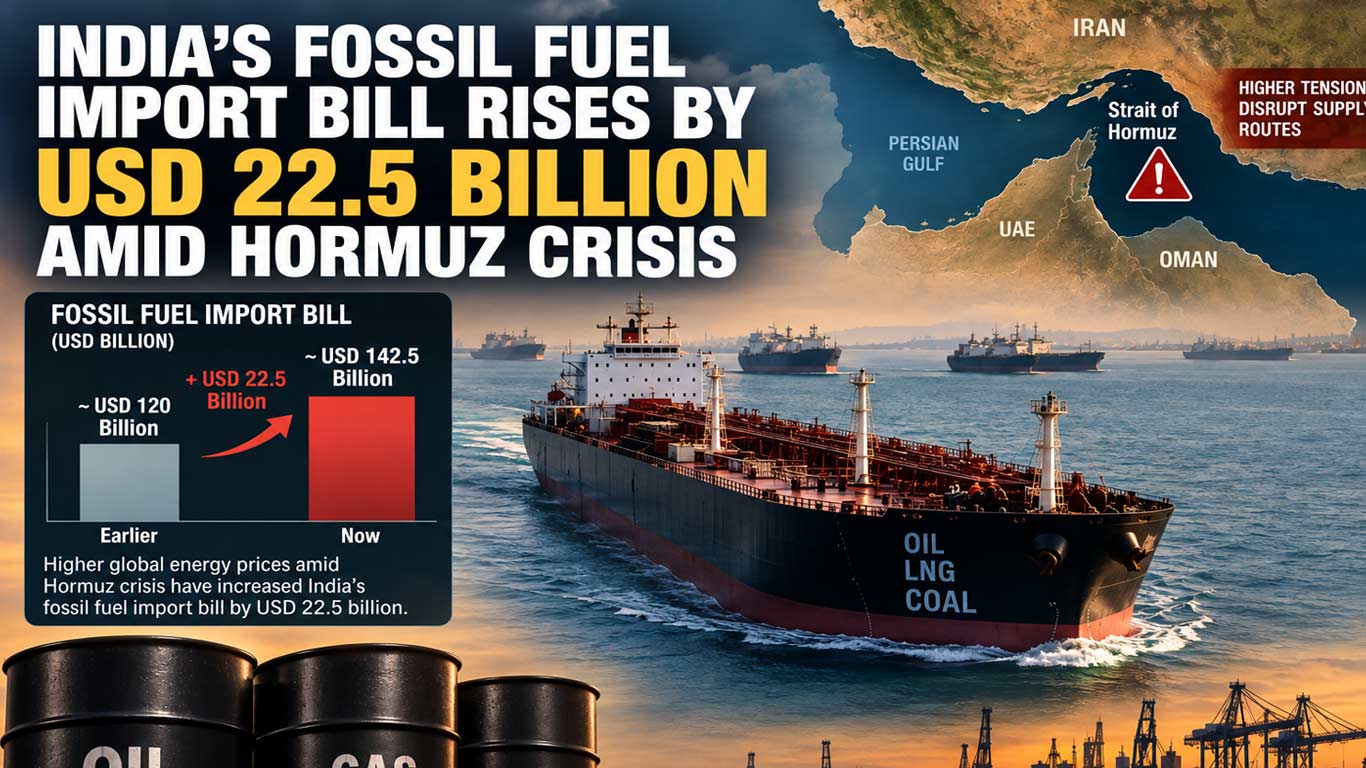
New Delhi, Aug 27 (KNN) India incurred an additional USD 22.5 billion in fossil fuel import costs between March and August 2026 amid disruptions to global energy trade following the Hormuz crisis, ranking second globally after China, according to a report by the Centre for Research on Energy and Clean Air (CREA).
The six-month disruption, triggered by attacks on Iran in late February, added more than USD 330 billion to global fossil fuel import bills, requiring importing countries to pay an additional USD 55 billion per month, the report said, reported Economic Times.
China recorded the highest additional cost at USD 35.5 billion, followed by India at USD 22.5 billion and the US at USD 16.5 billion. Other major economies also saw substantial increases, including the Netherlands at USD 13.5 billion, South Korea at USD 13.2 billion, Italy at USD 12.7 billion and Japan at USD 12 billion.
Crude Oil Accounts For Largest Share
Crude oil accounted for around USD 164 billion of the global additional import cost, with prices averaging 35 per cent above pre-crisis market expectations.
Refined fuels recorded sharper price increases. Global spending on diesel and gasoil rose 59 per cent, adding USD 74 billion to import bills, while gasoline costs increased 43 per cent, adding another USD 36 billion.
Liquefied natural gas (LNG) import costs increased by USD 38 billion, with prices rising 60 per cent in the Atlantic basin and 75 per cent in the Pacific basin.
Jet fuel costs also increased 59 per cent, adding around USD 20 billion to global import bills.
Higher Diesel Costs Add To Inflationary Pressure
The report said the sharp rise in diesel prices has increased inflationary pressures across manufacturing, freight transportation and agriculture.
Of the 170 countries assessed, 134 paid more for fuel than indicated by pre-crisis futures prices, highlighting the broad impact of the energy shock on importing economies.
(KNN Bureau)











 Loading...