India's Solar Industry Shifts Towards Tracker Technology to Boost Efficiency
Updated: Feb 05, 2025 03:08:13pm

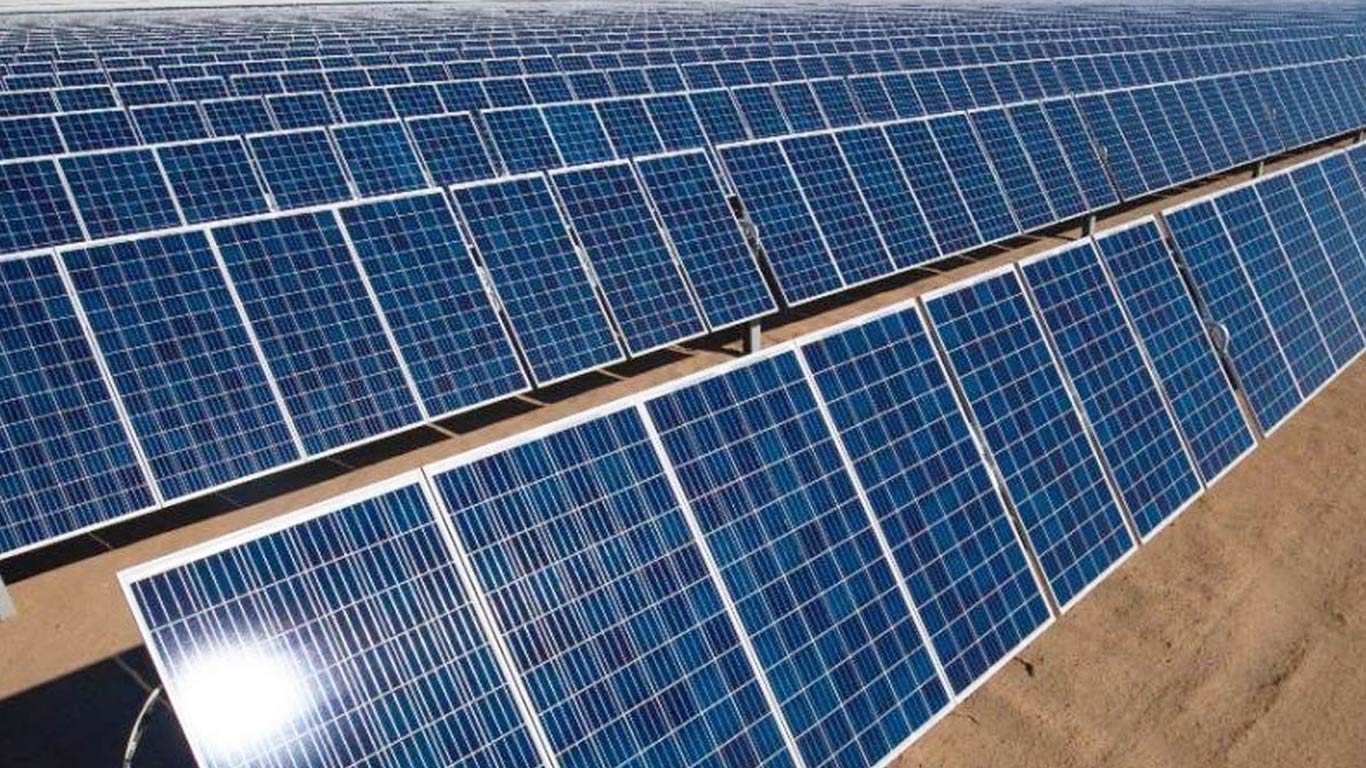
India's Solar Industry Shifts Towards Tracker Technology to Boost Efficiency
New Delhi, Feb 5 (KNN) India’s solar capacity is steadily growing, propelled by government initiatives and increasing participation from the industry.
However, domestic solar plants are still struggling to meet their targeted capacity utilisation, often stagnating around 17-20 per cent.
To address this, the renewable energy sector is shifting towards solar tracker technology, a promising solution to enhance efficiency across solar projects and maximize energy output.
Recent government tenders reveal a clear trend towards tracker-based projects. It’s estimated that 40-50 per cent of India’s annual utility-scale installations—ranging between 20-25 GW—will now feature trackers, translating to 10-15 GW of tracker-based installations each year.
Solar trackers, which allow panels to follow the sun’s path, increase energy generation by optimising the use of existing resources.
This technology enables the same or even higher energy output with fewer panels, improving project economics while reducing material and space needs.
According to industry experts, solar trackers can boost energy generation by 15-20 per cent compared to traditional fixed-tilt systems.
“Currently, about 20-25 per cent of utility-scale solar installations in India use tracker systems, and this is expected to rise to 40 per cent by 2030 due to falling costs and advances in tracker technology,” said Simarpreet Singh, CEO of Hartek Group.
The solar tracker market in India is expanding rapidly, with an anticipated compound annual growth rate (CAGR) of over 5 per cent from 2022 to 2027.
One key advantage of solar trackers is their synergy with bifacial modules, which capture more solar energy throughout the day. This pairing is becoming increasingly popular with developers and EPC (engineering, procurement, and construction) companies.
Solar trackers also complement storage and battery systems, offering reliable round-the-clock power, an essential factor as urbanization and data center growth drive energy demand.
However, challenges remain. Financial barriers, land acquisition issues, and inconsistent policies hinder the industry’s progress. To overcome these, experts advocate for innovative financing models, stable regulatory frameworks, and incentives for domestic manufacturing.
By incentivising advanced technologies and offering tax breaks, the government could make tracker-based solar projects financially viable, helping India achieve its ambitious renewable energy targets.
As of December 2024, India’s installed solar capacity reached 97.86 GW, with projections for a further 25-28 GW of renewable energy capacity this fiscal year.
The country aims for renewable sources to contribute 55-60 per cent of its total installed capacity by FY30, with solar playing a central role. However, infrastructure gaps and land acquisition challenges must be addressed to ensure the sector’s continued growth.
(KNN Bureau)











 Loading...


