Solar Growth Cuts India’s Midday Coal Use By 10 GW In 3 Years: Ember Report
Updated: Aug 12, 2026 04:38:30pm

Solar Growth Cuts India’s Midday Coal Use By 10 GW In 3 Years: Ember Report
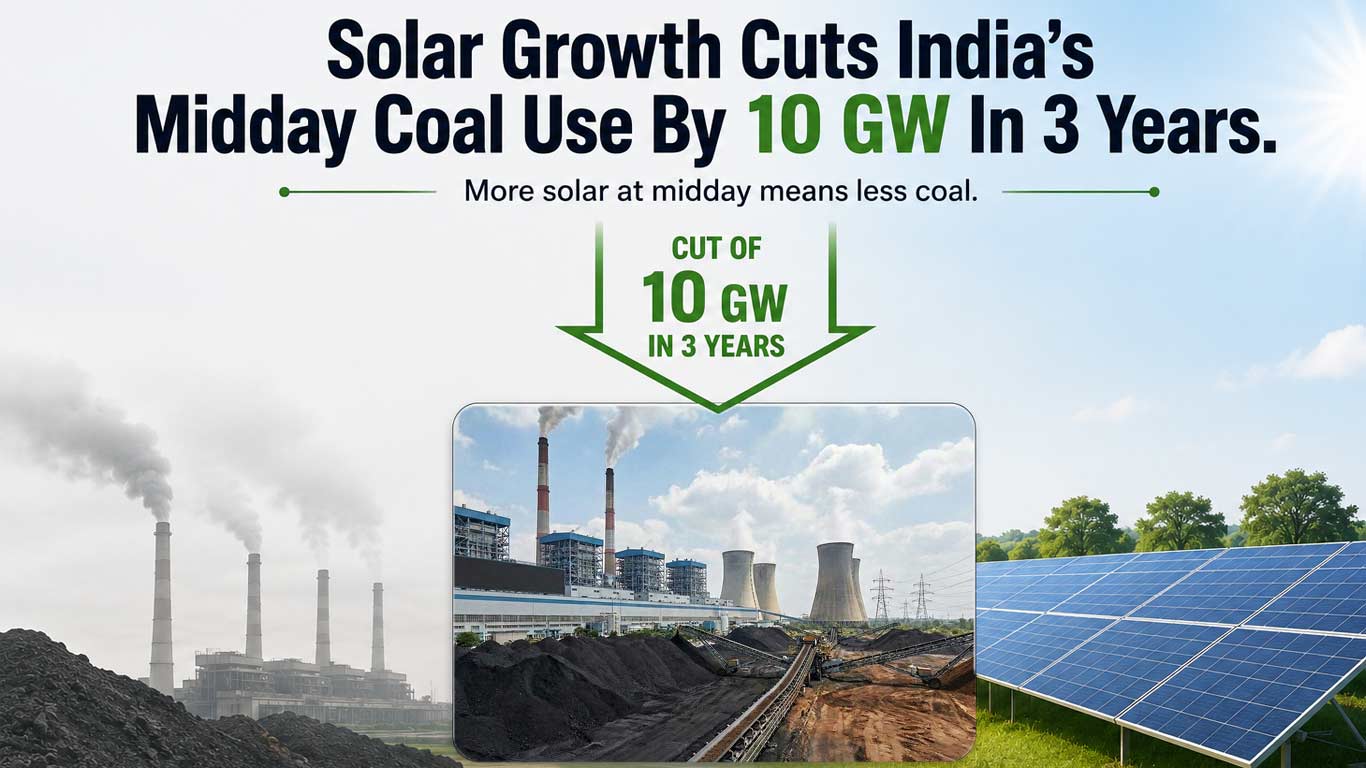
New Delhi, Aug 12 (KNN) India’s rapid expansion of solar power has reduced fossil fuel-based generation during daylight hours, cutting midday fossil fuel generation by around 10 GW over the past three years. However, rising electricity demand after sunset has increased reliance on coal-fired generation, highlighting the growing need for battery energy storage, global energy think tank Ember said in a report.
Solar Reduces Daytime Fossil Generation
Fossil-fuel generation at 1 pm fell to 125 GW in the first half (H1) of 2026 from 135 GW in H1 2023, equivalent to the output of around 15 modern coal-fired power units.
However, fossil generation between 5 pm and 7 am averaged 168 GW in H1 2026, up 22 GW from three years earlier, as coal-fired power plants increased generation to meet evening demand, the report noted.
The trend highlights the limitations of solar power, which contributes significantly during daylight hours but falls sharply after sunset.
Battery Storage Gains Importance
Ember emphasised that battery energy storage systems (BESS) could help bridge this gap by storing surplus solar power during the day and supplying electricity during evening peak demand. This could reduce dependence on coal, improve utilisation of renewable energy and provide greater flexibility to the power grid.
Kostantsa Rangelova, Global Electricity Analyst, Ember, said, “Cheap daytime solar has become the most powerful transformative force reshaping power grids globally, growing faster than any other source of electricity. Now batteries have become cheap and good enough to unlock the next stage of solar growth with anytime solar.”
“Delivering solar in non-sunny hours, the current stronghold of fossil power, changes everything: solar’s role in global power systems can be far bigger than previously thought possible,” she added.
Globally, solar generated more than 10 per cent of electricity in H1 2026, up from 8.9 per cent a year earlier and 5.6 per cent in H1 2023. On an average day, solar met more than a quarter of global electricity demand between 11 am and 2 pm, but its contribution fell to near zero during the night.
Global Battery Deployment Accelerates
The report estimated that around 459 GWh of new battery capacity could be added globally in 2026, up 50 per cent year-on-year. This capacity could theoretically shift around 34 per cent of new daily solar generation to non-sunny hours, although actual utilisation would depend on market conditions and battery operation.
Ember cited California, Bulgaria and Chile as examples of markets where batteries are increasingly extending the use of solar power into evening hours.
For India, the think tank said faster battery deployment, along with electricity market reforms that allow storage systems to participate fully in energy and ancillary service markets, would be important to reduce evening coal dependence and maximise the benefits of expanding solar capacity.
(KNN Bureau)










 Loading...