EU Carbon Border Tax Could Cut India's Steel Exports By 24%, Warns ICRIER Study
Updated: Jun 27, 2026 03:35:27pm

EU Carbon Border Tax Could Cut India's Steel Exports By 24%, Warns ICRIER Study
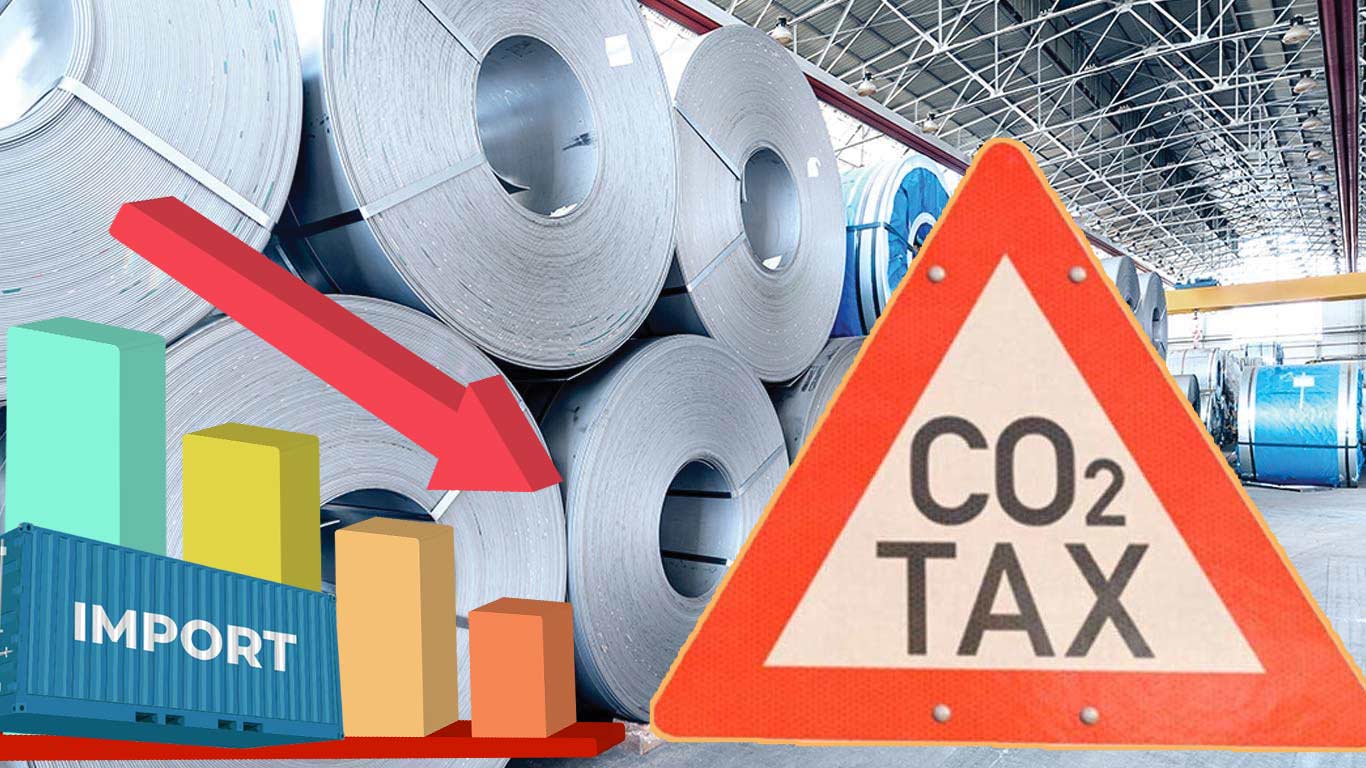
New Delhi, Jun 27 (KNN) India's steel exports to the European Union (EU) could decline by 24 per cent following the full implementation of the Carbon Border Adjustment Mechanism (CBAM), according to a study by the Indian Council for Research on International Economic Relations (ICRIER).
The EU formally began collecting duties under CBAM in January this year, based on the reported carbon content of shipments entering the bloc.
The study, which uses ICRIER's Samriddhi Trade computable general equilibrium model, found that the carbon tax burden would fall on Indian exporters, adversely affecting gains from trade with the EU.
India's overall global iron and steel exports are projected to decline by 5.7 per cent, compared with 1.2 per cent for China. The impact is expected to be felt most in iron and steel, followed by fertilisers, aluminium and metal products.
Limited Gains on Emissions
Despite its stated objective of reducing carbon leakage, the study found that CBAM would have a negligible effect on global emissions. Global carbon emissions in the steel industry are projected to fall by only 1 per cent.
Carbon emissions in India are expected to decline by 0.26 per cent, while emissions in the EU could rise marginally by 0.29 per cent as domestic EU production scales up to replace imports — a scale effect rather than a shift to cleaner production.
India's GDP is projected to decline by 0.04 per cent, while the EU records a welfare gain driven by favourable terms-of-trade effects. The study noted that CBAM effectively redistributes efficiency gains toward the EU while imposing welfare losses on most exporting nations.
What India Should Do
The study recommends a dual strategy: boosting export competitiveness through a shift to higher-value-added steel products, which carry a lower CBAM tax burden, while accelerating decarbonisation in line with India's net-zero 2070 commitment and Long-Term Low-Emissions Development Strategy.
It calls for industrial policies that integrate production-linked incentives with dedicated research and development funding, and targeted financial and technical assistance — including concessional financing and access to clean technology — to ease the compliance burden on MSMEs across the supply chain.
On carbon pricing, the study recommends that India establish or strengthen domestic carbon pricing mechanisms, either through a domestic carbon tax or by leveraging the Carbon Credit Trading Scheme. It also urges India to advocate in international forums for a differentiated CBAM rate for developing economies.
Strengthening monitoring, reporting and verification systems through standardised measurement protocols and digital traceability was also identified as critical to maintaining market access and supporting MSME compliance, the study noted.
(KNN Bureau)




 Loading...