India’s Goods And Services Exports Set To Hit USD 1 Tn In FY26: FIEO
Updated: May 28, 2025 02:38:26pm

India’s Goods And Services Exports Set To Hit USD 1 Tn In FY26: FIEO
New Delhi, May 28 (KNN) India's combined goods and services exports are projected to surge by more than 21 percent year-on-year to reach USD 1 trillion during the fiscal year 2026, compared to USD 825 billion recorded in the previous fiscal period.
The optimistic forecast was announced by S.C. Ralhan, President of the Federation of Indian Export Organisations (FIEO), during a briefing on Tuesday.
The anticipated growth is primarily attributed to increased export volumes to the United States and a broader trend of international buyers diversifying their supply chains amid ongoing global economic uncertainties.
Ralhan indicated that India's ongoing negotiations for free trade agreements are expected to further support this export momentum.
Breaking down the projections by sector, merchandise exports are expected to grow by 12 percent to reach between USD 525-535 billion, up from USD 437 billion in fiscal year 2024-25.
Services exports are anticipated to register stronger growth of approximately 20 percent year-on-year, climbing to USD 465-475 billion from the previous fiscal's USD 387 billion.
Multiple sectors are positioned for significant expansion, according to Ralhan's assessment. Electronics, engineering goods, chemicals, textiles and clothing, pharmaceuticals, and agricultural products are all expected to demonstrate robust export performance.
Additionally, petroleum products and gems and jewellery exports are forecast to maintain positive growth trajectories in the coming year.
Despite the encouraging outlook, Indian exporters face emerging regulatory challenges that could impact future performance.
The European Union's Digital Product Passport (DPP) requirement, set to take effect from January 1, 2026, represents a significant compliance hurdle for Indian manufacturers and exporters.
The DPP mandate will initially apply to electronics, batteries, textiles, and construction materials, with broader implementation planned by 2030.
The system requires digital documentation of a product's complete lifecycle, encompassing raw material sourcing, manufacturing processes, usage patterns, recycling procedures, and disposal methods.
Industry representatives have expressed concerns about the compliance burden, particularly for Micro, Small and Medium Enterprises (MSMEs) in the export sector.
The new requirements are viewed by some as protectionist measures that could increase operational costs and complexity for Indian exporters.
Non-compliance with DPP standards may result in shipment rejections or reduced competitiveness in the sustainability-focused European market.
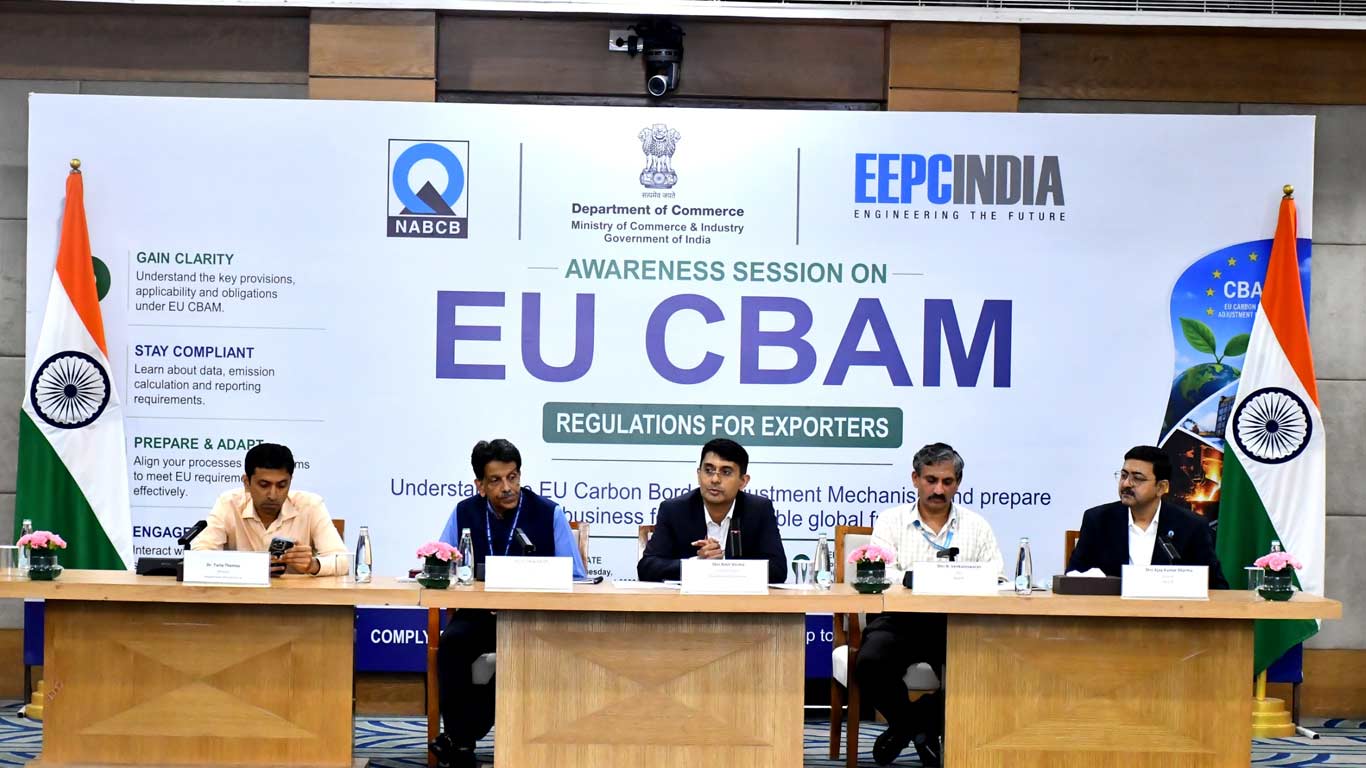
The DPP implementation follows a series of EU regulatory measures scheduled to commence on January 1, 2026, including carbon taxation, deforestation regulations, and the Eco Design Sustainable Product Regulation.
These combined requirements represent a comprehensive shift toward stricter environmental and sustainability standards in the European market.
On a positive note, Ralhan reported improvements in global shipping conditions, noting that geopolitical tensions affecting the Red Sea corridor have diminished.
The ongoing conflicts between Russia and Ukraine, as well as the Israel-Hamas situation, have shown signs of easing their impact on maritime trade routes, with ships resuming passage through the Red Sea corridor.
(KNN Bureau)








 Loading...


