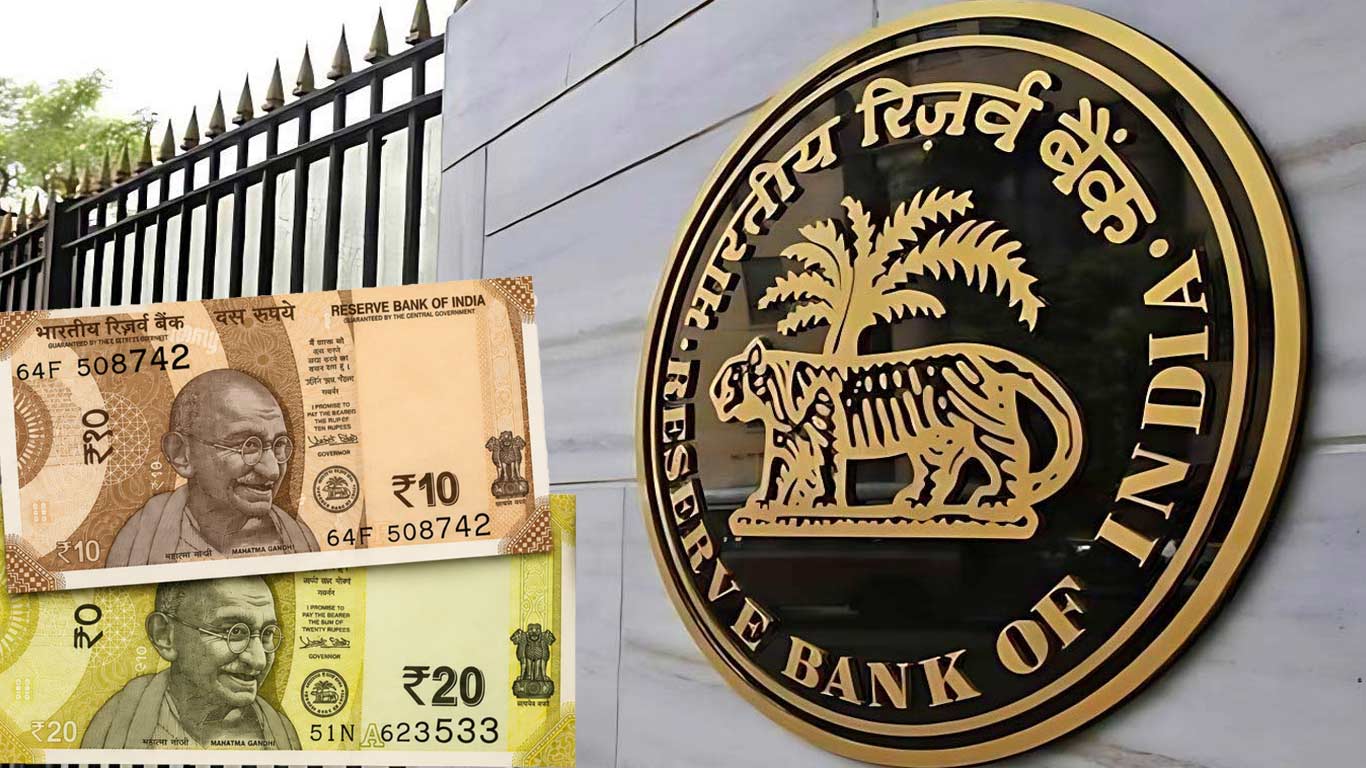
RBI Gets Govt Nod For Field Trials Of One Billion Rs 10, Rs 20 Polymer Banknotes
Updated: Aug 12, 2026 02:59:35pm

RBI Gets Govt Nod For Field Trials Of One Billion Rs 10, Rs 20 Polymer Banknotes
New Delhi, Aug 12 (KNN) The government has approved the introduction of one billion polymer banknotes each in the Rs 10 and Rs 20 denominations for field trials, Finance Minister Nirmala Sitharaman informed Parliament on Tuesday.
In a written reply to the Rajya Sabha, Sitharaman said the Reserve Bank of India (RBI), based on the recommendation of its Central Board, had proposed introducing polymer banknotes under Section 25 of the RBI Act, 1934, PTI reported.
Polymer Notes to Circulate Alongside Paper Currency
The RBI has proposed issuing polymer banknotes alongside existing paper substrate-based currency notes. Following successful field trials, the central bank has also proposed the regular issuance of polymer notes in the two denominations.
However, the finance minister noted that the procurement process is still at an initial stage. As a result, the government is currently unable to provide a specific timeline for the introduction of the new notes or estimate the expenditure involved.
Retail Inflation Remains Below RBI Target
In a separate reply, Sitharaman said average retail inflation, measured by the Consumer Price Index (CPI), declined from 5.4 per cent in 2023-24 to 4.6 per cent in 2024-25 and further to 2.1 per cent in 2025-26.
Retail inflation, however, rose to 3.9 per cent in the first quarter of 2026-27 due to higher global energy prices linked to the West Asia crisis, a seasonal rise in vegetable prices, commodity price pressures and expected unfavourable El Nino conditions. Despite the increase, inflation remained below the RBI's 4 per cent target.
Tax and Supply Measures to Contain Prices
The finance minister highlighted that the government has undertaken several tax and duty measures to reduce costs and contain inflation. These include GST rate rationalisation, changes in Basic Customs Duty on various goods, and reductions in duties on certain edible oils and masur.
The government also reduced central excise duty on petrol and diesel by Rs 10 per litre in March 2026, she added.
Measures Aimed at Supporting Consumption
Sitharaman said income tax relief for individuals earning up to Rs 12 lakh annually, or Rs 12.75 lakh for salaried taxpayers after the standard deduction, has helped increase disposable income.
Private final consumption expenditure accounted for around 56.5-56.7 per cent of GDP, while per capita private consumption grew 6.8 per cent in 2025-26, compared with 4.8 per cent in 2023-24, according to the latest estimates.
The government will continue to monitor price movements and take fiscal, administrative and supply-side measures when required to protect the purchasing power of households, particularly low- and middle-income groups.
(KNN Bureau)




 Loading...