RBI Proposes Raising Priority Sector Loan Limit to Rs 100 Crore for Agriculture Infra and Food Processing
Updated: Nov 06, 2026 01:54:36pm

RBI Proposes Raising Priority Sector Loan Limit to Rs 100 Crore for Agriculture Infra and Food Processing
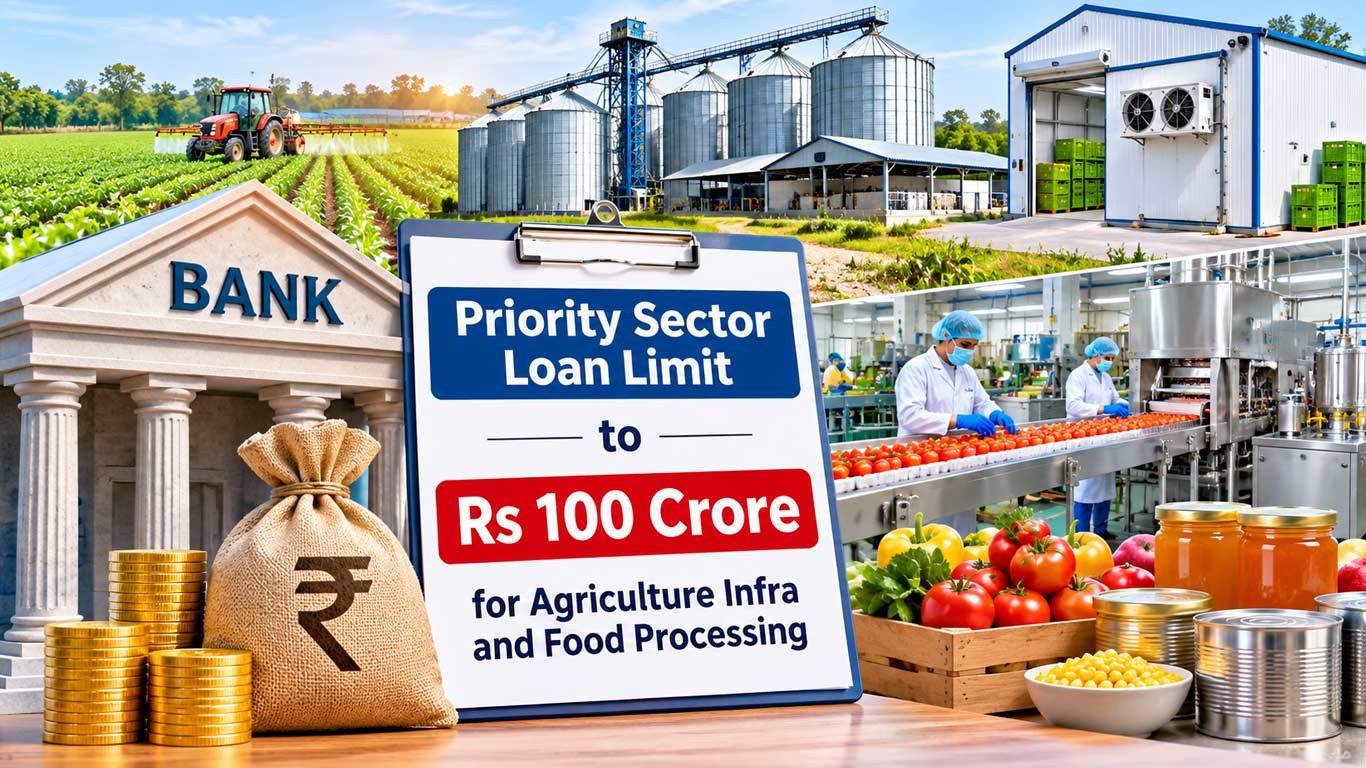
New Delhi, Nov 6 (KNN) The Reserve Bank of India (RBI) has proposed allowing bank loans of up to Rs 100 crore per borrower for agriculture infrastructure and food and agro-processing activities under priority sector lending (PSL), potentially improving access to institutional credit for enterprises, including MSMEs, across the agricultural value chain.
The proposal is part of the central bank's draft PSL Directions released on Thursday to consolidate and review existing guidelines for regulated entities, including commercial banks and regional rural banks.
Under the draft, the Rs 100-crore limit will apply to aggregate sanctioned loans across the banking system for each eligible activity.
Banks will have to sanction separate limits, obtain borrower declarations on loans from other banks for the same purpose and independently verify aggregate exposure. The limit will be calculated facility-wise and will exclude other priority and non-priority sector exposures.
Eligible agriculture infrastructure includes warehouses, market yards, godowns, silos, cold-storage facilities, soil conservation and watershed development, seed production and agri-biotechnology. Transport vehicles will qualify only if used exclusively for food and agro-processed products or specifically designed for such use, such as cold-storage trucks.
The proposal could benefit MSMEs involved in food processing, warehousing, cold-chain operations and other eligible activities by expanding access to priority-sector credit, subject to bank lending decisions and prescribed conditions.
PSL Targets and Agriculture Lending
The RBI has retained the overall PSL target at 40 per cent of adjusted net bank credit (ANBC), or the credit equivalent of off-balance-sheet exposures, whichever is higher. Agriculture accounts for 18 per cent, including a 14 per cent sub-target for non-corporate farmers and 10 per cent for small and marginal farmers. The targets for micro enterprises and weaker sections remain at 7.5 per cent and 12 per cent, respectively.
The draft retains a Rs 4-crore aggregate loan limit per borrowing entity for specified crop loans, medium and long-term agriculture and allied-activity loans, and pre- and post-harvest activities.
Loans to farmer producer organisations (FPOs) undertaking farming with assured marketing at predetermined prices will qualify up to Rs 10 crore. A separate Rs 10-crore limit is proposed for loans to purchase produce directly from members engaged in agriculture and allied activities.
The small and marginal farmer category includes farmers with landholdings of up to two hectares, tenant farmers, sharecroppers and eligible landless agricultural labourers. Loans of up to Rs 2.5 lakh to individuals engaged solely in allied activities such as dairy and fisheries will also qualify without a landholding requirement.
Other Proposed Changes
The draft proposes PSL eligibility for education loans of up to Rs 25 lakh, including vocational courses. Renewable energy-based power generation projects and public utilities, including street lighting and remote village electrification, will qualify for loans up to Rs 35 crore, while the limit for individual households will be Rs 10 lakh.
The RBI has also proposed a 5 per cent cap on eligible bank lending to non-banking financial companies (NBFCs) and other institutions for on-lending, subject to specified exemptions.
Banks will have to monitor PSL compliance quarterly and submit data within 15 days of each quarter-end. Those falling short of targets may be required to contribute to funds maintained with institutions such as the National Bank for Agriculture and Rural Development (NABARD), National Housing Bank (NHB), Small Industries Development Bank of India (SIDBI) and MUDRA.
The framework also proposes different weightages for incremental lending in districts with lower and higher priority-sector credit flows, at 125 per cent and 90 per cent, respectively.
The RBI has issued separate draft directions for small finance banks, local area banks and regional rural banks, and invited comments on the proposals until November 26. The provisions will take effect after the final directions are issued.
(KNN Bureau)









 Loading...