Stakeholders Raise Concerns Over RBI’s Draft PPI Framework
Updated: May 21, 2026 03:32:41pm

Stakeholders Raise Concerns Over RBI’s Draft PPI Framework
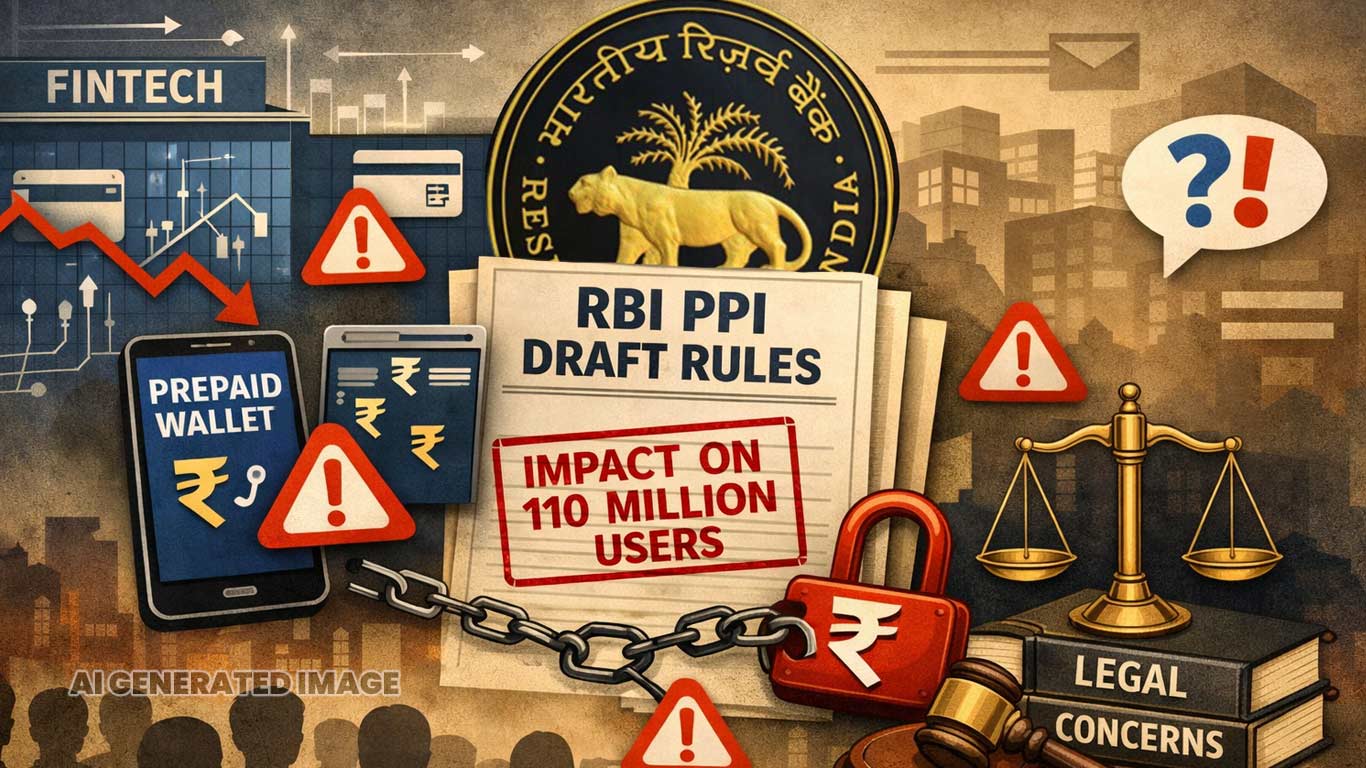
New Delhi, May 21 (KNN) Stakeholders from the fintech, legal and digital payments sectors have raised concerns that proposed changes to the Reserve Bank of India’s draft framework on Prepaid Payment Instruments (PPIs) could adversely affect more than 110 million Indians who use prepaid wallets for daily transactions.
The concerns were raised during a high-level stakeholder consultation organised by Policy Consensus Centre on the Reserve Bank of India’s proposed Draft Master Direction on Prepaid Payment Instruments.
The discussion brought together industry leaders, fintech experts, legal professionals and payments ecosystem participants to examine the economic, operational and financial inclusion impact of the proposed framework.
Industry Flags Risks To Financial Inclusion And MSME Transactions
While participants acknowledged the RBI’s effort to simplify and modernise PPI regulations, they warned that measures such as transaction caps, restrictions on wallet loading, tighter cash-loading limits and mandatory expiry provisions could create unintended friction for consumers, MSMEs, gig workers and first-time digital users.
Stakeholders noted that prepaid wallets have become an important tool for daily financial management, low-cost digital payments, mobility services, subscriptions and instant payouts.
Policy Consensus Centre, CEO, Nirupama Soundararajan said PPIs have evolved beyond digital wallets into an important financial infrastructure supporting commerce, mobility, MSME transactions and digital services across the economy.
“Given the scale and diversity of their usage, it is important that the regulatory framework evolves through wider stakeholder consultation and evidence-based assessment to fully understand the operational and inclusion-related implications of the proposed changes,” she said.
Experts Seek Longer Consultation Timeline For Draft Guidelines
Economist & Strategy Leader, Badri Narayan Gopalakrishnan noted that PPIs currently act as a stabilising mechanism by enabling controlled spending, low-cost transactions and quick access to funds, particularly during periods of economic and geopolitical uncertainty.
He warned that additional friction at the current stage could disproportionately affect first-time digital users, low-income groups and MSMEs that rely on wallets for routine financial transactions.
FinTech Association for Consumer Empowerment (FACE), Chairman, Ram Rastogi called for extending the finalisation timeline of the draft guidelines by at least six to twelve months to enable broader consultations and a smoother transition process.
He said the additional time would allow for deeper industry engagement and data-backed assessment without disrupting financial inclusion or innovation.
Balanced Regulation And Wider Industry Consultation
Dr. Raghav Pandey, Director, Centre for Regulatory Studies, NLU Delhi, said transaction caps and restrictions on PPIs could create unnecessary rigidity for users relying on wallets for utility payments, small business transactions and day-to-day digital payments.
He suggested that regulatory focus should instead remain on traceability, oversight and risk-based supervision rather than lower usage limits.
InGovern Research Services, Managing Director, Sriram Subramanian said PPIs have emerged as an important financial access tool for millions of consumers, particularly for low-ticket payments, budgeting and secure digital transactions.
He added that while stronger governance and interoperability measures are welcome, regulatory tightening should carefully balance compliance requirements with consumer convenience, innovation and frictionless access for underserved users.
The consultation concluded that the PPI framework should continue supporting innovation and financial inclusion while avoiding unnecessary disruption to India’s digital payments ecosystem.
Stakeholders also urged wider consultations involving industry bodies, MSMEs, fintech firms, consumer groups and legal experts before finalising the regulatory framework.
(KNN Bureau)









 Loading...