Govt Clears Rs 5,070 Crore PM Surya Sarovar Yojana For 5,000 MW Floating Solar Push
Updated: Aug 01, 2026 02:04:33pm

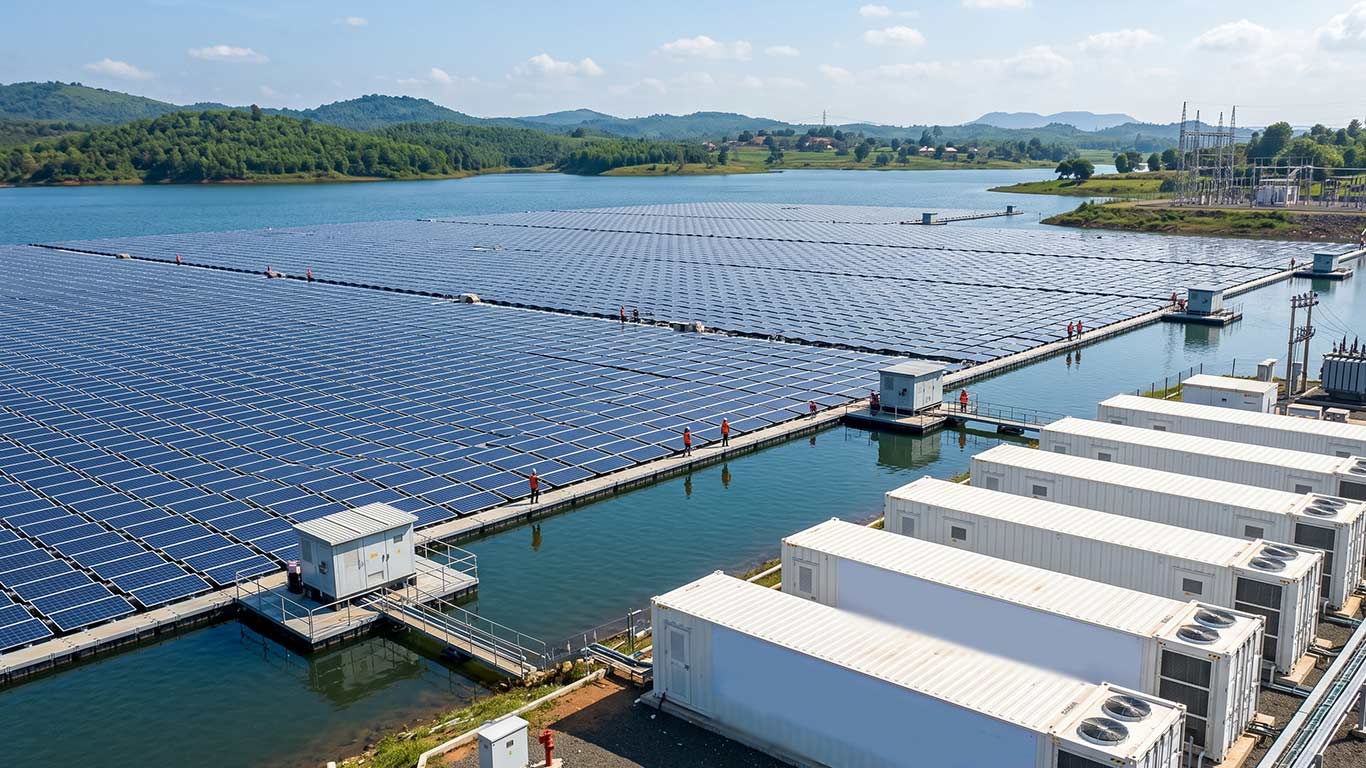
Govt Clears Rs 5,070 Crore PM Surya Sarovar Yojana For 5,000 MW Floating Solar Push
New Delhi, Aug 1 (KNN) The Union Cabinet, chaired by Prime Minister Modi, has approved the Pradhan Mantri Surya Sarovar Yojana (PM-SSY), a new scheme aimed at developing floating solar photovoltaic (FSPV) projects with integrated energy storage systems. The scheme has a total financial outlay of Rs 5,070 crore.
Under the plan, 5,000 MW of floating solar capacity will be developed along with co-located energy storage systems with a minimum storage capacity of two hours, equivalent to 10,000 MWh, the government said in a release.
Projects will be sanctioned between FY 2026–27 and FY 2030–31, with financial support continuing until FY 2032–33.
Leveraging untapped solar potential
The approval follows an assessment by the National Institute of Solar Energy (NISE), which estimates a floating solar potential of about 102.18 GWp across reservoirs and inland water bodies in India.
The scheme seeks to utilise these water surfaces to expand renewable energy capacity without increasing pressure on land resources.
Financial support and project development
The scheme provides Central Financial Assistance (CFA) of Rs 1 crore per MW for eligible projects after commissioning. Additionally, up to Rs 50 lakh per project will be available for feasibility studies, including environmental assessments and technical surveys, to support project planning and reduce risks.
Nationwide benefits and sectoral impact
All States and Union Territories are expected to benefit from the scheme. It aims to significantly increase India’s floating solar capacity from the current level of around 700 MW to 5,000 MW.
By utilising reservoirs and industrial water bodies, the projects are expected to reduce land-use conflicts while strengthening grid reliability through integrated energy storage. The scheme is also projected to reduce around 10 million tonnes of carbon dioxide emissions annually.
Economic and strategic significance
The initiative is expected to generate approximately 16,000–17,000 full-time equivalent jobs across the value chain. It will also support domestic manufacturing in areas such as floatation systems, solar modules, and energy storage technologies, aligning with the goal of self-reliance.
(KNN Bureau)






 Loading...


