Govt Eyes Manufacturing Push for 120 Products to Cut Import Dependence: Report
Updated: Oct 28, 2026 03:49:58pm

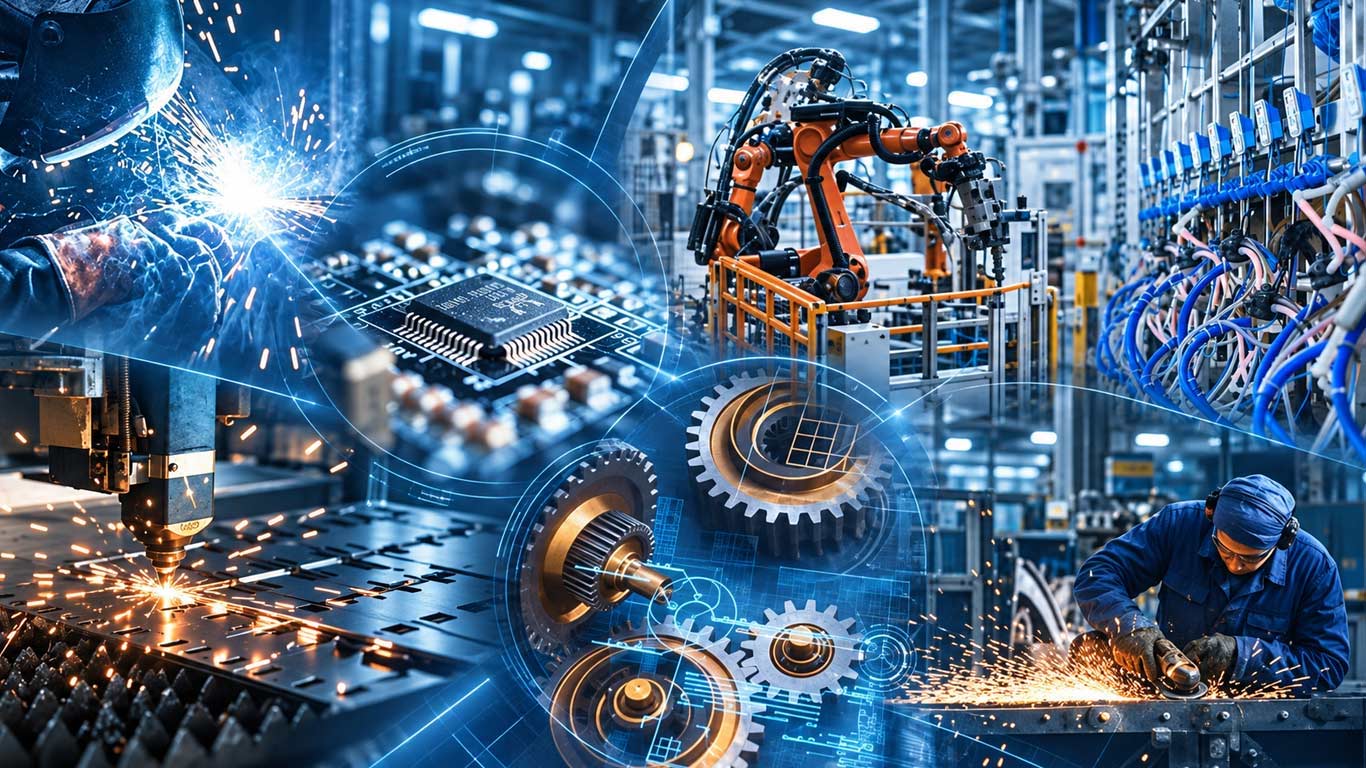
Govt Eyes Manufacturing Push for 120 Products to Cut Import Dependence: Report
New Delhi, Oct 28 (KNN) The government has identified around 120 products, including industrial intermediates and capital goods, for promoting domestic manufacturing and reducing import dependence, with a separate plan for tunnel boring machines following China's restrictions on their shipments.
The exercise, led by the Department for Promotion of Industry and Internal Trade (DPIIT), covers products such as chemicals, including acetic acid, pharmaceutical products and inputs, medical technology equipment, machine tools, textile looms, construction equipment, cranes, aerospace maintenance, repair and operations (MRO) products, and footwear-related goods, The Times of India reported, citing sources familiar with the matter.
Three-Pronged Support Strategy
The government is considering three types of interventions, with discussions underway across departments.
The first involves short-term protection for selected products against overseas competition, particularly from China, until supply sources are diversified. A similar approach was adopted for the mobile phone industry in its initial years.
The second focuses on addressing cost disadvantages through capital incentives or phased support, potentially linked to turnover. The third involves research and development (R&D) assistance for products that require domestic technological capabilities.
Focus on Local Technology and Supply Chains
The proposed measures build on government support over the past six to eight years for domestic and international companies across pharmaceuticals, electronics, semiconductors, solar equipment and white goods. Support has largely been routed through production-linked incentive (PLI) schemes, semiconductor missions and programmes for electronic component manufacturing.
The government is also seeking to address gaps in domestic technology. In the battery sector, for instance, some manufacturers assembling battery packs continue to import cells from China, where much of the production chain and technology is concentrated. Similar concerns have emerged in solar panel manufacturing.
The initiative is part of the government's Atmanirbhar Bharat strategy, which has gained renewed importance following supply disruptions during the West Asia crisis.
(KNN Bureau)









 Loading...