Govt support for accommodation for workers under textile incubation fund
Updated: Jul 07, 2014 12:28:31pm

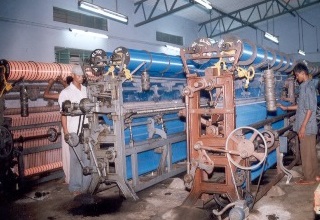
New Delhi, Jul 7 (KNN) Capacity building support under the Incubation Centres for apparel manufacturing will be available also for setting up of the textile industry workers accommodation , the Ministry of Textiles has said.
In a press notification, it said, "…grant of Rs 12.93 crore per incubation centre, which would accommodate 3 incubatees for 3 years, shall be available in instalments for infrastructure and capacity building support…”
In this context, the Ministry has invited proposals for pilot phase to set up incubation centres in apparel manufacturing. It has also invited proposals from host institutions to set up textile industry workers accommodation during the remaining part of the 12th Five Year Plan (April 2012 – March 2017).
Host institutions that are eligible to carry out the project are special purpose vehicles (SPVs) set up under the SITP where a minimum of 25 per cent units are operational and where the approved DPR of the ITP does not include components provided under this scheme.
SPVs promoted under other schemes of the Ministry of Textiles, namely TCIDS, APES, etc; state industrial development corporations, SPVs of textile parks promoted by state governments/UTIs; developers of SEZs; and textile industry associates or groups of entrepreneurs are also entitled to make proposals.
The textile industry is the second largest employer in the country and plays a pivotal role in the economic growth and development of the country. The industry contributes to 14 per cent of the total manufacturing output contributing to 10.5 per cent of export earnings and employs 35 million workers. The size of the Indian apparel market is estimated to be USD 45 billion and it is expected to grow up to USD 200 billion by 2025, as per official data.
Considering the potential of apparel sector to contribute to jobs and export earnings, the
Government of India have been taking necessary measures to strengthen the apparel industry. For every Rs 1 lakh invested in the industry, an average of 7 additional jobs is created. Therefore, there is a need to promote the apparel manufacturing sector for creation of employment, increasing export earnings and provide fillip to the national economy.
However, several constraints are faced by first generation entrepreneurs and start-ups in the apparel sector viz., lack of capital for investment in land, buildings and plant and machinery, limited access to finance, competition within the existing market and operational inefficiencies due to lack of trained manpower and poor market linkages.
In view of the above, there is need for creation of a holistic ecosystem that would boost entrepreneurship in the sector by systematically addressing the issues of lack of infrastructure and ecosystem linkages.
The textile parks established under the SITP Scheme would provide the right eco-system to develop, incubate and nurture entrepreneurs by providing necessary infrastructure support and capacity building services and market linkages. This would allow the entrepreneurs to execute their ideas and deliver the products through a process that is operationally and financially viable.
The main objective of Scheme is to create an integrated workspace and linkages-based entrepreneurial ecosystem for start-ups that is operationally and financially viable and increases the chance of success of start-ups and decreases the time and costs required to establish and grow a new business. The outcomes envisaged include: promote entrepreneurship in apparel manufacturing; create additional manufacturing capacity; generate additional employment opportunities. The target of the scheme is to establish three incubation centres during the balance 12th plan
The Project is to establish an incubation facility in the textile parks. Each incubation centre shall have a maximum of 3 incubatees. (KNN/ES)
In a press notification, it said, "…grant of Rs 12.93 crore per incubation centre, which would accommodate 3 incubatees for 3 years, shall be available in instalments for infrastructure and capacity building support…”
In this context, the Ministry has invited proposals for pilot phase to set up incubation centres in apparel manufacturing. It has also invited proposals from host institutions to set up textile industry workers accommodation during the remaining part of the 12th Five Year Plan (April 2012 – March 2017).
Host institutions that are eligible to carry out the project are special purpose vehicles (SPVs) set up under the SITP where a minimum of 25 per cent units are operational and where the approved DPR of the ITP does not include components provided under this scheme.
SPVs promoted under other schemes of the Ministry of Textiles, namely TCIDS, APES, etc; state industrial development corporations, SPVs of textile parks promoted by state governments/UTIs; developers of SEZs; and textile industry associates or groups of entrepreneurs are also entitled to make proposals.
The textile industry is the second largest employer in the country and plays a pivotal role in the economic growth and development of the country. The industry contributes to 14 per cent of the total manufacturing output contributing to 10.5 per cent of export earnings and employs 35 million workers. The size of the Indian apparel market is estimated to be USD 45 billion and it is expected to grow up to USD 200 billion by 2025, as per official data.
Considering the potential of apparel sector to contribute to jobs and export earnings, the
Government of India have been taking necessary measures to strengthen the apparel industry. For every Rs 1 lakh invested in the industry, an average of 7 additional jobs is created. Therefore, there is a need to promote the apparel manufacturing sector for creation of employment, increasing export earnings and provide fillip to the national economy.
However, several constraints are faced by first generation entrepreneurs and start-ups in the apparel sector viz., lack of capital for investment in land, buildings and plant and machinery, limited access to finance, competition within the existing market and operational inefficiencies due to lack of trained manpower and poor market linkages.
In view of the above, there is need for creation of a holistic ecosystem that would boost entrepreneurship in the sector by systematically addressing the issues of lack of infrastructure and ecosystem linkages.
The textile parks established under the SITP Scheme would provide the right eco-system to develop, incubate and nurture entrepreneurs by providing necessary infrastructure support and capacity building services and market linkages. This would allow the entrepreneurs to execute their ideas and deliver the products through a process that is operationally and financially viable.
The main objective of Scheme is to create an integrated workspace and linkages-based entrepreneurial ecosystem for start-ups that is operationally and financially viable and increases the chance of success of start-ups and decreases the time and costs required to establish and grow a new business. The outcomes envisaged include: promote entrepreneurship in apparel manufacturing; create additional manufacturing capacity; generate additional employment opportunities. The target of the scheme is to establish three incubation centres during the balance 12th plan
The Project is to establish an incubation facility in the textile parks. Each incubation centre shall have a maximum of 3 incubatees. (KNN/ES)








 Loading...