Improper waste management results in health hazards: TERI Survey
Updated: Jun 04, 2014 12:56:16pm

New Delhi, Jun 4 (KNN) A survey on environment, and in particular, issues of water and waste conducted in various urban cities of India has revealed that a majority of people are concerned about air quality, green cover and are of the opinion that improper waste management is causing various health hazards.
“Management of solid waste and e-waste is one of the most challenging tasks in urban India. Respondents were asked for their opinions on the negative impacts of improper waste management on human health. Close to 90 per cent felt that improper waste management imposed ‘severe’ (67 per cent) to ‘moderate’ (23 per cent) health hazards. There seemed to be consensus on this among respondents across localities,” the survey report said.
Initiated to gauge the perception, awareness, opinion and behaviour of people towards environment in India, the Environmental Survey 2014 was conducted by The Energy and Resources Institute (TERI) between December 2013 and February 2014 through face-to-face interviews in each city using a standardized questionnaire.
It comprised a sample of 11,214 citizens spread over 8 urban agglomerates across the geographical span of India — Coimbatore, Guwahati, Indore, Jamshedpur, Kanpur, Pune and the two most-populated metros of Delhi and Mumbai.
In his video message on the occasion, Director General, TERI, R K Pachauri said, “This time, we have focused on cities which normally don’t get the kind of attention they deserve. If we want to bring about improvement in environmental quality, then the foundation on which any such effort would rest, would be on the awareness of the public. I hope through this survey we are able to bring about the level of awareness that really lays the foundation for action in the right direction. If we don’t, then we would all be taken over by urban blight.”
Commenting on the survey findings, Distinguished Fellow, TERI, Prodipto Ghosh said, “Urban respondents felt government and consumers played a positive role for improving the environment. The survey will be of immense value to policymakers in identifying areas where sound environment management policy can play a significant role, and where greater efforts of outreach and awareness building are necessary.”
On the issue of waste, close to 50 per cent of the people did not have garbage collected from their houses. This was higher for respondents from low income localities (56 per cent) than high and middle income localities (44 per cent and 45 per cent respectively).
Generating less waste was seen as the best strategy to address the problem of waste management by around 60 per cent of respondents, followed by segregation of waste by 25 per cent. More than 50 per cent of respondents were not willing to segregate their waste into biodegradable and non-degradable.
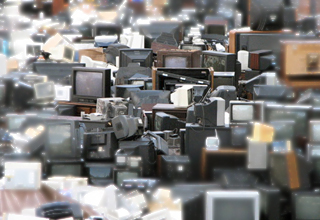
Over 80 per cent of the respondents were aware of the problem of e-waste, and most respondents either repaired or reused electronic goods. Very few respondents disposed electronic goods along with household garbage. Around 86 per cent respondents felt that polythene bags should be banned.
On a positive note, a majority of people felt that drinking water availability and quality as well as waste management in their cities had improved. However a slightly higher per cent of women (28 per cent and 30 per cent) felt that drinking water quality and availability respectively had deteriorated as compared to men (24 per cent and 24 per cent). The responses varied, though marginally, across localities for some of the indicators. Interestingly, the proportion of those who perceived an improvement in indicators like air quality, drinking water quality and availability, and tree/forest cover, was higher in high income localities when compared to other two localities.
The respondents showed a great deal of awareness and concern about the state of the environment. Over 90 per cent felt that the quality of the environment had an immediate impact on health. While close to 40 per cent felt that environment and development went hand in hand with no apparent trade-offs, a significant proportion (over 30 per cent) thought that the government should prioritize environment over development. It is worth noting that a higher proportion of women (48 per cent) as compared to men (36 per cent) felt that the objectives of environmental protection and development went hand in hand.
In terms of efforts to improve environment, over 40 per cent of the respondents ranked the government the highest followed by general consumers (by nearly 30 per cent). Nearly one-third of the respondents felt that academic/research organizations were putting in the least effort to address environmental concerns.
Overall, a large majority felt that air quality had worsened and the number of bird species in their cities had declined. However, a majority of people felt that drinking water availability and quality as well as waste management in their cities had improved.
Further, a vast majority of respondents (90 per cent) felt that climate change was a reality and a majority (over 80 per cent) out of those felt that average temperatures had risen and rainfall levels had gone down over time (over 63 per cent). (KNN/ES)
“Management of solid waste and e-waste is one of the most challenging tasks in urban India. Respondents were asked for their opinions on the negative impacts of improper waste management on human health. Close to 90 per cent felt that improper waste management imposed ‘severe’ (67 per cent) to ‘moderate’ (23 per cent) health hazards. There seemed to be consensus on this among respondents across localities,” the survey report said.
Initiated to gauge the perception, awareness, opinion and behaviour of people towards environment in India, the Environmental Survey 2014 was conducted by The Energy and Resources Institute (TERI) between December 2013 and February 2014 through face-to-face interviews in each city using a standardized questionnaire.
It comprised a sample of 11,214 citizens spread over 8 urban agglomerates across the geographical span of India — Coimbatore, Guwahati, Indore, Jamshedpur, Kanpur, Pune and the two most-populated metros of Delhi and Mumbai.
In his video message on the occasion, Director General, TERI, R K Pachauri said, “This time, we have focused on cities which normally don’t get the kind of attention they deserve. If we want to bring about improvement in environmental quality, then the foundation on which any such effort would rest, would be on the awareness of the public. I hope through this survey we are able to bring about the level of awareness that really lays the foundation for action in the right direction. If we don’t, then we would all be taken over by urban blight.”
Commenting on the survey findings, Distinguished Fellow, TERI, Prodipto Ghosh said, “Urban respondents felt government and consumers played a positive role for improving the environment. The survey will be of immense value to policymakers in identifying areas where sound environment management policy can play a significant role, and where greater efforts of outreach and awareness building are necessary.”
On the issue of waste, close to 50 per cent of the people did not have garbage collected from their houses. This was higher for respondents from low income localities (56 per cent) than high and middle income localities (44 per cent and 45 per cent respectively).
Generating less waste was seen as the best strategy to address the problem of waste management by around 60 per cent of respondents, followed by segregation of waste by 25 per cent. More than 50 per cent of respondents were not willing to segregate their waste into biodegradable and non-degradable.
Over 80 per cent of the respondents were aware of the problem of e-waste, and most respondents either repaired or reused electronic goods. Very few respondents disposed electronic goods along with household garbage. Around 86 per cent respondents felt that polythene bags should be banned.
On a positive note, a majority of people felt that drinking water availability and quality as well as waste management in their cities had improved. However a slightly higher per cent of women (28 per cent and 30 per cent) felt that drinking water quality and availability respectively had deteriorated as compared to men (24 per cent and 24 per cent). The responses varied, though marginally, across localities for some of the indicators. Interestingly, the proportion of those who perceived an improvement in indicators like air quality, drinking water quality and availability, and tree/forest cover, was higher in high income localities when compared to other two localities.
The respondents showed a great deal of awareness and concern about the state of the environment. Over 90 per cent felt that the quality of the environment had an immediate impact on health. While close to 40 per cent felt that environment and development went hand in hand with no apparent trade-offs, a significant proportion (over 30 per cent) thought that the government should prioritize environment over development. It is worth noting that a higher proportion of women (48 per cent) as compared to men (36 per cent) felt that the objectives of environmental protection and development went hand in hand.
In terms of efforts to improve environment, over 40 per cent of the respondents ranked the government the highest followed by general consumers (by nearly 30 per cent). Nearly one-third of the respondents felt that academic/research organizations were putting in the least effort to address environmental concerns.
Overall, a large majority felt that air quality had worsened and the number of bird species in their cities had declined. However, a majority of people felt that drinking water availability and quality as well as waste management in their cities had improved.
Further, a vast majority of respondents (90 per cent) felt that climate change was a reality and a majority (over 80 per cent) out of those felt that average temperatures had risen and rainfall levels had gone down over time (over 63 per cent). (KNN/ES)





 Loading...