India Considers Local Manufacturing Mandate For Solar Inverters, Batteries
Updated: Oct 13, 2026 01:27:19pm

India Considers Local Manufacturing Mandate For Solar Inverters, Batteries
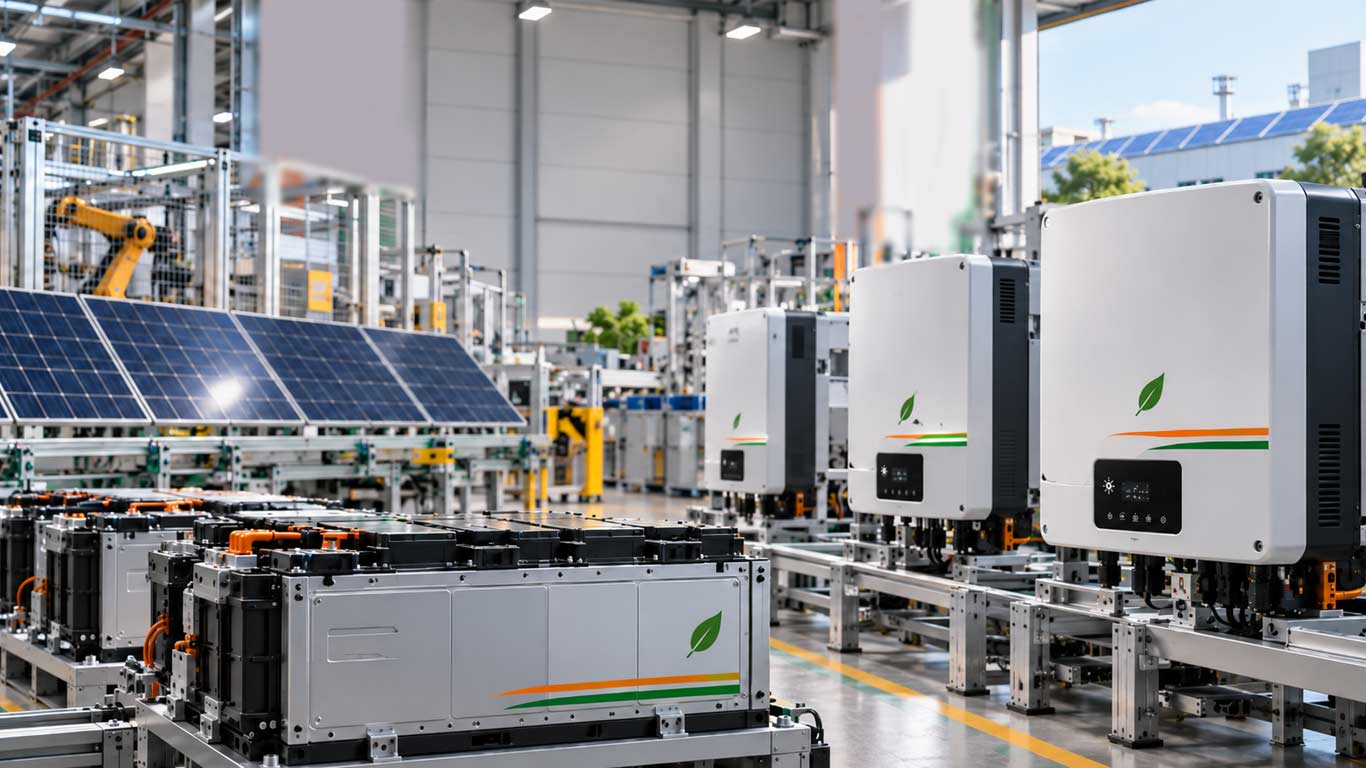
New Delhi, Oct 13 (KNN) The Ministry of New and Renewable Energy is examining proposals to mandate domestically manufactured solar inverters and introduce minimum local content requirements for batteries under the next phase of the PM Surya Ghar Muft Bijli Yojana.
The proposed changes aim to expand domestic manufacturing, reduce import dependence and create business opportunities for Indian solar equipment and battery manufacturers. The requirements are still under consideration and have not been finalised.
Local Content Rules May Be Expanded
Existing domestic content requirements primarily cover solar modules and cells in government-supported projects. The proposed changes could extend localisation requirements to inverters, batteries and related components used in rooftop solar installations.
The ministry is reviewing industry suggestions before deciding the final requirements. The current phase of the scheme runs until March 2027.
Scheme Targets One Crore Households
Launched in February 2024, the PM Surya Ghar Muft Bijli Yojana has an approved outlay of Rs 75,021 crore and aims to install rooftop solar systems in one crore households.
The scheme seeks to help households generate solar electricity and reduce their dependence on grid power. Subsidies are linked to installed capacity, with assistance of Rs 30,000 for a 1 kW system, Rs 60,000 for a 2 kW system and Rs 78,000 for systems of 3 kW or above.
The programme targets approximately 30 GW of residential rooftop solar capacity.
Push To Strengthen Domestic Supply Chains
India remains dependent on imports for several lithium-ion battery materials, including lithium, cathodes and anodes. The proposed localisation requirements could encourage domestic production of battery packs, energy storage components and solar power electronics.
The government has also introduced production-linked incentive schemes to support domestic solar manufacturing and advanced battery production.
However, localisation could initially increase procurement costs if domestic manufacturing capacity is insufficient to meet demand.
Implications For Manufacturers
The proposed rules could affect companies operating across solar equipment, battery manufacturing and energy storage. Waaree Energies and Premier Energies operate in solar manufacturing, while Exide Industries and Amara Raja Energy & Mobility have businesses in batteries and energy storage.
The impact would depend on the final domestic content thresholds, implementation timelines and eligibility criteria. Manufacturers may also need additional investment in production capacity, technology and supply chains to meet the proposed requirements.
(KNN Bureau)








 Loading...