Indian export promotion schemes must conform to WTO rules
Updated: Mar 21, 2014 05:23:54pm

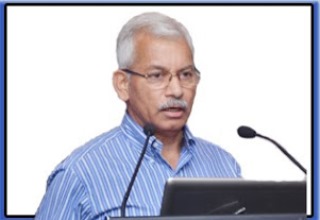
New Delhi, Mar 21 (KNN) Engineering exporters today agreed with the government assessment that the country's export promotion schemes and subsidies should conform to multilateral trade laws as enunciated by the WTO.
The exporters were unanimous in this opinion at an EEPC India review meeting with Commerce Secretary Rajeev Kher here.
Making a presentation before the Commerce Secretary, Chairman of the EEPC India, Anupam Shah said a recent feature has been the increasing use of countervailing measures by both developing and developed countries against Indian goods particularly engineering exports.
“For instance, in the month of February 2014, our exports of iron and steel products to Thailand fell by 88.44 per cent to a mere USD 13.35 million from USD 115.44 million in February 2013 due to the imposition of safeguard duty on Indian exports of HR Coils. As such there is a need for India’s export promotion schemes and export subsidies to conform to multilateral trade laws,” he explained.
The WTO Agreement on Subsidies and Countervailing Measures (ASCM), allows India to provide export subsidies as its per capita gross domestic product on nominal terms (on 1990 prices), is still within USD 1,000. While the Chapter 3 benefits should continue for 2014-15, India may in the near future cross this limit.
“Hence our new Foreign Trade Policy must show direction of how we can graduate to structure our incentives which are WTO compliant,” he added.
Expressing confidence that the country’s engineering exports have the potential to double in the next five years, Shah said, India has to remain vigilant on another score so that its exporters are not caught off-guard.
The Trans-Atlantic Trade and Investment Partnership between the EU and the US (TTIP) and Trans-Pacific Partnership (TPP) are likely to be concluded soon. Both TPP and TTIP are likely to produce market access restrictions and discrimination for Indian exporters even where India has already signed FTAs with TPP members such as Japan. Further, they will hasten the momentum towards the multilateralisation of regionalism, which is increasingly seen as the only way out of the contradictions between the surge in preferential trade agreements and the WTO, Shah said.
There is also a perception amongst them, according to him, that there is contradiction between the Government’s Manufacturing Policy and its Trade Policy.
In fact, while on the one hand, the Government’s Free Trade Agreements are lowering import duties even with countries that export medium to high technology products, the provisions to provide even a level playing field for domestic units for international projects within the country through the “Deemed Exports” provision is being diluted and often changed midway, as a consequence of which certain decisions taken prior to the change get adversely affected, he said.
He therefore urged the Commerce Secretary to ensure a better coordination between the Commerce and Finance ministries.
Quite often, notifications are ambiguous giving discretionary powers to the field force, making in the process life of exporters miserable as they are made to run from pillar to post, he said. (KNN/ES)
The exporters were unanimous in this opinion at an EEPC India review meeting with Commerce Secretary Rajeev Kher here.
Making a presentation before the Commerce Secretary, Chairman of the EEPC India, Anupam Shah said a recent feature has been the increasing use of countervailing measures by both developing and developed countries against Indian goods particularly engineering exports.
“For instance, in the month of February 2014, our exports of iron and steel products to Thailand fell by 88.44 per cent to a mere USD 13.35 million from USD 115.44 million in February 2013 due to the imposition of safeguard duty on Indian exports of HR Coils. As such there is a need for India’s export promotion schemes and export subsidies to conform to multilateral trade laws,” he explained.
The WTO Agreement on Subsidies and Countervailing Measures (ASCM), allows India to provide export subsidies as its per capita gross domestic product on nominal terms (on 1990 prices), is still within USD 1,000. While the Chapter 3 benefits should continue for 2014-15, India may in the near future cross this limit.
“Hence our new Foreign Trade Policy must show direction of how we can graduate to structure our incentives which are WTO compliant,” he added.
Expressing confidence that the country’s engineering exports have the potential to double in the next five years, Shah said, India has to remain vigilant on another score so that its exporters are not caught off-guard.
The Trans-Atlantic Trade and Investment Partnership between the EU and the US (TTIP) and Trans-Pacific Partnership (TPP) are likely to be concluded soon. Both TPP and TTIP are likely to produce market access restrictions and discrimination for Indian exporters even where India has already signed FTAs with TPP members such as Japan. Further, they will hasten the momentum towards the multilateralisation of regionalism, which is increasingly seen as the only way out of the contradictions between the surge in preferential trade agreements and the WTO, Shah said.
There is also a perception amongst them, according to him, that there is contradiction between the Government’s Manufacturing Policy and its Trade Policy.
In fact, while on the one hand, the Government’s Free Trade Agreements are lowering import duties even with countries that export medium to high technology products, the provisions to provide even a level playing field for domestic units for international projects within the country through the “Deemed Exports” provision is being diluted and often changed midway, as a consequence of which certain decisions taken prior to the change get adversely affected, he said.
He therefore urged the Commerce Secretary to ensure a better coordination between the Commerce and Finance ministries.
Quite often, notifications are ambiguous giving discretionary powers to the field force, making in the process life of exporters miserable as they are made to run from pillar to post, he said. (KNN/ES)



 Loading...