India’s Apparel Export Share Slips Despite Global Shift Away From China: BCG-CII Report
Updated: Nov 25, 2026 04:07:13pm

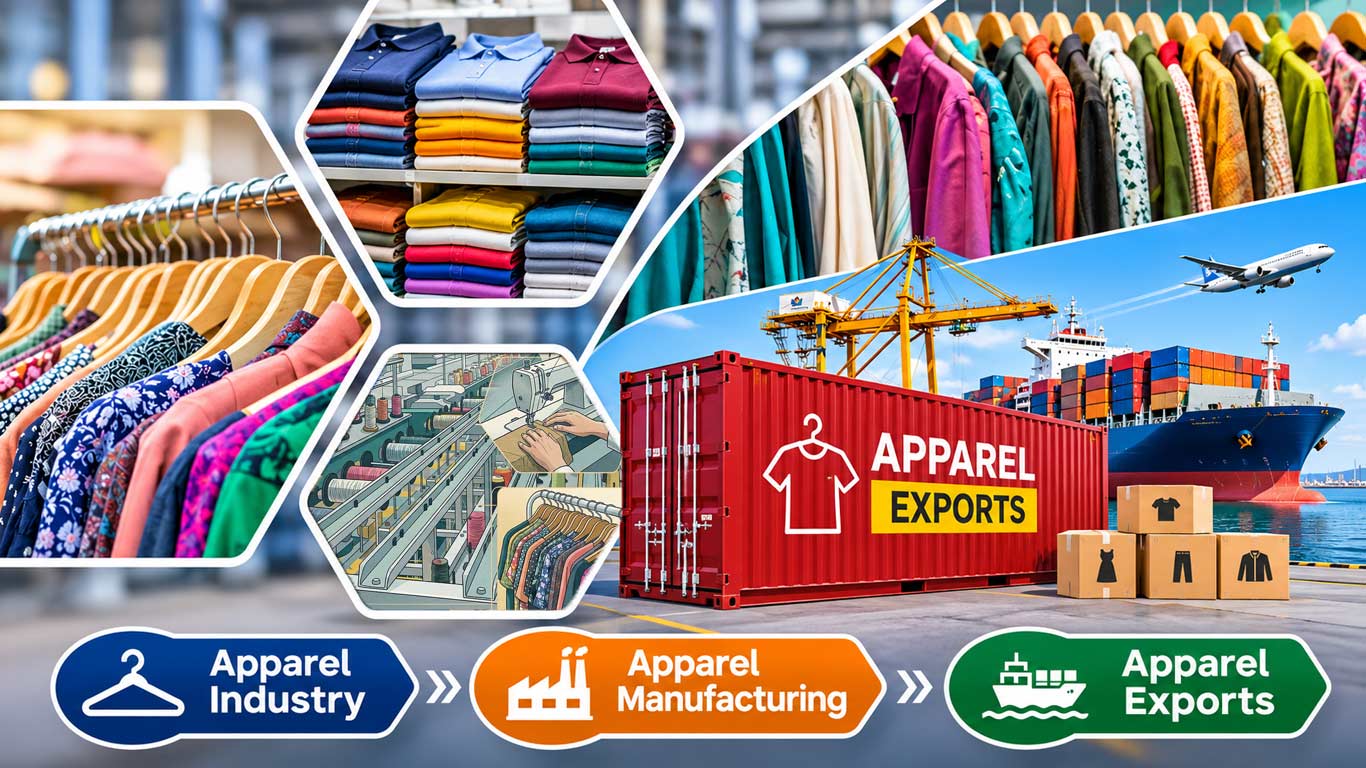
India’s Apparel Export Share Slips Despite Global Shift Away From China: BCG-CII Report
New Delhi, Nov 25 (KNN) India has failed to benefit from the global shift in apparel sourcing away from China, as international buyers diversify supply chains and consolidate orders with fewer manufacturers, according to a report by Boston Consulting Group (BCG) and the Confederation of Indian Industry (CII).
China’s share of global apparel exports fell from 37 per cent in 2015 to 27 per cent in 2025, while Bangladesh and Vietnam gained four and three percentage points, respectively, as mentioned by Business Standard.
India’s share declined from 4 per cent to 3 per cent, the report, Winning the Global Wardrobe: India’s Roadmap to Textile and Apparel Leadership, said.
The global apparel export market was estimated at USD 530-540 billion in 2025, with India accounting for around 3 per cent, compared with its 6 per cent share of global textile exports. This highlights India's limited presence in finished garments.
India’s textile and apparel industry is valued at USD 190-200 billion and employs more than 45 million people, with women accounting for over half the workforce. The government aims to grow the sector to USD 350 billion, including USD 100 billion in exports, by 2030.
However, domestic consumption accounts for around 80 per cent of the market, while exports have remained broadly flat at about USD 37 billion over the past decade. Domestic demand grew at a 7 per cent CAGR between FY20 and FY26, compared with just 1 per cent for exports. Reaching the USD 100 billion export target by FY31 would require annual export growth of more than 20 per cent.
Need to Expand Beyond Cotton-Based Products
India has a strong presence in cotton-based products such as T-shirts, shirts, dresses and innerwear but remains underrepresented in synthetic-fibre segments such as knitwear, outerwear and sportswear.
The country accounts for less than 1 per cent of global exports in several of these categories, despite synthetic materials making up 87 per cent of global outerwear trade and 93 per cent of sportswear trade.
The report called for greater investment in man-made fibre (MMF) products and higher-value garments, alongside better integration across the textile value chain. Only 5-6 per cent of India's textile clusters are integrated from spinning to garment manufacturing.
Global Brands Seek Larger and More Reliable Suppliers
Leading brands have reduced their number of supplier factories by 35-60 per cent since 2010, favouring larger manufacturers that can offer expertise, innovation and reliable deliveries, the report said.
Indian exporters will therefore need to compete beyond price by handling larger orders, maintaining quality and meeting delivery schedules.
Trade agreements with the UK, EU, UAE and Australia could improve market access and reduce tariff disadvantages. However, exporters must also meet buyers' requirements on cost, quality, speed, sustainability and traceability.
The report recommended investment in modern machinery, improved factory processes, workforce training, artificial intelligence and automation.
It said India’s manufacturing base and workforce offer a foundation for export growth, but the country must strengthen its capabilities in finished garments rather than remain focused largely on fibres, yarn and fabrics.
(KNN Bureau)






 Loading...