India’s Basmati, Non-Basmati Rice Exports Grow In April-August 2026: IREF
Updated: Oct 14, 2026 04:27:54pm

India’s Basmati, Non-Basmati Rice Exports Grow In April-August 2026: IREF
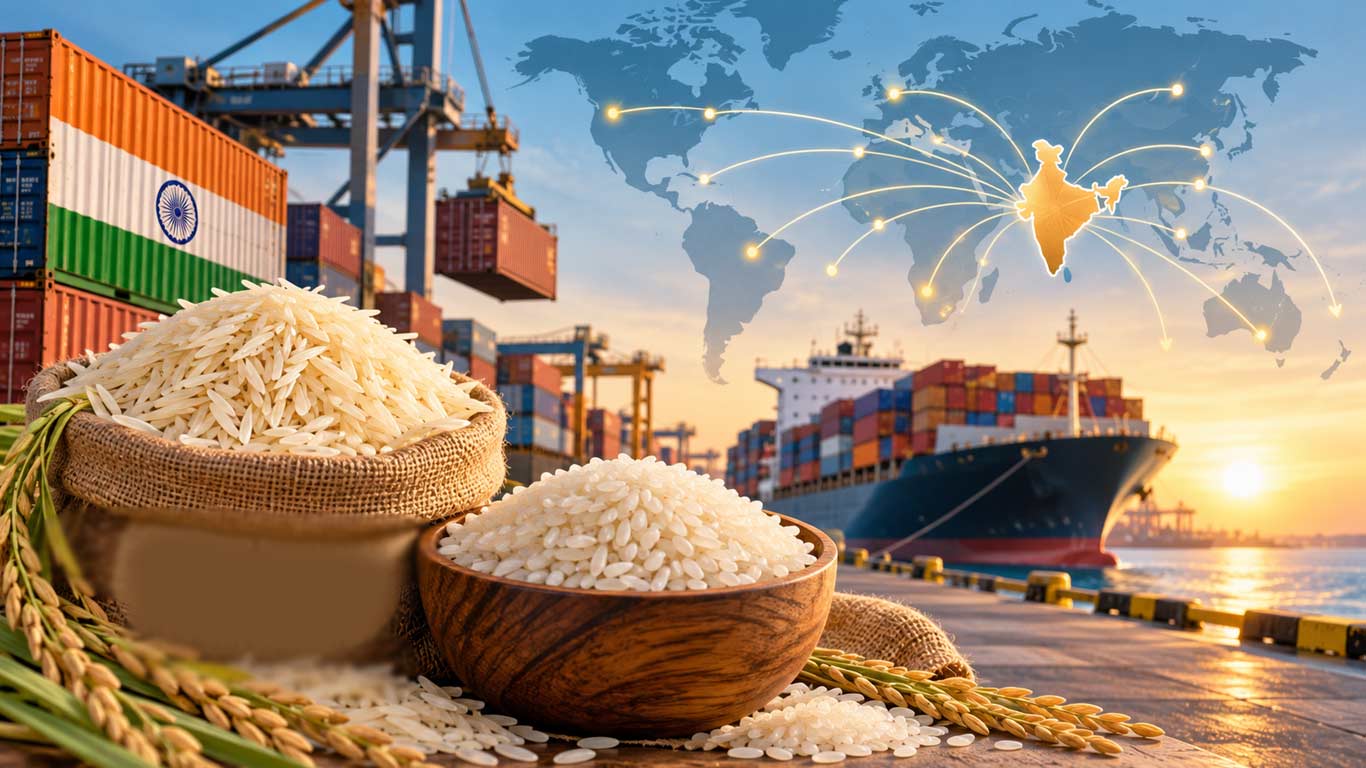
New Delhi, Oct 14 (KNN) India’s rice export earnings increased 12.9 percent year-on-year to Rs 45,739 crore during April-August 2026, with stable trade policies, accessible incentives and improved market access key to sustaining growth, the Indian Rice Exporters’ Federation (IREF) said.
Basmati rice exports rose 11.6 percent to Rs 22,864 crore, while non-Basmati exports grew 14.2 percent to Rs 22,874 crore during the period, according to the federation. The figures reflect export value in rupee terms and not physical shipment volumes.
The federation will discuss export policies, incentives and market expansion opportunities at the Bharat International Rice Conference (BIRC) 2026, scheduled for October 23-25 at Bharat Mandapam in New Delhi, reported ANI.
Dev Garg, National Vice President, IREF, said exporters needed better access to government incentives and clearer information on eligibility under trade agreements to translate policy announcements into business benefits.
A dedicated session, ‘Policy Shifts 2026: Trade Schemes, Incentives and Rice Export Opportunities’, will be held on October 24 to discuss support schemes, documentation, import duties, tariff concessions and changing regulations in overseas markets.
Bipin Aggarwal, IREF Vice President (Kakinada) and director of rice exporter CLRK, said consistent policies and timely incentives were important for non-Basmati exporters operating on tight margins, particularly in price-sensitive African and Asian markets.
Rice Reserves To Support Export Supplies
IREF said substantial government rice stocks could help cushion exports against a projected decline in production.
Citing the US Department of Agriculture, the federation said India’s rice production is projected to decline from around 154 million tonnes in 2025-26 to 147 million tonnes in 2026-27 due to adverse weather conditions.
Government rice stocks have been reported at more than 38 million tonnes, nearly four times the prescribed October buffer norm of 10.25 million tonnes, according to the release.
The federation expects reserves to remain above buffer requirements despite a potential decline in stocks, supporting domestic food security and export availability.
The conference will also examine export credit, insurance, guarantees and warehouse-receipt financing. IREF plans to introduce a ‘BIRC 2026 Rice Export Policy Watch’ identifying five major policy developments that could affect rice trade over the next 12 months.
The initiative will distinguish between policies already in force, announced measures, proposed reforms and trade agreements under negotiation.
IREF said policy stability and accessible incentives would be important for diversifying export markets, expanding India's presence in Africa, Europe and Asia, and encouraging investment in processing, quality improvement and value-added rice products.
(KNN Bureau)









 Loading...