India's BESS Capacity to Surge to 302 GWh by FY32, Growing at 91% CAGR: Nuvama
Updated: Oct 12, 2026 04:29:16pm

India's BESS Capacity to Surge to 302 GWh by FY32, Growing at 91% CAGR: Nuvama
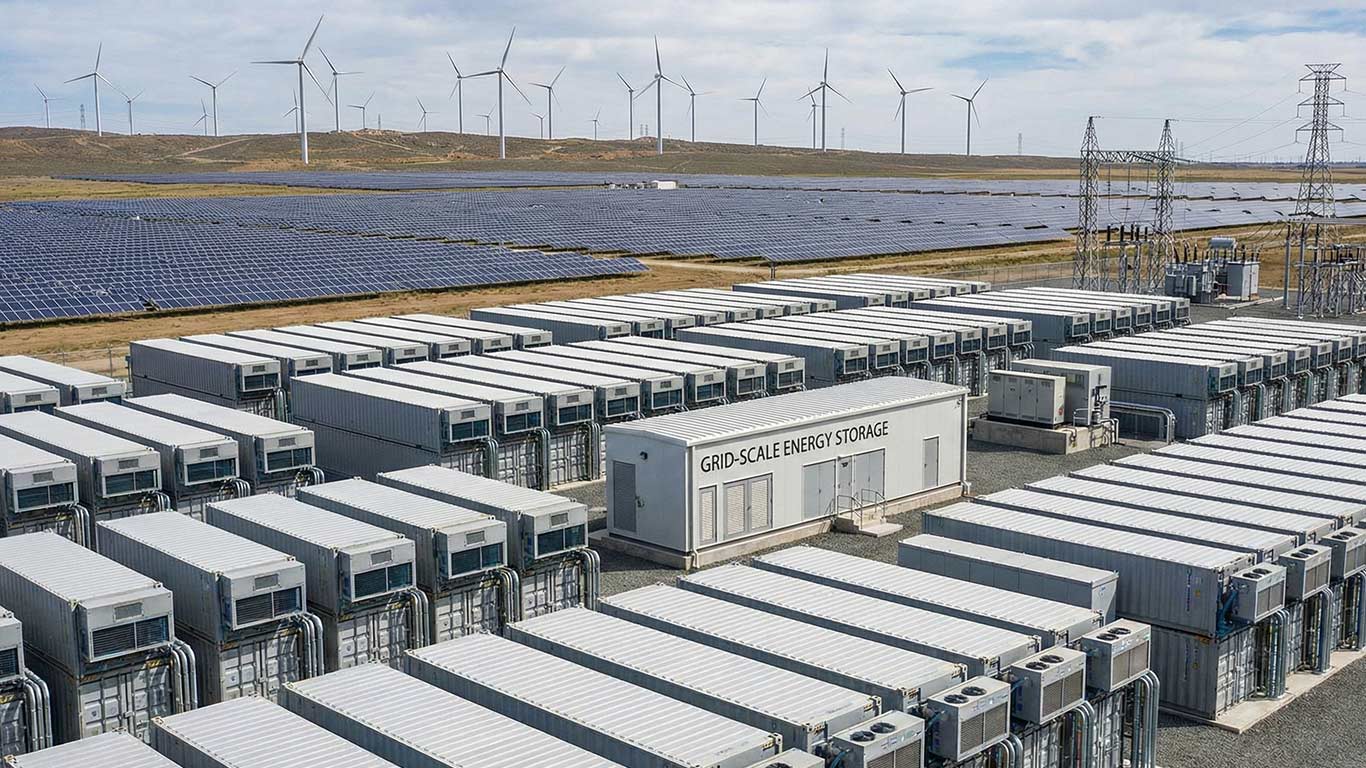
New Delhi, Oct 12 (KNN) India's battery energy storage system (BESS) sector is projected to grow at a compound annual growth rate (CAGR) of 91 per cent between FY26 and FY32, with cumulative capacity expected to increase from 6.3 GWh to 302 GWh, according to a report by Nuvama.
Annual capacity additions are projected to rise from 5.7 GWh in FY26 to 56 GWh by FY32, driven by growing demand for renewable energy integration, grid balancing and round-the-clock power supply.
The report noted that the Central Electricity Authority (CEA) estimates India's BESS requirement at 236 GWh by FY32 and 1,840 GWh by 2047.
It said around 89 per cent of current requirements are met through imports, creating scope for domestic manufacturing as battery costs decline and a framework similar to the Approved List of Models and Manufacturers (ALMM) for solar equipment is potentially introduced, ANI reported, citing the report.
While lithium-ion technology accounts for 98 per cent of the BESS market, the report identified opportunities for India in sodium-ion technology and the China+1 supply-chain strategy.
Manufacturing Economics And Investment Potential
Nuvama said cell-to-pack manufacturing offers attractive economics, with commercial, industrial and retail segments generating spreads of USD 18-23 per kWh and EBITDA margins of 17-20 per cent.
The utility segment has a lower spread of USD 8 per kWh and an EBITDA margin of 9 per cent. However, the report estimated a payback period of one to two years for this segment.
While integrated BESS manufacturing is estimated to generate an internal rate of return (IRR) of 12 per cent, cell-to-pack manufacturing offers a higher IRR of 31 per cent.
The report placed domestic manufacturing capital expenditure at around USD 80 million per GWh and cited the production-linked incentive (PLI) support of Rs 181 billion for 50 GWh of capacity, along with competitive labour costs, as factors supporting India's cost competitiveness.
It said policy support, localisation and economies of scale could help integrated BESS manufacturing develop export potential.
BESS To Boost Solar Companies' Revenues
BESS integration could contribute 17-60 per cent of revenues for select companies by FY28, according to the report.
Premier is projected to have a BESS opportunity of Rs 103 billion, accounting for 60 per cent of its estimated FY28 revenue, while Vikram could see a 54 per cent revenue uplift.
Nuvama said the earnings contribution from BESS remains limited for most listed solar and storage companies despite their early investments and expansion plans.
It added that solar and BESS companies are trading at 17 times FY27 estimated earnings per share, representing a 77 per cent discount to battery chemicals companies and a 64 per cent discount to battery independent power producer peers.
As manufacturing capacity expands, BESS could become a significant driver of earnings growth and valuation re-rating for companies in the sector, the report said.
(KNN Bureau)








 Loading...