Industry calls for regulatory framework for direct selling in India
Updated: Jul 16, 2014 05:18:40pm

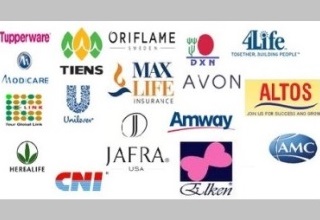
New Delhi, Jul 16 (KNN) In the absence of a fair regulatory framework for the direct selling industry, consumers are unable to make a distinction between genuine and fake companies, according to an industry body here.
“FICCI stands against anything that breaches consumer trust and /or hampers industry growth. In view of the nonexistence of guidelines or legislation for the direct selling industry, a clear distinction between fly-by-night operators and legitimate businesses is the key demand raised by industry,” said an official release.
The direct selling industry is worth Rs.7000 crore and provides livelihood opportunity to over six million, more than 60 per cent of whom are women.
The issue was deliberated at length during the release of a paper, 'Establishment of an appropriate regulatory framework for Direct Selling in India' a thought paper by HAL DPSU Chair Professor and Registrar, National Law School (NLS) of India University, Bangalore, Nandimath Omprakash V.
The paper that was released here today by the FICCI Direct Selling Taskforce in association with National Law School of India University, Bangalore primarily focuses on the imperative for an urgent legislation to facilitate the functioning of genuine direct sellers and contain scams.
Speaking to the media at the event, Omprakash pointed out that the application of the Act (Prize Chits and Money Circulation (Banning) (PCMC) Act, 1978) randomly on the direct selling industry has led to chaotic situation for consumers, private-entrepreneurs as well as the industry. A case in point is the recent arrest and incarceration of Amway CEO and MD on the basis of orchestrated complaints.
The enforcement agencies have failed to distinguish between 'money circulation schemes', which the PCMC (Prize chits and money circulation) Act bans and genuine 'multi-level marketing schemes' organized for the legitimate purpose of selling quality products to customers. In other words, the State (enforcement) agencies have failed to understand the nuances of the direct selling business versus pyramid schemes.
Tweaking the existing provisions of PCMC Act may be the pragmatic way to bring clarity to the issue. This will mitigate the adverse effects of misapplication of PCMC Act on genuine direct selling players, it said.
Meanwhile, the Indian direct selling industry has made a strong pitch for exclusion of the industry from the Prize Chits and Money Circulation (Banning) (PCMC) Act, 1978, in view of the failure of the enforcement agencies to distinguish between 'money circulation schemes' and genuine 'multi-level marketing schemes'.
Industry has made a strong demand to add the clause exempting 'any direct selling scheme duly certified as may be prescribed' as a sub-clause (e) to Section 11 of the PCMC Act.
The event saw the participation of Co-Chair, Direct Selling Task Force, Rajat Banerji; Retd. Special Commissioner Delhi Police, Deep Chand; Consumer Activist, Bejon Mishra; and former Chairman, IDSA, Amarnath Sengupta, among others who presented their views on the issue. (KNN/ES)
“FICCI stands against anything that breaches consumer trust and /or hampers industry growth. In view of the nonexistence of guidelines or legislation for the direct selling industry, a clear distinction between fly-by-night operators and legitimate businesses is the key demand raised by industry,” said an official release.
The direct selling industry is worth Rs.7000 crore and provides livelihood opportunity to over six million, more than 60 per cent of whom are women.
The issue was deliberated at length during the release of a paper, 'Establishment of an appropriate regulatory framework for Direct Selling in India' a thought paper by HAL DPSU Chair Professor and Registrar, National Law School (NLS) of India University, Bangalore, Nandimath Omprakash V.
The paper that was released here today by the FICCI Direct Selling Taskforce in association with National Law School of India University, Bangalore primarily focuses on the imperative for an urgent legislation to facilitate the functioning of genuine direct sellers and contain scams.
Speaking to the media at the event, Omprakash pointed out that the application of the Act (Prize Chits and Money Circulation (Banning) (PCMC) Act, 1978) randomly on the direct selling industry has led to chaotic situation for consumers, private-entrepreneurs as well as the industry. A case in point is the recent arrest and incarceration of Amway CEO and MD on the basis of orchestrated complaints.
The enforcement agencies have failed to distinguish between 'money circulation schemes', which the PCMC (Prize chits and money circulation) Act bans and genuine 'multi-level marketing schemes' organized for the legitimate purpose of selling quality products to customers. In other words, the State (enforcement) agencies have failed to understand the nuances of the direct selling business versus pyramid schemes.
Tweaking the existing provisions of PCMC Act may be the pragmatic way to bring clarity to the issue. This will mitigate the adverse effects of misapplication of PCMC Act on genuine direct selling players, it said.
Meanwhile, the Indian direct selling industry has made a strong pitch for exclusion of the industry from the Prize Chits and Money Circulation (Banning) (PCMC) Act, 1978, in view of the failure of the enforcement agencies to distinguish between 'money circulation schemes' and genuine 'multi-level marketing schemes'.
Industry has made a strong demand to add the clause exempting 'any direct selling scheme duly certified as may be prescribed' as a sub-clause (e) to Section 11 of the PCMC Act.
The event saw the participation of Co-Chair, Direct Selling Task Force, Rajat Banerji; Retd. Special Commissioner Delhi Police, Deep Chand; Consumer Activist, Bejon Mishra; and former Chairman, IDSA, Amarnath Sengupta, among others who presented their views on the issue. (KNN/ES)





 Loading...