Emergency Arbitration, Dedicated GIFT City Bench Could Streamline India’s Dispute Resolution
Updated: Sep 05, 2026 04:25:49pm

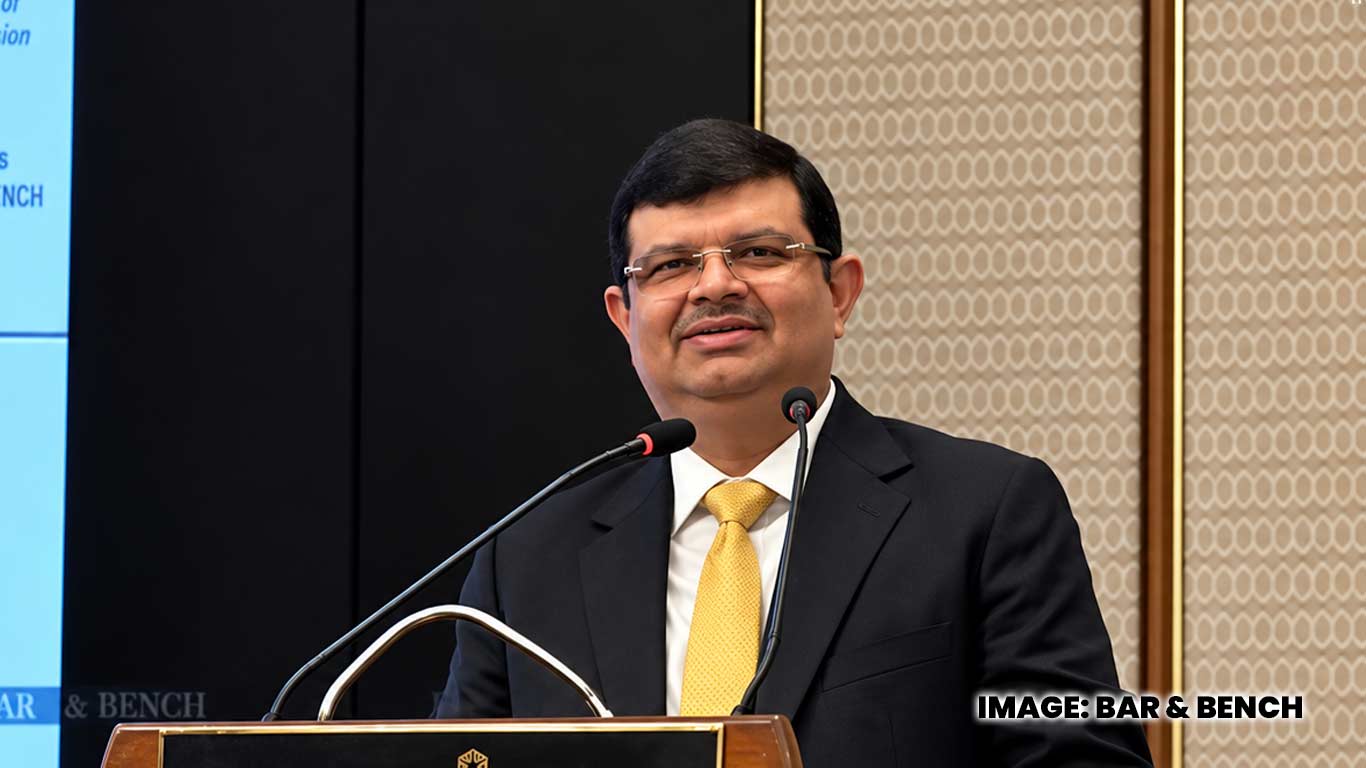
Gandhinagar, Sept 5 (KNN) Statutory recognition of emergency arbitration and a dedicated Gujarat High Court bench at GIFT City could significantly streamline India’s dispute resolution framework, Delhi High Court Justice Tejas Karia said on Friday.
Speaking at a panel discussion organised by the Gujarat High Court Arbitration Centre (GHAC) during its Arbitration Week 2026 event at GIFT City, Justice Karia said procedural bottlenecks under Sections 9, 11, 34 and 37 of the Arbitration and Conciliation Act continue to burden courts despite progress following the 2015 amendments.
Emergency Arbitration, Dedicated Bench
Justice Karia called for formally incorporating emergency arbitration into the statute through proposed Section 9A, noting that the mechanism would need to operate through institutional arbitration.
He said such a framework could allow parties to obtain interim relief within 14 days while reducing the burden on courts.
GIFT City Could Emerge As International Arbitration Hub
On GIFT City’s potential as an international arbitration hub, Justice Karia proposed a dedicated Gujarat High Court bench at GIFT City, noting that jurisdiction currently rests with the Gandhinagar district court.
He also suggested a longer-term vision of a full-fledged international commercial court modelled on the DIFC Courts and Singapore International Commercial Court (SICC).
Justice Karia further called for specialised arbitration benches, greater capacity building and retraining of arbitrators.
Experts Seek Time-Bound Arbitration Proceedings
Senior Advocate Janak Dwarkadas attributed delays partly to inadequate judge-to-population ratios and suggested narrowing the definition of ‘court’ under the Arbitration Act to specialised arbitral tribunals or dedicated judicial divisions.
Gujarat Advocate General Kamal Trivedi called for an end to ad-hoc arbitration, stating that a large proportion of ad-hoc awards lack quality. He also proposed statutory deadlines, including six months for Section 34 petitions and three months for Section 37 appeals.
Need To Reduce Judicial Intervention
The panel discussed the scope of judicial review under Section 34, including whether courts should maintain a light-touch approach or intervene to correct flawed awards.
Former Supreme Court Justice M R Shah said judicial intervention should remain minimal and be limited to ‘ironing out creases’, cautioning against interpretations that effectively rewrite the Arbitration Act.
He noted that applications to extend arbitration timelines under Section 29A have become routine and called for specialised arbitration training for trial court judges.
Thakore highlighted delays in execution proceedings under Order 21 of the CPC and suggested transferring execution powers to Section 34 courts or adopting the recovery mechanism under Schedule Two of the Income Tax Act.
Disclosure Key To Arbitrator Neutrality
On arbitrator neutrality under the revised IBA Guidelines 2024, Justice Shah said declarations under Section 12 of the Arbitration Act have become largely mechanical.
Senior Advocate Mihir Thakore advised arbitrators to adopt a cautious approach, stressing that disclosure is preferable to non-disclosure.
Dwarkadas cited data indicating that tribunal composition accounts for 74.28 per cent of awards set aside by courts, underscoring the importance of upfront disclosure to protect the enforceability of arbitral awards.
Impact on MSMEs
Proposed arbitration reforms could help MSMEs resolve commercial disputes faster and at lower cost through time-bound proceedings, emergency arbitration and reduced court intervention.
Dedicated arbitration benches and clearer procedures would also improve legal certainty, cash-flow recovery and business continuity.
(KNN Bureau)






 Loading...