SC Rules Interest Cannot Be Claimed If Contract Expressly Prohibits It
Updated: Feb 19, 2026 04:12:46pm

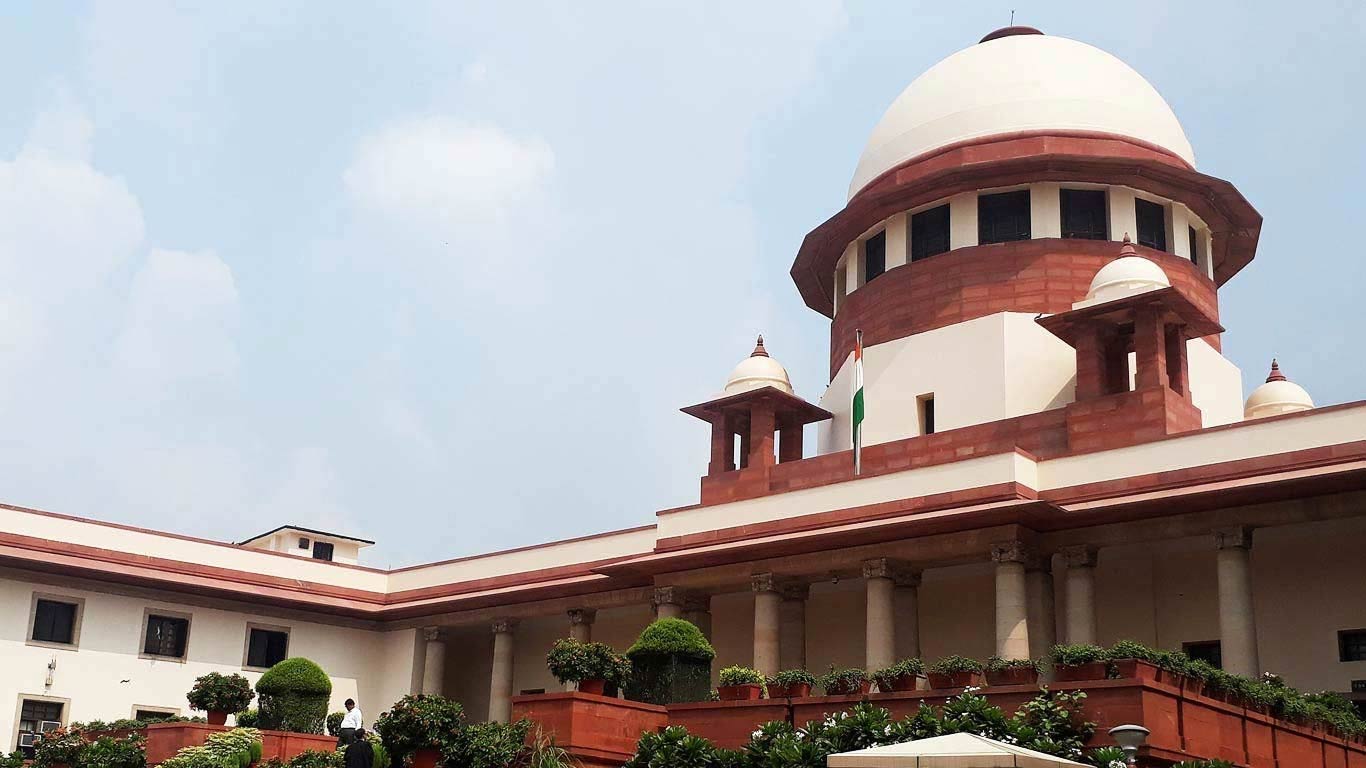
SC Rules Interest Cannot Be Claimed If Contract Expressly Prohibits It
New Delhi, Feb 19 (KNN) The Supreme Court has held that where a contract does not provide for payment of interest on delayed payments, and expressly prohibits such claims, a party cannot claim interest.
A Bench comprising Justices M.M. Sundresh and N. Kotiswar Singh set aside a judgment of the Kerala High Court, which had upheld the award of interest on delayed payments in favour of a contractor.
Dispute Over Delayed Payment
The dispute stemmed from a 2013 contract between the Kerala Water Authority and a contractor to build a sewage treatment plant at Government Medical College, Calicut.
Although the project was completed in July 2014, the Rs 86.64 lakh payment was released only in March 2016 after court intervention. The contractor then sought 14 percent annual interest for the delay; the trial court upheld the claim, and the High Court reduced the rate to 9 percent.
Challenging this, the Kerala Water Authority moved the Supreme Court, citing an express clause in the contract which stated that payments were subject to availability of funds and seniority of bills, and that “no claims or interest for damages whatsoever shall be made for the belated settlement of claims.”
Interpretation of the Interest Act
The High Court had invoked Section 3(1) of the Interest Act, 1978 to grant interest on the delayed payment. However, the Supreme Court noted that Section 3(3) had been overlooked, observing that the Act applies only where a contract is silent on interest or creates a contractual vacuum. It clarified that if a contract expressly bars interest, Section 3(3) prohibits courts from awarding it.
Section 34 CPC Not Applicable
The Court also rejected reliance on Section 34 of the Code of Civil Procedure. It observed that the provision merely governs the rate of interest once entitlement is established and does not create a substantive right to claim interest where it is contractually barred.
Accordingly, the Supreme Court set aside the High Court’s decision, reiterating that contractual terms expressly prohibiting interest on delayed payments must be given effect.
Impact on MSMEs
The ruling underscores the importance of carefully drafting and reviewing contract terms, particularly for MSMEs engaged in government or large infrastructure projects.
If contracts expressly bar interest on delayed payments, MSMEs may have limited legal recourse to recover compensation for payment delays, potentially affecting cash flow and working capital. The judgment highlights the need for MSMEs to negotiate clearer payment protection clauses to safeguard financial stability.
(KNN Bureau)







 Loading...