Supreme Court To Revisit Applicability Of IBC Moratorium On Cheque Bounce Cases
Updated: May 28, 2026 03:39:53pm

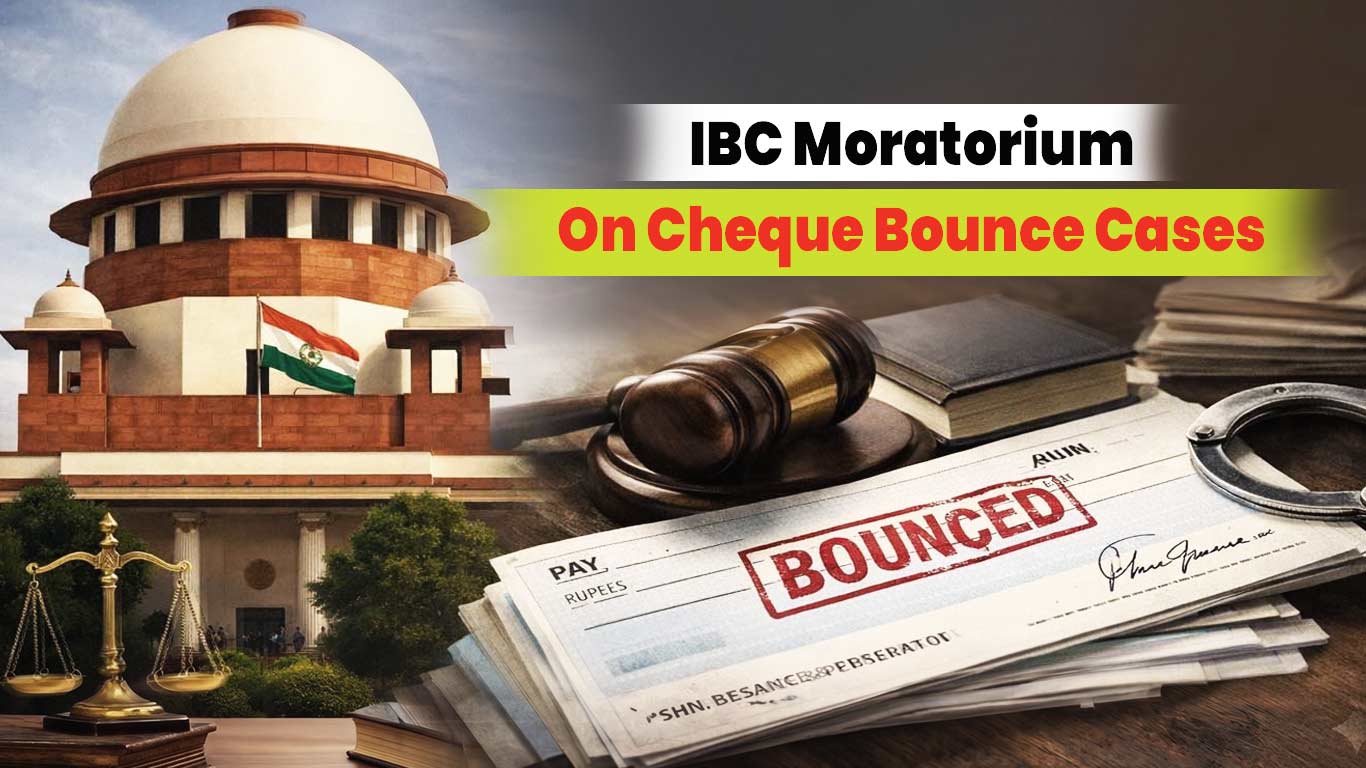
Supreme Court To Revisit Applicability Of IBC Moratorium On Cheque Bounce Cases
New Delhi, May 28 (KNN) The Supreme Court has referred to a larger Bench the issue of whether cheque bounce proceedings under Section 138 of the Negotiable Instruments Act can be stayed during the moratorium period under Part III of the Insolvency and Bankruptcy Code (IBC).
The court also observed that such proceedings are predominantly criminal in nature and not merely debt recovery actions.
Court Rejects Earlier View Treating Section 138 As Purely Civil
A Bench comprising Justice JB Pardiwala and Justice KV Viswanathan held that proceedings under Section 138 of the Negotiable Instruments Act cannot be treated purely as legal action for recovery of money.
The Court disagreed with the view expressed in the earlier judgment in P Mohanraj and others v M/s Shah Brothers Ispat Ltd, which had characterised cheque dishonour cases as essentially civil in nature.
The Bench observed that the core objective of Section 138 is to preserve public confidence in cheque-based commercial transactions by attaching criminal consequences to dishonour of cheques.
The Court clarified that the offence under Section 138 arises from the act of cheque dishonour itself, while the non-payment of debt is only a consequence flowing from the offence.
It emphasised that the provision was enacted as a deterrent against issuing cheques without sufficient funds and was not intended to function merely as a debt recovery mechanism.
Supreme Court Evolves ‘Tiered’ Understanding Of Cheque Bounce Cases
The Bench also recognised the compensatory component embedded in proceedings under Section 138 and accordingly developed a ‘tiered’ approach to cheque bounce cases.
Under this framework, ‘Tier I’ covers the criminal aspect of the proceedings, including punishment such as imprisonment or fines, while ‘Tier II’ relates to the compensatory component involving payment of compensation to the complainant.
Examining the interplay between the Negotiable Instruments Act, 1881 and the Insolvency and Bankruptcy Code, 2016, the Court held that the moratorium under Part III of the IBC does not protect accused persons from the criminal consequences of cheque dishonour cases, noting that fines are specifically excluded from moratorium protection under Section 79(15) of the IBC.
However, the Bench clarified that the compensatory component under Section 138 of the Negotiable Instruments Act stands on a different footing, as compensation payments could deplete the assets of an insolvent debtor.
It therefore ruled that recovery of compensation would remain subject to the moratorium, depending on the stage and nature of the proceedings.
Larger Bench To Decide Scope Of Moratorium Protection
The Court further held that directors prosecuted under Section 141 of the Negotiable Instruments Act would also be entitled to moratorium protection with respect to the compensatory aspect during personal insolvency proceedings, observing that denying such relief could prejudice both the debtor and other creditors.
Concluding that an authoritative pronouncement was necessary, the Bench referred the matter to a three-judge Bench on two key questions.
These include whether Section 138 proceedings are quasi-criminal in nature with a predominant criminal character, and whether the moratorium provisions under Part III of the IBC should apply to the entire proceedings under Section 138 or only to the compensatory aspect thereof.
Impact on MSMEs
The Supreme Court of India decision to revisit the applicability of IBC moratorium provisions to cheque bounce cases could have major implications for MSMEs, which continue to rely heavily on cheque-based transactions.
The ruling may reinforce payment discipline by reaffirming the criminal nature of cheque dishonour proceedings, while also balancing insolvency protections for financially stressed businesses.
Greater clarity on whether recovery of compensation can be stayed during insolvency proceedings is likely to affect MSMEs’ ability to recover dues and manage financial liabilities.
(KNN Bureau)






 Loading...


