Manufacturing PMI Slips to 54.7 in October as Domestic Demand, Hiring Moderate; Export Demand Rises: HSBC India
Updated: Nov 02, 2026 02:43:24pm

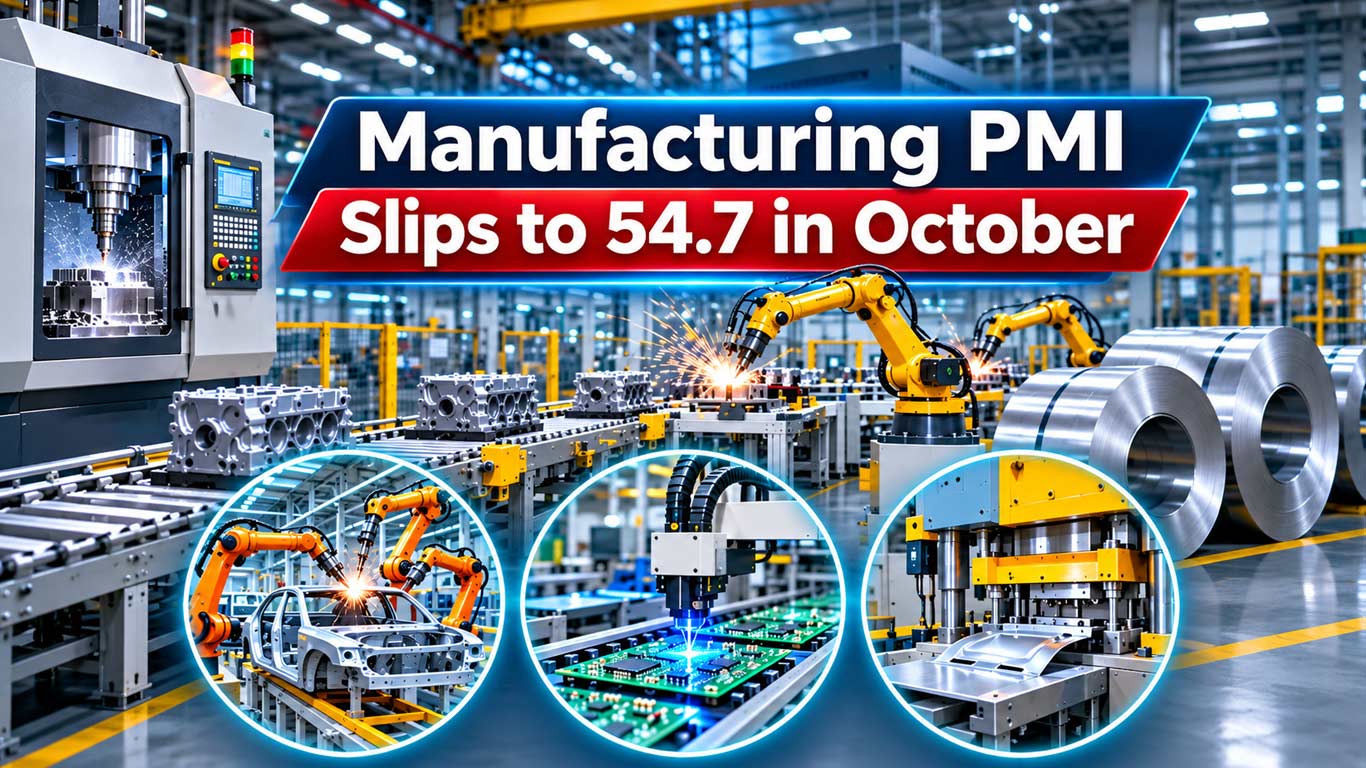
Manufacturing PMI Slips to 54.7 in October as Domestic Demand, Hiring Moderate; Export Demand Rises: HSBC India
New Delhi, Nov 2 (KNN) India's manufacturing sector remained in expansion territory in October, although growth in output and new orders moderated. Stronger export demand supported activity, while input and output price pressures eased.
The seasonally adjusted HSBC India Manufacturing Purchasing Managers' Index (PMI), compiled by S&P Global, fell to 54.7 in October from 55.1 in September and below the preliminary estimate of 54.9. However, it remained above the 50-point mark separating expansion from contraction and its long-run average.
Pranjul Bhandari, Chief India Economist at HSBC, said, “Strong international demand pushed growth of new export orders to a six-month high, supporting a robust rise in output.”
Export Demand Offsets Moderation in Domestic Orders
Growth in new business eased marginally from September's seven-month high but remained strong by historical standards. New export orders rose at their fastest pace in six months, with manufacturers reporting gains across markets including the UK, US, UAE, Bangladesh and Saudi Arabia.
Output continued to rise sharply, supported by higher sales and new product launches, although growth moderated from September. Intermediate goods producers led the expansion.
Manufacturing employment increased for the second consecutive month, but job creation slowed and remained slight. Capital goods producers reduced staffing, while other manufacturing categories added workers. Outstanding business volumes rose for the seventh consecutive month, although the increase was marginal.
Inventory Build-up and Easing Price Pressures
Manufacturers increased finished goods inventories at the fastest pace in the survey's more than 21-year history, citing efforts to meet demand and prevent shortages. Input inventories also rose at their fastest rate in eight months as firms built precautionary buffers.
However, input purchasing growth slowed to its weakest pace in the 64-month sequence of expansion.
“Producers also increased input inventories to the greatest extent in eight months, building precautionary buffers to mitigate potential shortages and meet rising production requirements amid a volatile global environment. Although some material and energy costs increased, overall input and output price pressures eased slightly from the previous month,” Bhandari said.
Input cost inflation fell to its lowest level since February, while the increase in factory selling prices was the weakest in nearly four years.
Business Confidence Weakens
Business confidence declined from September and remained below its long-run average. Close to 18 per cent of manufacturers expected output to increase over the coming year, supported by new client enquiries and demand for industrial automation and technology solutions.
The October data indicate continued manufacturing expansion, supported by export demand and easing cost pressures. However, softer new orders, slower hiring and weaker business confidence point to moderating growth. The record build-up in finished goods inventories also bears watching for signs of a mismatch between production and demand.
(KNN Bureau)









 Loading...