MeitY Unveils Three Homegrown AI Models To Strengthen India's AI Capabilities
Updated: Nov 04, 2026 01:08:28pm

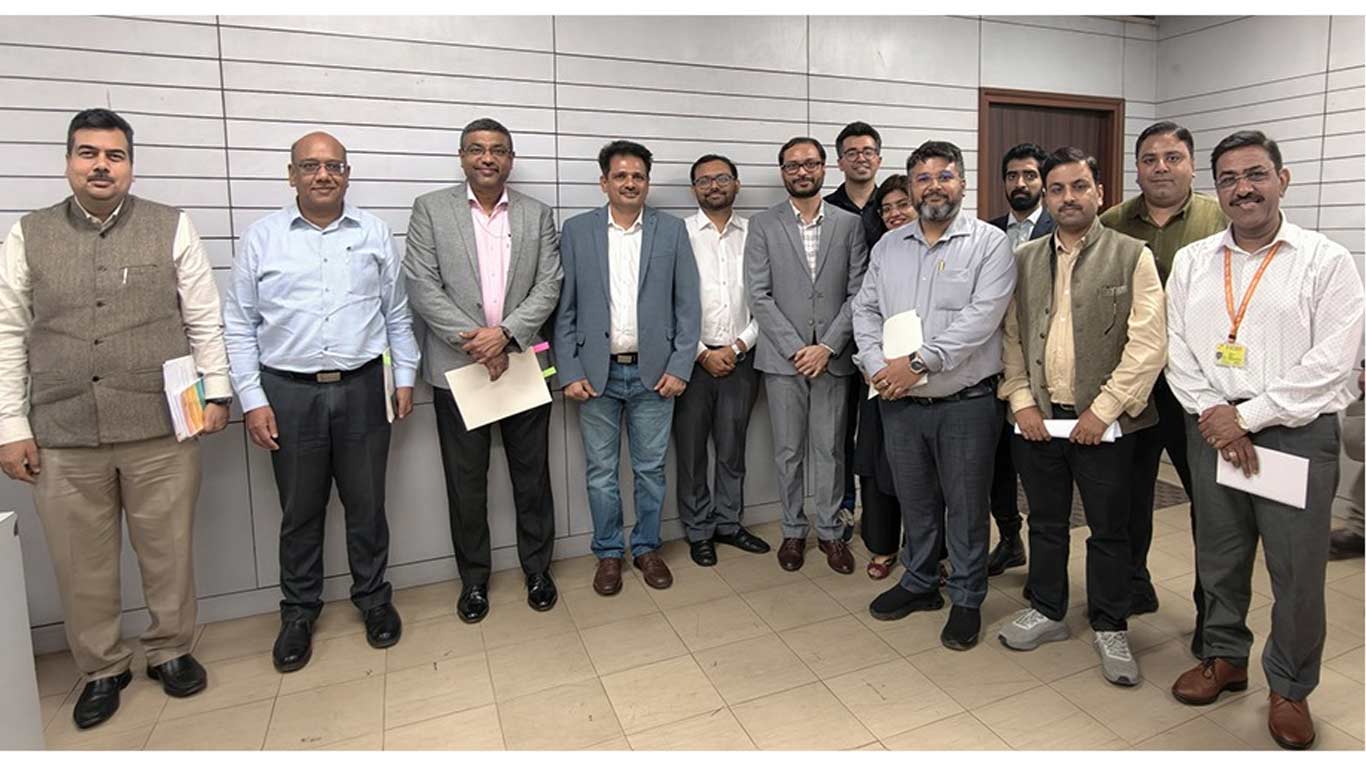
MeitY Unveils Three Homegrown AI Models To Strengthen India's AI Capabilities
New Delhi, Nov 4 (KNN) The Ministry of Electronics and Information Technology (MeitY) has unveiled three indigenous artificial intelligence foundation models, EKA-1, Dhīr 2B and Dhīr 5B, developed by domestic companies with support under the IndiaAI Mission.
The government said the models could support specialised applications and enable deployment in secure, offline environments, including enterprise settings where internet connectivity may be restricted.
MeitY Secretary S. Krishnan congratulated the development teams, saying the initiative would strengthen India's strategic autonomy in artificial intelligence and expand the availability of models suited to domestic requirements.
The models have been developed by Bengaluru-based Socket AI and ZenteiQ under the Foundation Model initiative of the IndiaAI Mission, reported ANI.
EKA-1 targets mathematics, coding and reasoning
EKA-1, developed by Socket AI, is a 26-billion-parameter foundation model designed for mathematics, coding and reasoning. It has been trained on 7.5 trillion tokens and supports more than 100 Indian and international languages, along with programming languages.
The model is designed to handle multi-step tasks, execute code and operate in on-premises, private cloud and air-gapped environments.
Dhīr models designed for offline deployment
Dhīr 2B and Dhīr 5B, developed by ZenteiQ, are mixture-of-experts foundation models trained from scratch using Google Cloud Tensor Processing Units (TPUs).
The models support English and 10 Indian languages and can run directly on tested mobile hardware without an internet connection.
ZenteiQ said it was releasing the model weights under the Apache 2.0 licence, along with technical documentation and evaluation tools, through AIKosh.
Focus on secure enterprise AI applications
Krishnan said the models had potential applications beyond general-purpose artificial intelligence, including mathematics, coding, scientific research and cybersecurity.
He particularly highlighted their ability to operate in air-gapped environments, which could enable wider adoption of enterprise AI applications.
"These models can be deployed on air-gapped environments, which means enterprise-based artificial intelligence, which thus far hasn't really taken off, would be possible to do a lot more of that in the country using models like this," he said.
He added that smaller models could improve productivity and efficiency across different applications, and said the government would continue supporting their refinement and development.
The models are accessible through AIKosh to researchers, students, innovators, enterprises and the general public, making them available as a wider national resource, Krishnan said.
(KNN Bureau)








 Loading...