Carbon Emissions Emerging As Key Risk To Costs and Competitiveness For Indian Firms: Study
Updated: May 21, 2026 03:30:26pm

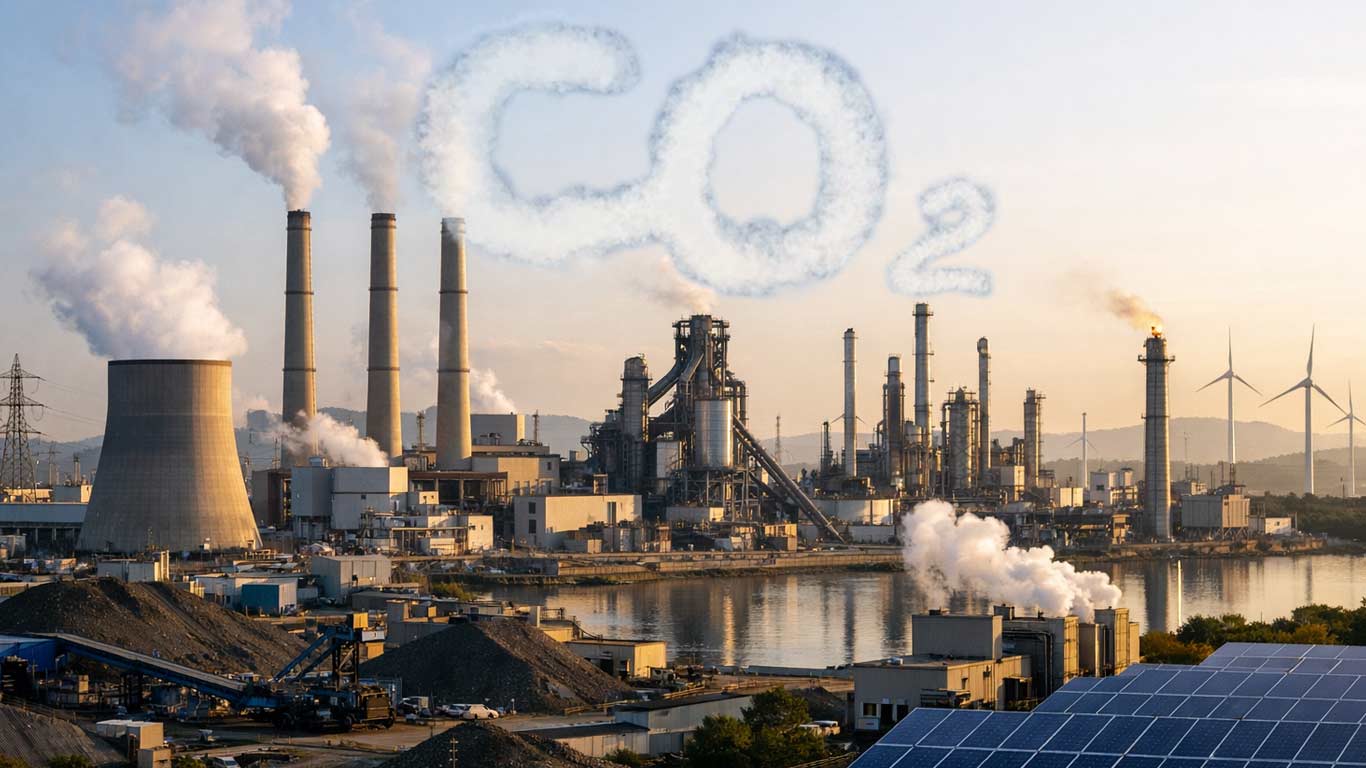
Carbon Emissions Emerging As Key Risk To Costs and Competitiveness For Indian Firms: Study
New Delhi, May 21 (KNN) A new study by Rubix Data Sciences and Breathe ESG has found that carbon emissions are increasingly emerging as a key business, trade and credit-risk variable for Indian companies, extending beyond sustainability disclosures to directly influence costs, export competitiveness and financing decisions.
The report, titled Carbon as a Business Variable: Trade, Risk, and the Evolution of India’s Carbon Market, comes as India prepares to operationalise its domestic carbon market in 2026 amid evolving climate-linked trade measures such as the European Union’s Carbon Border Adjustment Mechanism (CBAM).
According to the study, carbon exposure is gradually beginning to shape cost structures, profitability, capital allocation, supply-chain strategies and credit-risk assessment frameworks across industries.
RBI, SEBI Norms Driving ESG Integration Across Industries
It noted that regulatory expectations from institutions such as the Reserve Bank of India (RBI) and the Securities and Exchange Board of India (SEBI) are also driving deeper integration of carbon and ESG considerations into corporate and financial decision-making.
India has emerged as a major participant in the voluntary carbon market, with more than 375 million carbon credits issued between 2010 and 2025.
However, the report observed that a significant portion of the economic value generated through these credits has accrued outside the country, with limited alignment to India’s domestic emissions-reduction priorities.
It added that the proposed Carbon Credit Trading Scheme (CCTS) and the broader Indian Carbon Market framework indicate a policy shift aimed at retaining greater economic and environmental value within the domestic ecosystem.
Execution Bottlenecks Hindering Carbon Market Growth
The study also pointed to execution bottlenecks within India’s carbon ecosystem. An analysis of over 1,100 Verra-certified Indian carbon projects found that only around one-third successfully reach the registration stage, with delays linked to verification processes, monitoring costs and regulatory uncertainty.
According to the report, these challenges may affect monetisation prospects, investor confidence, project viability and the credibility of India’s emerging carbon market framework.
Climate-linked trade regulations are also beginning to reshape international trade economics, the study said. Mechanisms such as the EU’s CBAM are expected to convert carbon emissions into a direct export cost for Indian industries, particularly sectors such as steel and aluminium, with possible spillover effects on cement and fertilisers.
The report noted that carbon efficiency is increasingly becoming linked to competitiveness, pricing power and market access in global markets.
Carbon Exposure Increasingly Linked To Financing And Supply Chains
It further observed that carbon and energy exposure are becoming more relevant for lenders, insurers and credit-rating frameworks.
As climate disclosure norms evolve, financial institutions may increasingly incorporate carbon-related risks into credit assessments, portfolio evaluations and underwriting processes.
Supply-chain emissions, especially Scope 3 emissions, are also emerging as a significant concern.
“A large part of carbon risk will not sit within a company’s own operations, but within its supply chain,” said Mohan Ramaswamy, CEO, Rubix Data Sciences, adding that carbon exposure is gradually becoming linked to pricing, procurement, financing and market access.
The report concluded that India’s carbon transition is increasingly evolving into an economic and financial issue with implications for competitiveness, financing costs, supply-chain resilience and long-term enterprise value across sectors.
(KNN Bureau)










 Loading...