Govt Notifies New Pricing Rule For Low-Grade Iron Ore To Boost Supply For Steel Sector
Updated: Apr 14, 2026 04:37:37pm

Govt Notifies New Pricing Rule For Low-Grade Iron Ore To Boost Supply For Steel Sector
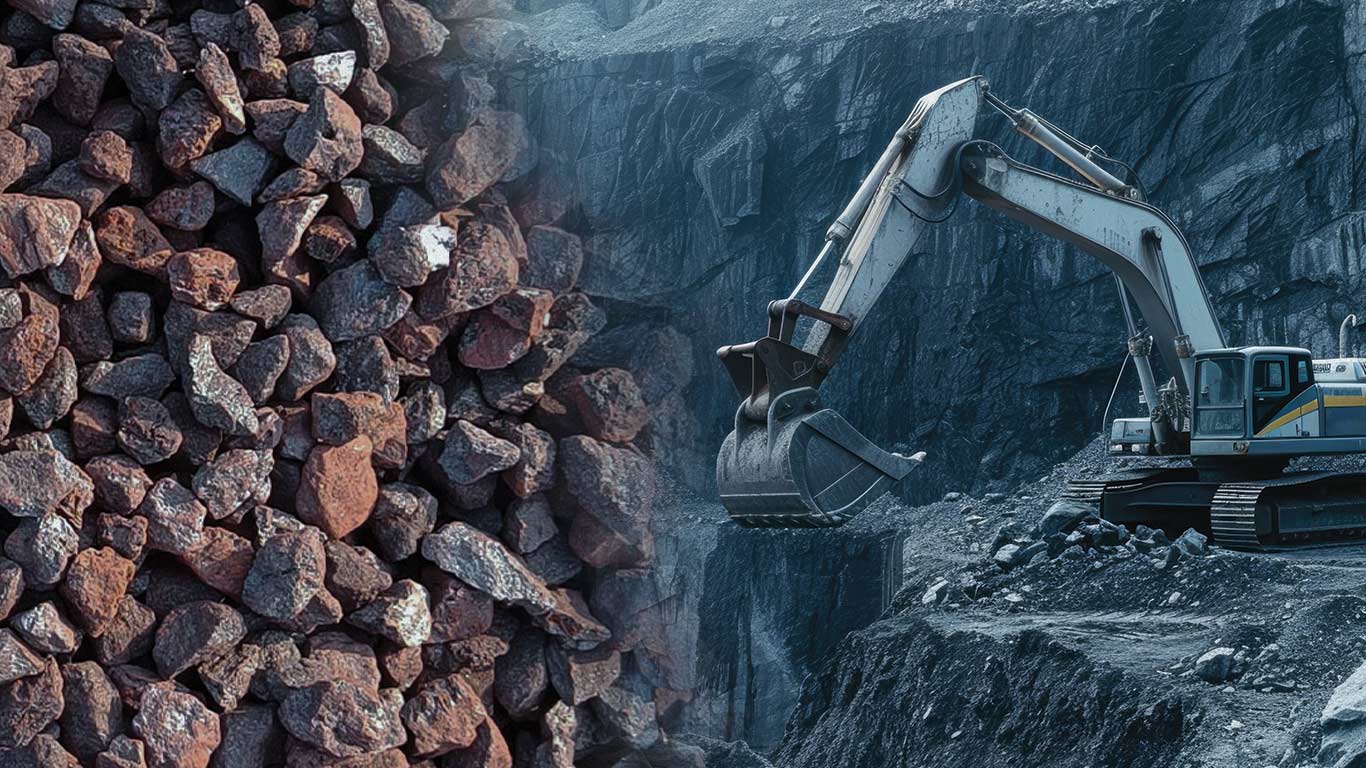
New Delhi, Apr 14 (KNN) The government has amended the rules to revise average sale price (ASP) of low-grade iron ore to curb wastage of resources and ensure steady supply of mineral to the steel industry.
The Ministry of Mines has notified amendments to the Mineral Concession Rules for determining the average sale price (ASP) of low-grade haematite iron ore, including Banded Haematite Quartzite (BHQ) and Banded Haematite Jasper (BHJ), according to an official release.
The amendments, issued under the Minerals (Other than Atomic and Hydro Carbons Energy Minerals) Concession (Third Amendment) Rules, 2026, address a long-standing gap in pricing iron ore with iron (Fe) content below the notified threshold of 45 per cent.
Under the revised framework, ASP for lower-grade iron ore will now be calculated as a proportion of the price of higher-grade ore. For ore with 35–45 per cent Fe content, the ASP will be set at 75 per cent of the price of 45–51 per cent grade ore, while for ore below 35 per cent Fe, the ASP will be fixed at 50 per cent of that benchmark.
Earlier, in the absence of a separate pricing mechanism, ASP for low-grade ore was aligned with higher-grade iron ore (45–51 per cent Fe), making beneficiation economically unviable due to higher royalty and levy calculations. The revised rules aim to correct this distortion and incentivise the processing of low-grade resources.
The ministry noted that significant reserves of sub-threshold iron ore, including BHQ and BHJ formations, exist in India. With advancements in beneficiation technologies, these resources can now be upgraded into usable feedstock for the steel industry.
The amendment is expected to support mineral conservation, reduce pressure on high-grade reserves and ensure a steady supply of raw material for domestic steel production, thereby strengthening long-term resource security.
In addition, the rules clarify that if processing of run-of-mine (ROM) ore leads to a reduction in its economic value, royalty will be levied based on the quantity of lumps and fines obtained after initial screening, rather than on the processed output. This provision is intended to prevent undervaluation of minerals during processing.
The changes are aimed at promoting scientific and efficient mining practices while improving the economic viability of low-grade iron ore utilisation.
(KNN Bureau)







 Loading...