IEEFA Proposes Loan Guarantees, Grants To Decarbonise India's Secondary Steel Sector
Updated: Oct 19, 2026 02:25:10pm

IEEFA Proposes Loan Guarantees, Grants To Decarbonise India's Secondary Steel Sector
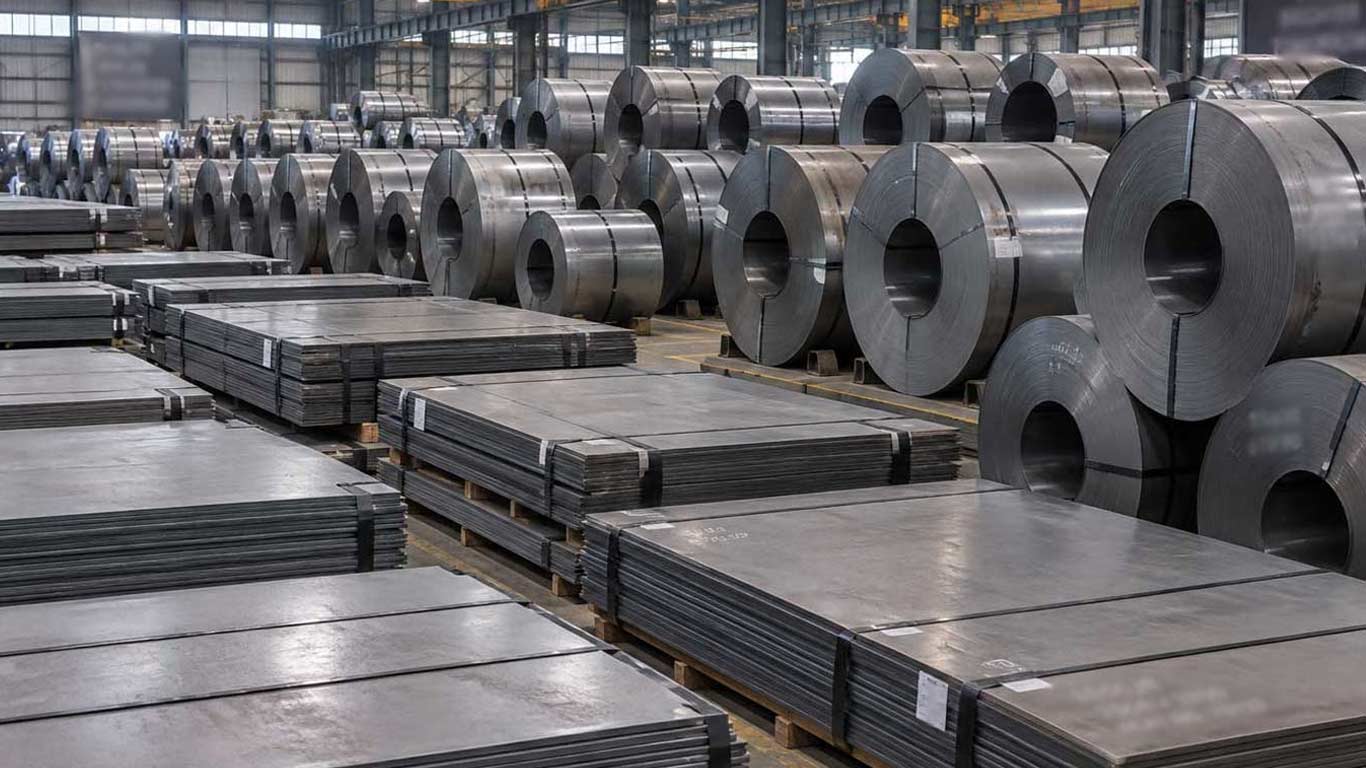
New Delhi, Oct 19 (KNN) India’s secondary steel sector needs targeted financial support to help MSMEs adopt cleaner technologies and deepen decarbonisation, according to the Institute for Energy Economics and Financial Analysis (IEEFA).
The sector accounts for around 47 per cent of India’s steel production and relies heavily on coal-based direct reduced iron (DRI). IEEFA noted that emission reduction gains from energy efficiency diminish as plants become more efficient, necessitating further measures.
The proposed National Strategy for Sustainable Secondary Steel (NSSS) could address financial and technological barriers to low-carbon production.
Existing Schemes Face Implementation Gaps
Government schemes support MSME energy efficiency, resource conservation and cleaner production, but their reach remains limited. IEEFA noted that implementation and delivery remain key challenges for energy efficiency programmes.
The ADEETIE scheme offers interest subsidies and energy audits but excludes coal-based DRI kilns and induction furnaces, major emission sources.
The MSE-SPICE scheme promotes scrap recycling but has sanctioned loans to only 14 units since 2023. Meanwhile, the GIFT scheme supports green investments, and ZED promotes quality and environmental standards.
Three Areas For Decarbonisation
The Ministry of Steel estimates that 43 per cent renewable energy penetration could cut the sector’s emission intensity by 7.5 per cent from 2023-24 levels.
Group-captive solar power could offer steel units electricity at tariffs 34 per cent below grid rates, with equity costs recovered within two years, though high upfront costs and regulatory hurdles constrain adoption.
Using one tonne of scrap steel can save up to 1.1 tonnes of iron ore and reduce raw material-related emissions by around 58 per cent. Combining 30 per cent scrap use with 50 per cent renewable electricity could lower emission intensity by 28 per cent, but fragmented collection and inadequate processing infrastructure remain barriers.
Iron ore pellets, automated controls, energy monitoring and waste heat recovery offer further efficiency gains, although financing constraints hinder smaller units.
Biochar and gas-based steelmaking offer near-term decarbonisation options, while hydrogen-based ironmaking could provide a longer-term pathway, subject to affordable fuel supplies and supporting infrastructure.
IEEFA Proposes Two Financing Models
The steel ministry plans to link NSSS support to annual emission cuts rather than upfront subsidies. IEEFA warned this could disadvantage smaller units, as banks may hesitate to lend against future incentives.
For proven technologies, IEEFA proposed partial loan guarantees and interest rebates tied to verified emission reductions, supporting renewable power, scrap use, pellet switching and waste heat recovery.
Cluster-level renewable projects could access financing through special purpose vehicles, while loan guarantees could improve MSMEs’ access to processed scrap.
For emerging technologies such as hydrogen-based DRI production, IEEFA recommended milestone-based capital grants linked to design, commissioning and verified performance to mitigate risks in first-of-a-kind projects.
Conditions For NSSS Support
IEEFA proposed three conditions for NSSS support: meeting energy-efficiency benchmarks verified by accredited auditors, avoiding new coal-based capacity, and holding at least ZED Bronze certification for quality, process control and energy management.
Units failing efficiency benchmarks should first access ADEETIE or similar state schemes. Pellet use and waste heat recovery should qualify only if they meet emission-reduction targets and timelines, with future support prioritising fuel switching and electrification.
The framework could complement existing schemes, fund technologies beyond MSMEs’ financial capacity and link public support to measurable emission cuts, IEEFA said.
(KNN Bureau)





 Loading...