India Aims For Rs 25 Lakh Cr Bioeconomy By 2030: Jitendra Singh
Updated: Jul 09, 2025 04:17:13pm

India Aims For Rs 25 Lakh Cr Bioeconomy By 2030: Jitendra Singh
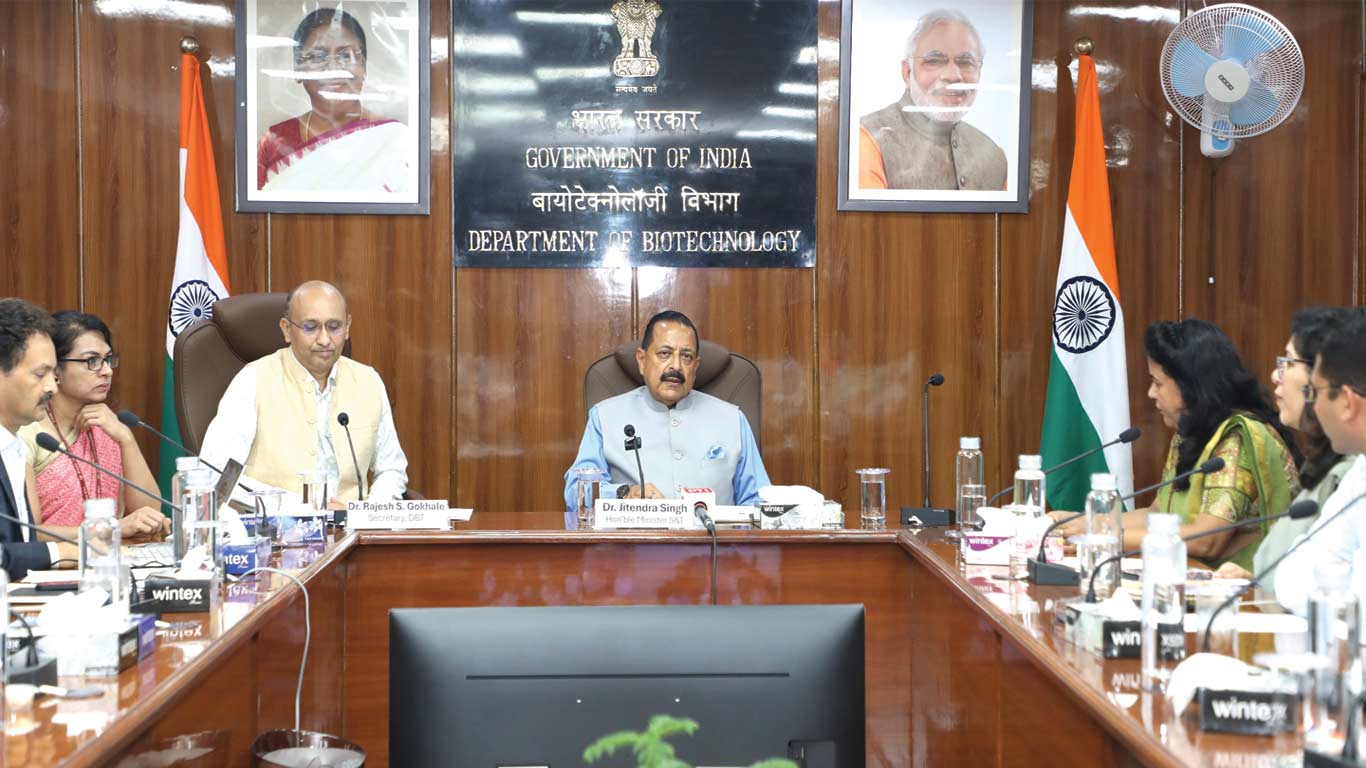
New Delhi, July 9 (KNN) The Indian government is targeting a Rs 25 lakh crore (USD 300 billion) bioeconomy by 2030, aiming to position the country as a global hub for biotechnology-led growth, Union Science & Technology Minister Dr. Jitendra Singh announced on Monday.
Speaking at a national forum, he called for greater public participation in India’s biotechnology mission, emphasising that ‘every Indian is a stakeholder’ in the nation’s expanding bioeconomy.
India’s bioeconomy has seen exponential growth over the past decade, surging from USD 10 billion in 2014 to Rs 13.8 lakh crore (USD 165.7 billion) in 2024, according to FY25 estimates.
The sector has recorded a compound annual growth rate (CAGR) of 17.9 percent over the last four years and now contributes 4.25 percent to the national GDP, underlining its growing strategic and economic significance.
The minister highlighted the remarkable rise in the number of biotech startups, which has grown from just 50 in 2014 to nearly 11,000 in 2024.
He credited this expansion to robust policy frameworks and institutional support mechanisms such as the Biotechnology Industry Research Assistance Council (BIRAC).
Since its inception in 2012, BIRAC has established 95 bio-incubation centres and launched key funding schemes including the Biotechnology Ignition Grant (BIG), SEED, and LEAP funds, supporting a range of startups in healthcare, AI-based diagnostics, and digital health.
Dr. Singh cautioned that startup survival depends on timely industry partnerships and capital investment, stating, “It is easy to start a startup. What’s difficult is to keep it started.”
India’s National Biopharma Mission (NBM), supported by a USD 250 million fund co-financed with the World Bank, is helping scale domestic pharmaceutical and vaccine production.
The mission has so far supported 101 projects, aided 30 MSMEs, and created over 1,000 jobs.
The report also noted biotechnology’s transformative role in agriculture. Innovations such as drought-resistant crop varieties and genome-edited rice are boosting farm productivity.
The Biotech-KISAN programme has trained over 37,000 farmers, primarily women, in scientific farming practices across 115 aspirational districts. States like Jharkhand, Chhattisgarh, and Madhya Pradesh have reported 40–100 percent increases in farm yields and incomes following biotech interventions.
In the bioenergy space, India has achieved notable progress, with ethanol blending in petrol rising from 1.53 percent in 2014 to 15 percent in 2024.
According to Oil Minister Hardeep Singh Puri, India reached its 20 percent ethanol blending target six years ahead of schedule, helping reduce crude oil imports by 173 lakh metric tonnes and saving Rs 99,014 crore in foreign exchange, while also delivering significant environmental and economic benefits.
The government’s recent launch of the BioE3 Policy in August 2024 aims to align India’s bioeconomy with principles of sustainability, equity, and inclusive growth.
The policy promotes regenerative biomanufacturing, bio-based products, and carbon emission reduction, while fostering job creation in Tier-2 and Tier-3 cities through biofoundry clusters and manufacturing hubs.
(KNN Bureau)









 Loading...


