Sodium-Ion Batteries Could Reach Commercial Scale In India Within 2-3 Years: Renewable Energy Secretary
Updated: Aug 25, 2026 04:19:28pm

Sodium-Ion Batteries Could Reach Commercial Scale In India Within 2-3 Years: Renewable Energy Secretary
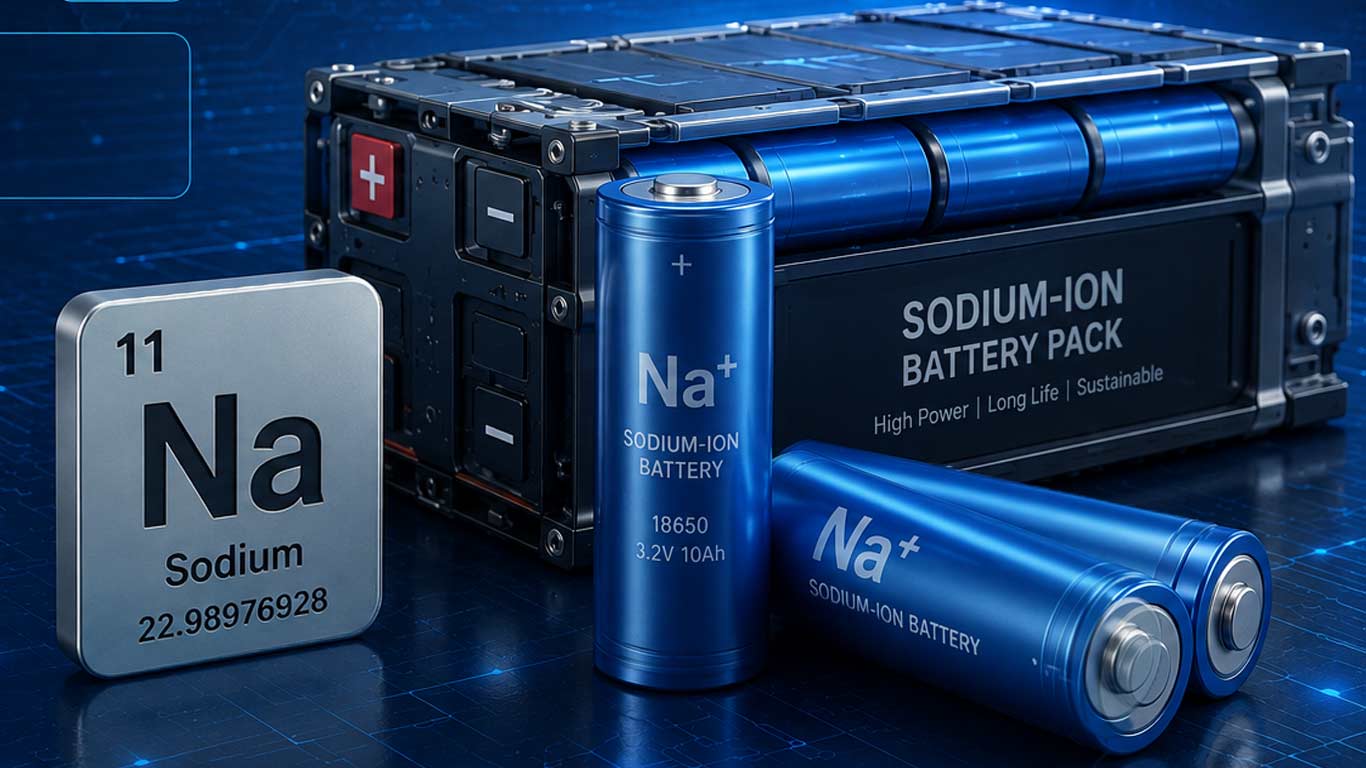
New Delhi, Aug 25 (KNN) India could see significant growth in sodium-ion battery technology over the next two to three years as researchers have reached Technology Readiness Level (TRL) 7 and above, Renewable Energy Secretary Santosh Kumar Sarangi said.
Speaking on the sidelines of the BloombergNEF Summit, Sarangi said technologies that reach TRL 7, where a system prototype has been demonstrated in an operational environment, can typically move from pilot projects to commercial production within two to three years.
He said the government expects alternative battery technologies to play a larger role as India expands energy storage capacity to support the growing share of renewable energy, reported ANI.
Sodium-Ion Technology Nears Commercialisation
Sarangi said the advancement of sodium-ion battery technology to TRL 7 and above indicates that the technology could move towards commercial-scale deployment in India within the next two to three years.
The development could help diversify India's energy-storage technology base as the country expands renewable energy capacity and seeks cost-effective storage solutions.
Vanadium Flow Batteries Also Gaining Ground
On vanadium flow batteries, Sarangi said domestic manufacturers are developing supply capabilities and rising demand could help reduce costs.
He said NTPC Green Energy has placed an order for 100 MW of vanadium flow battery capacity, while domestic manufacturers are working to meet the requirement.
Higher demand and larger production volumes are expected to bring down prices and improve the commercial viability of the technology, he said.
India On Track To Exceed 411 GWh Storage Target
Sarangi said the Central Electricity Authority (CEA) estimates India's energy storage requirement at around 411 GWh by 2031-32, adding that the country is on track to achieve the requirement ahead of schedule.
While current installed storage capacity remains lower, around 156 GWh of battery energy storage systems are currently under tendering, processing or implementation, he said.
On battery recycling, Sarangi said the government is addressing the issue under the existing e-waste rules and would introduce further provisions if required.
Government Working On Polysilicon Manufacturing Scheme
Sarangi also said the government is working on a new scheme to support domestic polysilicon manufacturing, as the capacity expected under the earlier Production Linked Incentive (PLI) scheme may be insufficient to meet India's requirements.
The earlier PLI framework covered polysilicon, wafers, cells and modules, but is expected to result in only limited polysilicon capacity, he said.
To strengthen energy security and manufacturing resilience, India is considering adding at least 30 GW of polysilicon manufacturing capacity by 2030, Sarangi said.
(KNN Bureau)






 Loading...