Task Force calls for new technologies to manage municipal solid waste
Updated: May 15, 2014 05:37:09pm

New Delhi, May 15 (KNN) Municipal Solid Waste (MSW) has to be managed by technologies and methods that enable keeping our cities clean, prevent pollution and protect the environment and at the same time minimize the cost through recovery of resources and energy, said a report of the task force of the Planning Commission.
Chaired by K Kasturirangan, the task force has recommended the setting up 215 Waste to Energy plants by 2031 to generate 1,075 MW of power, among others, calling for public-private partnerships (PPPs) with viability gap funding of up to 40 per cent for setting up such plants.
Viability Gap Funding is a one-time grant provided by the Public Sector (Central Government / State Government) for Financial Support to PPPs in Infrastructure, with the objective of making a project commercially viable.
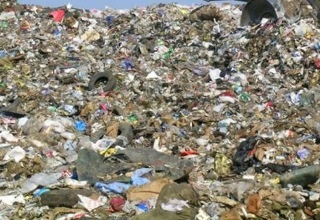
According to a Central Pollution Control Board Report (2012-13) municipal areas in the country generate 1, 33,760 metric tonnes per day of MSW, of which only 91,152 TPD waste is collected and 25,884 TPD treated. The MSW, therefore, dumped in low lying urban areas is a whopping 1,07,876 TPD, which needs 2,12,752 cubic meter space every day and 776 hectare of precious land per year, it said.
Further, as per 2011 census, the 377 million people living in 7,935 urban centres, generate 1, 70,000 TPD and 62 million tonnes of MSW per year which is based on an average per capita generation of 450gm per person per day. This does not include wastes picked up by kabadiwalas from households and from the streets by rag pickers.
Official data suggests that municipal authorities have so far only set up 279 compost plants, 172 biomethanation plants, 29 RDF plants and eight Waste to Energy (W to E) plants in the country.
World Health Organization (WHO) has observed that 22 types of diseases can be prevented/ controlled in India by improving Municipal Solid Waste Management (MSWM) system. Scientific management of MSW will save, huge financial resources currently spent on medical services and the health of our young population.
The report has noted that the principal reasons for the prevailing unhygienic conditions in our cities is the casual attitude of the citizens as well as the municipal authorities towards managing solid waste, lack of priority to this essential service, inadequate and inappropriate institutional structure, lack of technical knowhow and paucity of financial resources.
The Task Force critically looked at failure/under performance of the processing facilities setup and observed that 1) lack of due diligence on the part of investors as well as public sector , 2) non supply of committed quantity / quality of waste to the plant by the municipal authority, 3) presence of inerts - dust and C and D waste in MSW delivered for processing, making the operations difficult and very expensive, 4) Inadequate market for sale of compost/RDF, 5) public outcry against the location of a plant, and 6) lack of financial viability of projects, were found to be the major reasons.
The task force recommends an Integrated Municipal Solid Waste Management (IMSWM) system that addresses all essential activities namely, segregation and storage of waste at source, door-to-door collection, secondary storage, transportation, transfer stations, processing and disposal of MSW simultaneously in a coordinated manner to make towns and cities clean and liveable and optimize tapping the potential of MSW through recovery of recyclables, generation of energy, compost and Refuse Derived Fuel (RDF) from the waste and minimize the wastes going to landfills.
It also recommends a campaign that would create awareness on the importance of reducing the waste generation, calling for active participation of civil society; integration of kabadiwalas and rag pickers in to MSWM system.
Also featured in the recommendations of the report are common regional sanitary landfills; centralized and decentralized processing of waste and selection of appropriate technologies for processing of MSW waste. (KNN/ES)
Chaired by K Kasturirangan, the task force has recommended the setting up 215 Waste to Energy plants by 2031 to generate 1,075 MW of power, among others, calling for public-private partnerships (PPPs) with viability gap funding of up to 40 per cent for setting up such plants.
Viability Gap Funding is a one-time grant provided by the Public Sector (Central Government / State Government) for Financial Support to PPPs in Infrastructure, with the objective of making a project commercially viable.
According to a Central Pollution Control Board Report (2012-13) municipal areas in the country generate 1, 33,760 metric tonnes per day of MSW, of which only 91,152 TPD waste is collected and 25,884 TPD treated. The MSW, therefore, dumped in low lying urban areas is a whopping 1,07,876 TPD, which needs 2,12,752 cubic meter space every day and 776 hectare of precious land per year, it said.
Further, as per 2011 census, the 377 million people living in 7,935 urban centres, generate 1, 70,000 TPD and 62 million tonnes of MSW per year which is based on an average per capita generation of 450gm per person per day. This does not include wastes picked up by kabadiwalas from households and from the streets by rag pickers.
Official data suggests that municipal authorities have so far only set up 279 compost plants, 172 biomethanation plants, 29 RDF plants and eight Waste to Energy (W to E) plants in the country.
World Health Organization (WHO) has observed that 22 types of diseases can be prevented/ controlled in India by improving Municipal Solid Waste Management (MSWM) system. Scientific management of MSW will save, huge financial resources currently spent on medical services and the health of our young population.
The report has noted that the principal reasons for the prevailing unhygienic conditions in our cities is the casual attitude of the citizens as well as the municipal authorities towards managing solid waste, lack of priority to this essential service, inadequate and inappropriate institutional structure, lack of technical knowhow and paucity of financial resources.
The Task Force critically looked at failure/under performance of the processing facilities setup and observed that 1) lack of due diligence on the part of investors as well as public sector , 2) non supply of committed quantity / quality of waste to the plant by the municipal authority, 3) presence of inerts - dust and C and D waste in MSW delivered for processing, making the operations difficult and very expensive, 4) Inadequate market for sale of compost/RDF, 5) public outcry against the location of a plant, and 6) lack of financial viability of projects, were found to be the major reasons.
The task force recommends an Integrated Municipal Solid Waste Management (IMSWM) system that addresses all essential activities namely, segregation and storage of waste at source, door-to-door collection, secondary storage, transportation, transfer stations, processing and disposal of MSW simultaneously in a coordinated manner to make towns and cities clean and liveable and optimize tapping the potential of MSW through recovery of recyclables, generation of energy, compost and Refuse Derived Fuel (RDF) from the waste and minimize the wastes going to landfills.
It also recommends a campaign that would create awareness on the importance of reducing the waste generation, calling for active participation of civil society; integration of kabadiwalas and rag pickers in to MSWM system.
Also featured in the recommendations of the report are common regional sanitary landfills; centralized and decentralized processing of waste and selection of appropriate technologies for processing of MSW waste. (KNN/ES)






 Loading...