Why consumers are turning to plastics
Updated: Apr 17, 2014 02:40:51pm

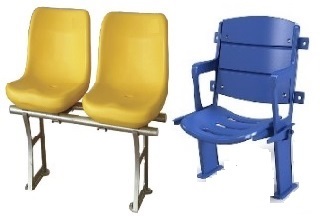
New Delhi, Apr 17 (KNN) Prevalent problems and emerging opportunities provide a reservoir of inspiration for designers consumer good made from plastic. “Things can irritate you so you become aware of a problem, which is a very pragmatic and the least challenging,” says Apple’s design chief Sir Jonathan Ive.
What is more difficult is when you are intrigued by an opportunity, he told the Evening Standard’s Mark Prigg at the Technology giant’s Cupertino headquarters. Nobody has articulated a need [for the product] and “the starting point is asking questions, what if we do this, combine it with that, would that be useful?”
It was the combination of both which inspired Cambridge Consultants to develop two design technologies in-house that are now available for licensing. The first is a plastics dispenser that eliminates the need for flammable volatile organic compounds (VOCs) which contribute to ground-level ozone linked to respiratory problems.
In California, the Environment Protection Agency has already placed limits on the amount of VOCs that can be included in aerosol products such as deodorants and antiperspirants. Europe has limited the amount level of VOCs in paint products – with similar legislation imminent for personal care products.
The foam dispenser technology is set to replace uniform rows of cylindrical aluminium aerosol cans with low-cost PET bottles in a range of shapes and sizes. Typically PET bottles cost 50 per cent less to produce than aluminium cans.
Peter Luebcke, head of personal care at Cambridge Consultants, says: “And on top of the environmental benefits of doing away with VOCs, PET bottle containers can be recycled and have half of the environmental impact of aluminium cans.”
Another bonus is that the bottles can be filled on a standard aerosol production line. Luebcke says this latest example of dispensing technology also benefits the consumer as “it offers smaller and more consistent air bubbles to give a creamier, more luxurious texture and a better sensory experience.”
The technology could also bring molecular gastronomy at the touch of a button into the home – opening up the possibility of picking up restaurant-style foams in a bottle with the weekly food shop.
Traditionally, a VOC – typically propane/or butane – is liquefied inside an aerosol can together with a foam agent and the liquid to be dispensed. The VOCs are liquefied at the pressure within the can, typically around four bar. When the valve is opened, the mixture is expelled through the nozzle and the VOC flashes as a vapour. The expanding gas puffs the foaming agent up to a froth. The new foaming technology devised, by Cambridge Consultants, is formed simply with air or nitrogen.
Luebcke says: “It gives us the ability to foam things that are traditionally difficult to foam – like foundation cream or insulating materials giving FMCG companies the opportunity to differentiate in crowed markets.
He adds the greater control over particle size means less of the spray is breathable – an issue of regulatory concern. The foaming technology can also be incorporated into an appliance – or into a disposable pod for use in conjunction with an appliance – to create milkshakes, ice cream or milk froth for coffee machines.
It is equally applicable to dispensing systems, such as soap or shaving foam, that use a motion sensor to automatically dispense foam when a hand is detected under the appliance’s nozzle. Cambridge Consultants is also patenting a new technology that harnesses the power of a cyclone to better mix and spray liquids. Any plastic material can be used to create the two-to three centimetre diameter cyclone chamber. The Vortik allows two-to-three different liquids to be mixed at the point of spray without altering their characteristics, opening up the possibility of new applications in consumer and healthcare products.
Conventional atomisers use either a high pressure or high airflow to create a spray. The new fluid handling technology uses low-pressure air and liquid in a specially-shaped cyclone chamber. Shear between swirling air and liquids create the desired droplet size for spraying.
Meanwhile, a client’s desire to improve its environmental credentials, with its green-conscious customers, led card manufacturer Plastic Card Services to search for an ecological alternative that landed it a deal with Denmark’s retail chain Coop Danmark.
The deal will see the Macclesfield-based company supply loyalty cards for the Danish group, which has more than 1,200 outlets and is Denmark’s most popular loyalty card scheme, with more than 1,700 million active members.
Following extensive research and development, PCS developed a sustainable bio-PVC card for the Danish retailer, which has advanced biodegradable properties so that the enzymes in soil turn the chlorine content of the material into salt. Using a waterless lithographic process, one that reduces emissions and potentially harmful compounds further enhances the product’s environmental credentials.
Adam Unsworth, sales director at PCS, says: “As an ethical retailer, Coop Danmark is committed to raising the bar in terms of sustainability in the retail sector and has a strict environmental policy. When sourcing the cards and fobs for its loyalty scheme, the team wanted a product that outperformed the traditional PVC offering.” (KNN/AIPMA)
What is more difficult is when you are intrigued by an opportunity, he told the Evening Standard’s Mark Prigg at the Technology giant’s Cupertino headquarters. Nobody has articulated a need [for the product] and “the starting point is asking questions, what if we do this, combine it with that, would that be useful?”
It was the combination of both which inspired Cambridge Consultants to develop two design technologies in-house that are now available for licensing. The first is a plastics dispenser that eliminates the need for flammable volatile organic compounds (VOCs) which contribute to ground-level ozone linked to respiratory problems.
In California, the Environment Protection Agency has already placed limits on the amount of VOCs that can be included in aerosol products such as deodorants and antiperspirants. Europe has limited the amount level of VOCs in paint products – with similar legislation imminent for personal care products.
The foam dispenser technology is set to replace uniform rows of cylindrical aluminium aerosol cans with low-cost PET bottles in a range of shapes and sizes. Typically PET bottles cost 50 per cent less to produce than aluminium cans.
Peter Luebcke, head of personal care at Cambridge Consultants, says: “And on top of the environmental benefits of doing away with VOCs, PET bottle containers can be recycled and have half of the environmental impact of aluminium cans.”
Another bonus is that the bottles can be filled on a standard aerosol production line. Luebcke says this latest example of dispensing technology also benefits the consumer as “it offers smaller and more consistent air bubbles to give a creamier, more luxurious texture and a better sensory experience.”
The technology could also bring molecular gastronomy at the touch of a button into the home – opening up the possibility of picking up restaurant-style foams in a bottle with the weekly food shop.
Traditionally, a VOC – typically propane/or butane – is liquefied inside an aerosol can together with a foam agent and the liquid to be dispensed. The VOCs are liquefied at the pressure within the can, typically around four bar. When the valve is opened, the mixture is expelled through the nozzle and the VOC flashes as a vapour. The expanding gas puffs the foaming agent up to a froth. The new foaming technology devised, by Cambridge Consultants, is formed simply with air or nitrogen.
Luebcke says: “It gives us the ability to foam things that are traditionally difficult to foam – like foundation cream or insulating materials giving FMCG companies the opportunity to differentiate in crowed markets.
He adds the greater control over particle size means less of the spray is breathable – an issue of regulatory concern. The foaming technology can also be incorporated into an appliance – or into a disposable pod for use in conjunction with an appliance – to create milkshakes, ice cream or milk froth for coffee machines.
It is equally applicable to dispensing systems, such as soap or shaving foam, that use a motion sensor to automatically dispense foam when a hand is detected under the appliance’s nozzle. Cambridge Consultants is also patenting a new technology that harnesses the power of a cyclone to better mix and spray liquids. Any plastic material can be used to create the two-to three centimetre diameter cyclone chamber. The Vortik allows two-to-three different liquids to be mixed at the point of spray without altering their characteristics, opening up the possibility of new applications in consumer and healthcare products.
Conventional atomisers use either a high pressure or high airflow to create a spray. The new fluid handling technology uses low-pressure air and liquid in a specially-shaped cyclone chamber. Shear between swirling air and liquids create the desired droplet size for spraying.
Meanwhile, a client’s desire to improve its environmental credentials, with its green-conscious customers, led card manufacturer Plastic Card Services to search for an ecological alternative that landed it a deal with Denmark’s retail chain Coop Danmark.
The deal will see the Macclesfield-based company supply loyalty cards for the Danish group, which has more than 1,200 outlets and is Denmark’s most popular loyalty card scheme, with more than 1,700 million active members.
Following extensive research and development, PCS developed a sustainable bio-PVC card for the Danish retailer, which has advanced biodegradable properties so that the enzymes in soil turn the chlorine content of the material into salt. Using a waterless lithographic process, one that reduces emissions and potentially harmful compounds further enhances the product’s environmental credentials.
Adam Unsworth, sales director at PCS, says: “As an ethical retailer, Coop Danmark is committed to raising the bar in terms of sustainability in the retail sector and has a strict environmental policy. When sourcing the cards and fobs for its loyalty scheme, the team wanted a product that outperformed the traditional PVC offering.” (KNN/AIPMA)








 Loading...