West Bengal Investment Policy 2026 Proposes Rs 5 Crore R&D Support For Industries
Updated: Nov 05, 2026 12:38:57pm

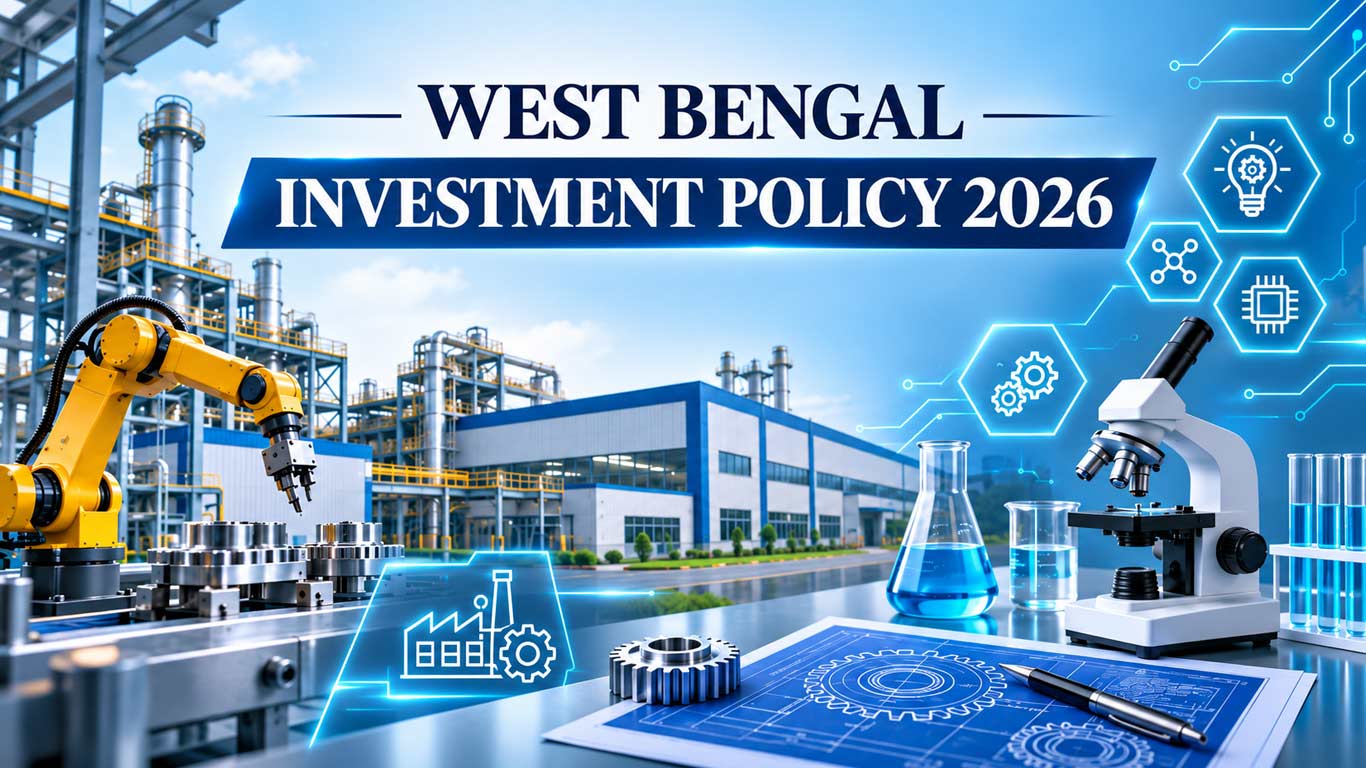
West Bengal Investment Policy 2026 Proposes Rs 5 Crore R&D Support For Industries
Kolkata, Nov 5 (KNN) West Bengal plans to offer higher employment-linked incentives to companies hiring women and transgender people under its proposed Investment Promotion Policy, 2026, alongside support for labour-intensive industries, R&D and infrastructure.
Chief Minister Suvendu Adhikari is scheduled to unveil the policy on Thursday. Under the proposed framework, eligible MSMEs will receive reimbursement of 50 per cent of employer EPF contributions for male employees and 100 per cent for women and transgender employees, subject to an annual cap of Rs 5 crore per unit.
Larger industrial units will be eligible for 50 per cent reimbursement for five years, capped at Rs 10 crore, provided they directly employ at least 200 people in priority areas or 400 in other locations. The policy also proposes grants for working women's hostels in industrial clusters and parks employing over 100 women.
Single-window portal for business approvals
The policy proposes a single-window portal for information, applications, approvals, financial assistance, grievance redressal and investor support throughout a project's lifecycle, reported The Indian Express.
Each stage of the application, approval and payment process would have defined timelines and designated officers, with departments required to justify delays. The state would also facilitate approvals from the Centre and other external authorities.
A State-level Empowered Committee will assess projects seeking strategic or mega project status and approve customised incentives, higher benefit ceilings, locations and special power subsidies. It will also address inter-departmental issues.
Incentives for research and development
The policy proposes covering 50 per cent of the investment in R&D facilities by eligible units, rising to 75 per cent for 100 per cent export-oriented units, subject to a maximum of Rs 5 crore.
Eligible expenses will include laboratories, pilot facilities, testing, prototyping, product development, intellectual property creation and industry-academia collaboration.
Other incentives include state GST-linked assistance, electricity duty concessions, interest subsidies, stamp duty and registration fee relief, technology upgradation and infrastructure support.
Thrust and strategic sectors identified
The policy classifies eligible industries into two categories: thrust sectors and strategic sectors.
Thrust sectors include semiconductors, electronics manufacturing, green hydrogen, waste-to-energy, emerging digital technologies, electric vehicles, batteries, defence, shipbuilding, food processing, textiles, etc.
Strategic sectors include electric vehicles, advanced chemistry cell batteries, green hydrogen, specialty steel, defence manufacturing, gems and jewellery, data centres and petrochemicals.
The category also covers PM MITRA and integrated textile parks spanning at least 20 acres, as well as multi-modal logistics parks.
Industries excluded from government incentives
The policy lists industries excluded from government incentives, including sponge iron plants, traditional brick kilns, asbestos-based manufacturing, prohibited single-use plastics and non-recyclable packaging, charcoal manufacturing and used oil refining for edible purposes.
Other excluded activities include thermal power generation (except eligible captive units and waste-to-energy projects), stone crushing, mineral grinding, coke briquetting and processing, tobacco products, coal washing, sawmills, timber sawing and firecracker manufacturing.
Eligible manufactured sand (M-sand) and ready-mix concrete units meeting prescribed environmental standards will be exempted from these exclusions.
(KNN Bureau)







 Loading...