FISME Supports Periodic Wage Revision But Warns Against Politically-Motivated Sudden Hike
Updated: Apr 20, 2026 04:54:14pm


FISME Supports Periodic Wage Revision But Warns Against Politically-Motivated Sudden Hike
Lucknow, Apr 20 (KNN) Responding to the Uttar Pradesh government’s recent decision to revise minimum wages for industrial workers by up to 21 per cent, industry body Federation of Indian Micro and Small & Medium Enterprises (FISME) has endorsed periodic revision of wages but noted that abrupt hikes particularly driven by political considerations could harm businesses and become counterproductive.
“While we consider periodic increases in minimum wages necessary, we have consistently maintained that such revisions should be based on rational and transparent criteria. Sudden increases, often driven by political considerations, can be counterproductive,” FISME said.
Worker Protest And Wage Revision
The Uttar Pradesh government has revised minimum wages following recent labour unrest in industrial areas of Noida and Greater Noida, which turned violent on 13 April 2026.
On 17 April 2026, the state government notified the revised minimum wages for workers employed in scheduled employment across the state.
The decision came after interventions by authorities and negotiations between employers and workers, facilitated by the Deputy Labour Commissioner in Gautam Buddh Nagar.
As part of the settlement, employers agreed to ensure payment of at least minimum wages and overtime at double the prescribed rate, along with other assurances.
High-Powered Committee Formed
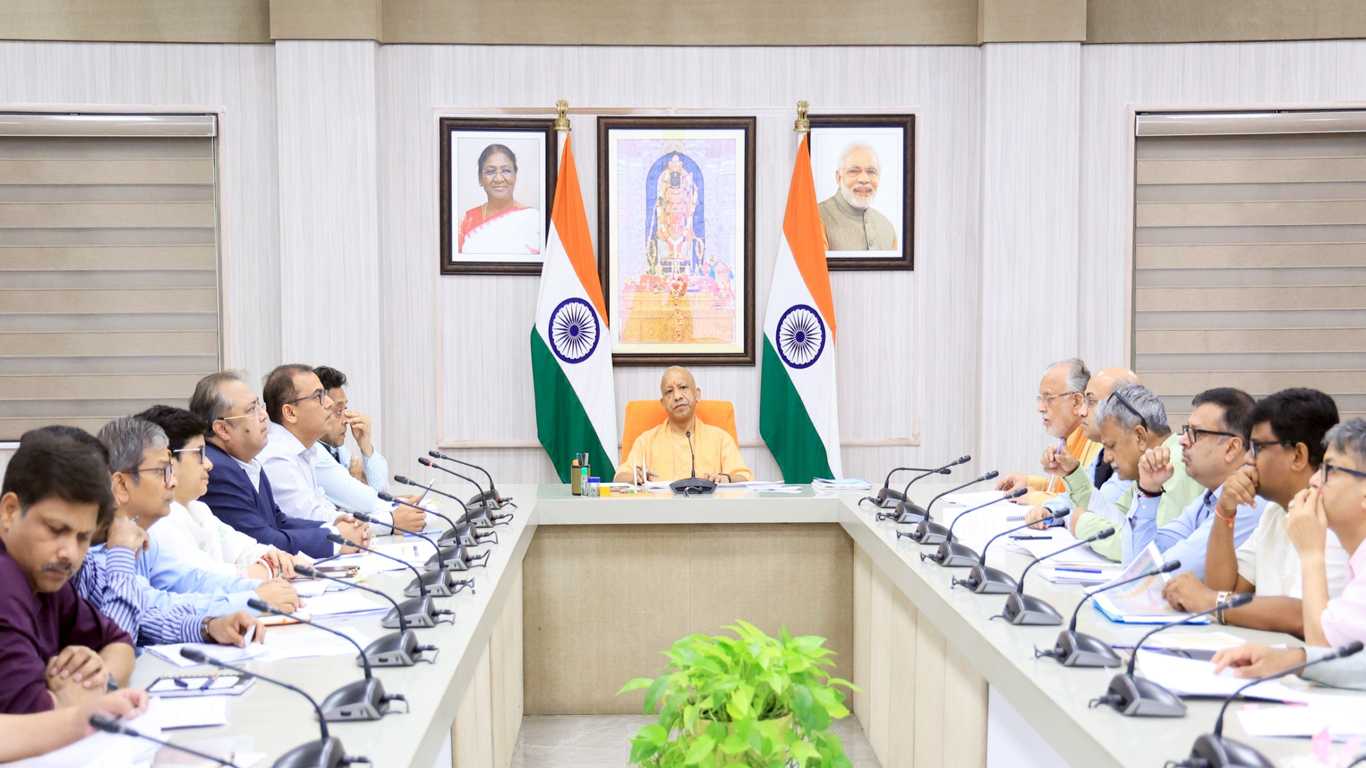
A high-powered committee, chaired by the Industrial Development Commissioner, was constituted to address the issue. The panel included senior officials from the micro, small and medium enterprise (MSME) and Labour departments, along with representatives of workers and employers.
The committee visited industrial clusters, assessed stakeholder concerns, and finalised a revised wage structure, balancing worker welfare with industry constraints.
FISME has welcomed the government's decision of setting up a committee to fix minimum wages in the state with the participation of MSME representatives.
Consideration of Economic Pressures
While recommending the revision, the committee noted the financial challenges faced by workers and the delay of over two years in revising wages, which were due from April 2024.
At the same time, it considered concerns raised by employers regarding global geopolitical tensions and their impact on business conditions, particularly for the MSME sector.
Three-Tier Wage Structure Introduced
Taking into account regional diversity and industrial conditions, the government has introduced a three-category wage structure.
Category I covers Gautam Buddh Nagar and Ghaziabad, where wages are set at Rs 13,690 for unskilled, Rs 15,059 for semi-skilled, and Rs 16,868 for skilled workers.
Category II includes districts with municipal corporations (excluding Category I), with wages of Rs 13,006 for unskilled, Rs 14,306 for semi-skilled, and Rs 16,025 for skilled workers.
Category III covers the remaining districts, where wages are Rs 12,356 for unskilled, Rs 13,590 for semi-skilled, and Rs 15,224 for skilled workers.
The revised wages, including Variable Dearness Allowance (VDA), were notified on April 17, 2026, and are effective from April 1, 2026.
Legal Framework
The notification has been issued under relevant provisions of the U.P. General Clauses Act, 1904, and the U.P. Industrial Disputes Act, 1947.
The revision covers 74 scheduled employments under the existing Minimum Wages framework.
Transition to Code on Wages
The government also noted that the Code on Wages, 2019 has been enforced, with rules expected to be finalised by May 2026 after public consultation. Once implemented, the Code will replace the concept of scheduled employments, making minimum wage provisions applicable across all establishments.
Additionally, the Centre will introduce a floor wage, below which states will not be permitted to set minimum wages.
(KNN Bureau)







 Loading...