Experts Urge India To Improve FTA Utilisation To Boost Export Growth
Updated: May 25, 2026 01:36:00pm

Experts Urge India To Improve FTA Utilisation To Boost Export Growth
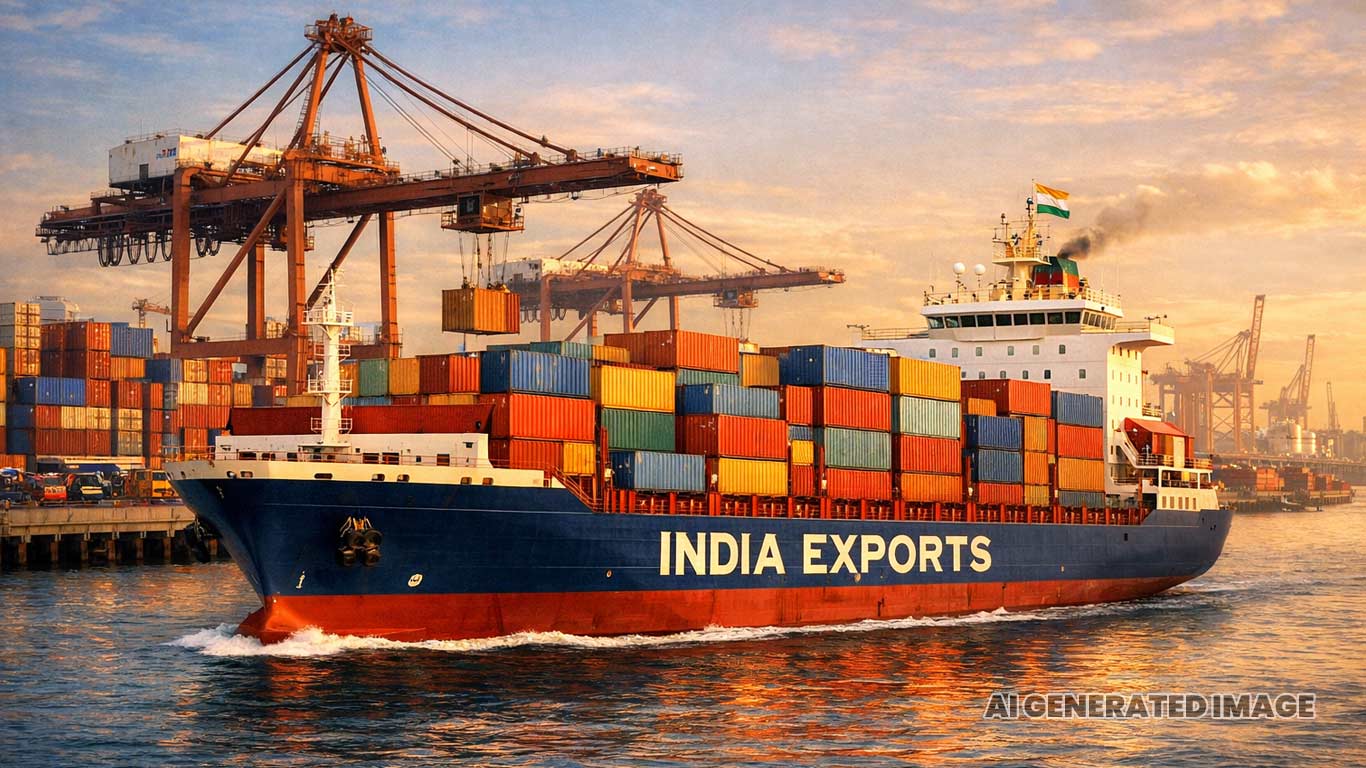
New Delhi, May 25 (KNN) With India rapidly expanding its network of free trade agreements (FTAs), trade experts have said the country's next priority should be ensuring effective utilisation of these pacts, arguing that the gap between negotiated market access and actual usage remains India's biggest trade challenge.
According to industry experts, India has secured significant tariff concessions and market access through agreements with countries and blocs including Singapore, Japan, South Korea, the UAE, Australia, ASEAN and EFTA, while recently concluding trade pacts with Oman, New Zealand, the European Union and the United Kingdom.
However, they noted that the real challenge now lies in translating these negotiated benefits into tangible export gains, reported PTI.
Low Utilisation Rates Limit Benefits of Trade Agreements
Gulzar Didwania, Partner, Deloitte India, India’s FTA utilisation rate has historically remained around 25 percent, far below the 70–80 percent levels seen in many developed economies, making higher utilisation one of the most impactful trade policy opportunities available to the country.
He argued that the policy focus should shift from merely signing FTAs to ensuring their effective utilisation. Didwania noted that India has already secured significant market-access gains, including duty-free access for 99 percent of exports to the UK under the Comprehensive Economic and Trade Agreement and preferential access for over 99 percent of India’s exports by trade value under the India-EU FTA.
He added that FTAs can help cushion geopolitical disruptions by opening alternative export markets and deepening India’s integration with global value chains.
According to Didwania, India’s long-term trade strategy should focus on diversifying export destinations and products while strengthening domestic manufacturing competitiveness.
MSME Awareness, Compliance Support Key to Higher FTA Usage
Rudra Kumar Pandey, Partner, Shardul Amarchand Mangaldas & Co, said improving FTA utilisation should be India’s foremost trade priority, noting that while utilisation under the India-Australia Economic Cooperation and Trade Agreement has reached around 84 percent, awareness and adoption remain limited among MSMEs under several other agreements.
He observed that the gap between negotiated market access and actual utilisation continues to be a major challenge, underscoring the need for greater awareness, documentation support and compliance assistance to help exporters fully leverage preferential tariff benefits.
Pandey also called for targeted support to sectors such as textiles, leather, engineering goods, pharmaceuticals and marine products, which have secured substantial tariff concessions under various FTAs.
He stressed the importance of strengthening domestic certification systems, securing mutual recognition arrangements for testing and conformity assessment, and developing robust carbon accounting frameworks to meet evolving regulatory requirements in global markets.
He added that firms capable of meeting higher standards of quality, traceability and sustainability will be best placed to benefit from India’s expanding FTA network.
Building Domestic Competitiveness Critical for Export Growth
Experts said technical assistance and affordable financing support will be essential to help MSMEs comply with increasingly stringent international trade requirements.
They also noted a gradual shift in India’s export profile towards higher-value manufacturing, with electronics and machinery accounting for a growing share of exports and smartphones emerging as the country’s top export product.
At the same time, they warned that this transition heightens dependence on imported components and intermediate goods from China and East Asia.
Key sectors including electronics, pharmaceuticals, chemicals and non-ferrous metals continue to rely heavily on imported inputs, underscoring the importance of supply-chain resilience.
Pandey said India should view its FTA network as an external market-access framework while building stronger domestic manufacturing capabilities to fully leverage these opportunities.
He advocated lower tariffs on intermediate goods and capital equipment, supported by investments in standards infrastructure and technology upgradation.
According to the experts, India’s trade strategy should now focus on improving utilisation of existing FTAs, strengthening compliance capabilities and enhancing domestic manufacturing competitiveness, particularly among MSMEs, to maximise export growth.
(KNN Bureau)





 Loading...