FM Sitharaman Says Govt Tax Reforms Aim To Reduce Litigation At Source, Seeks Practical Industry Inputs
Updated: Sep 16, 2026 03:02:11pm

FM Sitharaman Says Govt Tax Reforms Aim To Reduce Litigation At Source, Seeks Practical Industry Inputs
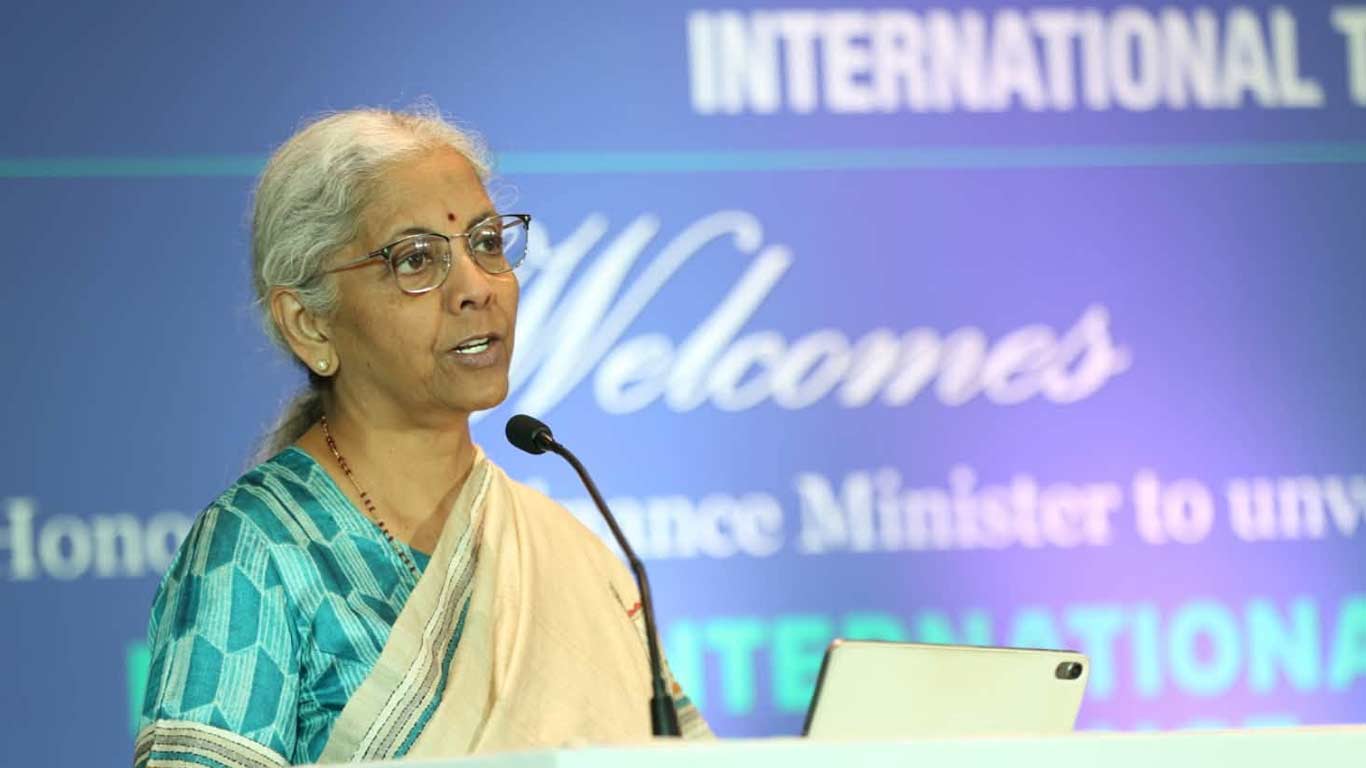
New Delhi, Sep 16 (KNN) Union Finance Minister Nirmala Sitharaman said the Centre's structural tax reforms are aimed at reducing tax litigation at its source rather than merely clearing existing dispute backlogs, and urged industry and policy researchers to submit workable, quantified alternatives for further reforms.
Speaking at the 8th International Tax Conference of the International Tax Research and Analysis Foundation (ITRAF) in Bengaluru, Sitharaman noted, “The philosophy is simple: make voluntary compliance easier and reserve enforcement capacity for cases that genuinely require it. We have aimed at reducing tax litigation rather than merely managing it,” ANI reported.
Tax Reforms Focused on Dispute Reduction
“Vivad se Vishwas schemes provided taxpayers and the government an opportunity to close old disputes rather than litigate them indefinitely. At the same time in 2024, the monetary threshold for departmental appeals was raised to Rs 60 lakh before the appellate tribunal, Rs 2 crore before the high courts, and Rs 5 crore before the Supreme Court,” the Finance Minister added.
She cited the reduction in corporate tax to 22 per cent in 2019, rationalisation of individual income-tax rates in 2025, under which individuals with income up to Rs 12 lakh pay no income tax, and replacement of the Income Tax Act, 1961, with a shorter, plain-language code.
The consolidation of GST into essentially two primary rates in 2025 was also cited as a measure that reduced classification-related disputes.
FM Seeks Quantified Industry Submissions
Sitharaman highlighted that pre-Budget representations often focus on demands for lower tax rates, exemptions and concessions. She urged industry bodies to instead present impact-assessed proposals that consider their implications for revenue, the tax base, administration and other taxpayers.
“So, I wish to hear a submission that says, ‘here is a provision that no longer serves the tax system and ought to be removed even though we presently benefit from it’,” she said.
The Finance Minister noted, “If a provision is said to impose an excessive compliance burden, tell us how many taxpayers it affects, how much time or cost it imposes, and what an alternative would mean for revenue. If a change is proposed, show us not only who gains from it but also its consequences for the tax base itself, administration and other taxpayers,” as quoted by ANI.
Professionals should also point out potential unintended consequences, she added.
Push for Independent Tax Research
On international taxation, Sitharaman highlighted treaty renegotiations with Mauritius, Singapore and Cyprus to restore India's source-based capital gains taxation rights, along with the implementation of GAAR, the Multilateral Instrument and expansion of the Advance Pricing Agreement programme and safe-harbour provisions.
She urged ITRAF to move beyond quiet commentary towards visible, independent research, citing institutions such as the UK's Institute for Fiscal Studies and the Netherlands' IBFD as examples.
She said rigorously researched policy choices could help strengthen India's economic framework and support the country's long-term development goals under Viksit Bharat 2047.
(KNN Bureau)







 Loading...