Increase R&D Investment To 2% Of GDP; MSMEs, Startups Key To India’s Innovation Push: Niti Aayog Report
Updated: May 19, 2026 12:47:55pm

Increase R&D Investment To 2% Of GDP; MSMEs, Startups Key To India’s Innovation Push: Niti Aayog Report
New Delhi, May 19 (KNN) India should raise its investment in research and development (R&D) from the current 0.64 percent to at least 2 percent of GDP over the next four to five years to strengthen the country’s innovation ecosystem, according to a new report released by NITI Aayog.
The report, titled Ease of Doing Research & Development in India- Removing Obstacles, Promoting Enablers, stated that higher public and private investment is essential for building a globally competitive R&D ecosystem and accelerating technology-led economic growth.
GST Relief And Fiscal Incentives Suggested
The report recommended restoring a 5 percent GST slab for R&D procurement and introducing time-bound fiscal incentives to boost private sector participation in research.
It also proposed a separate reporting head for R&D spending under the Companies Act, 2013 to improve transparency and encourage higher investment.
Call For Greater Private And CSR Participation
To diversify funding, the report suggested stronger CSR provisions and enhanced tax deductions of at least 125 percent for R&D donations. It noted that India’s research ecosystem remains heavily dependent on government funding, with private and philanthropic participation still limited despite rising allocations.
The report also highlighted procedural bottlenecks such as repetitive applications, delays in approvals and fund disbursal, rigid compliance norms and cumbersome procurement systems.
It added that low researcher density, delayed fellowships, rigid hiring systems and vacant institutional positions continue to weaken India’s scientific capacity.
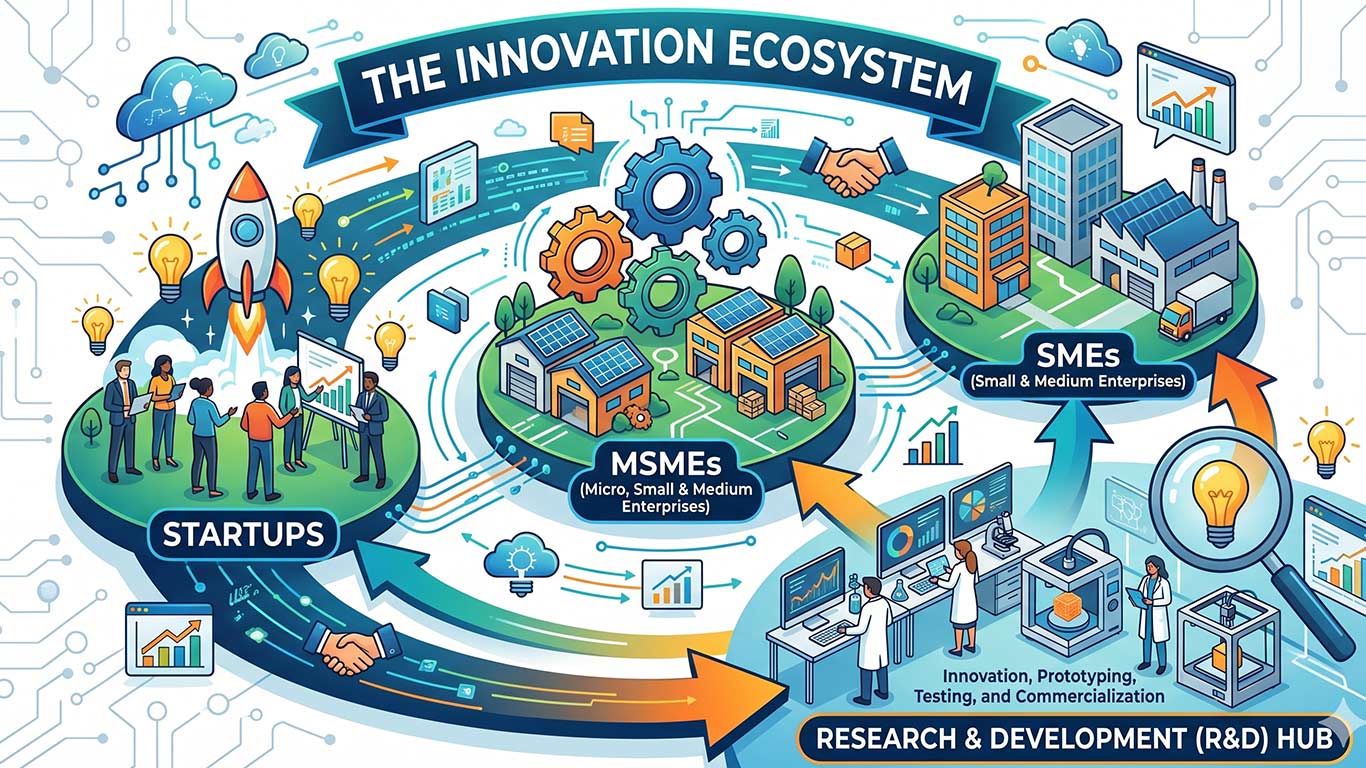
MSMEs And Startups Seen As Key Innovation Drivers
On technology development and commercialisation, the report identified weak industry-academia linkages, fragmented MSME support systems, limited co-development opportunities and a weak innovation culture among small businesses as major challenges.
It noted that startups and MSMEs are critical for converting research into market-ready products and reducing import dependence, but continue to face gaps in incubation support, technical mentoring and funding access.
Gaps Highlighted
The report also highlighted the lack of robust domestic certification and validation systems, forcing startups and MSMEs to depend on foreign agencies, increasing costs and delaying market entry.
Referring to the newly launched Research Development and Innovation Fund with a proposed corpus of Rs 1 lakh crore, it said the initiative could significantly support startups and MSMEs, though India still needs a standardised Technology Readiness Level assessment framework and dedicated nodal institutions.
Recommendations
Among its recommendations, the report proposed State-level RDI clusters bringing together universities, R&D institutions, MSMEs, PSUs and industry under a Centre-State partnership model.
It also called for stronger domestic certification systems and the creation of a Centre for Technology Indigenization to identify priority technologies and coordinate with MSMEs to boost indigenous capabilities.
(KNN Bureau)









 Loading...


