Rs 30 Lakh Crore Stuck In GST Credits, MSMEs Face Liquidity Crunch: Empower India
Updated: May 13, 2026 04:24:44pm

Rs 30 Lakh Crore Stuck In GST Credits, MSMEs Face Liquidity Crunch: Empower India
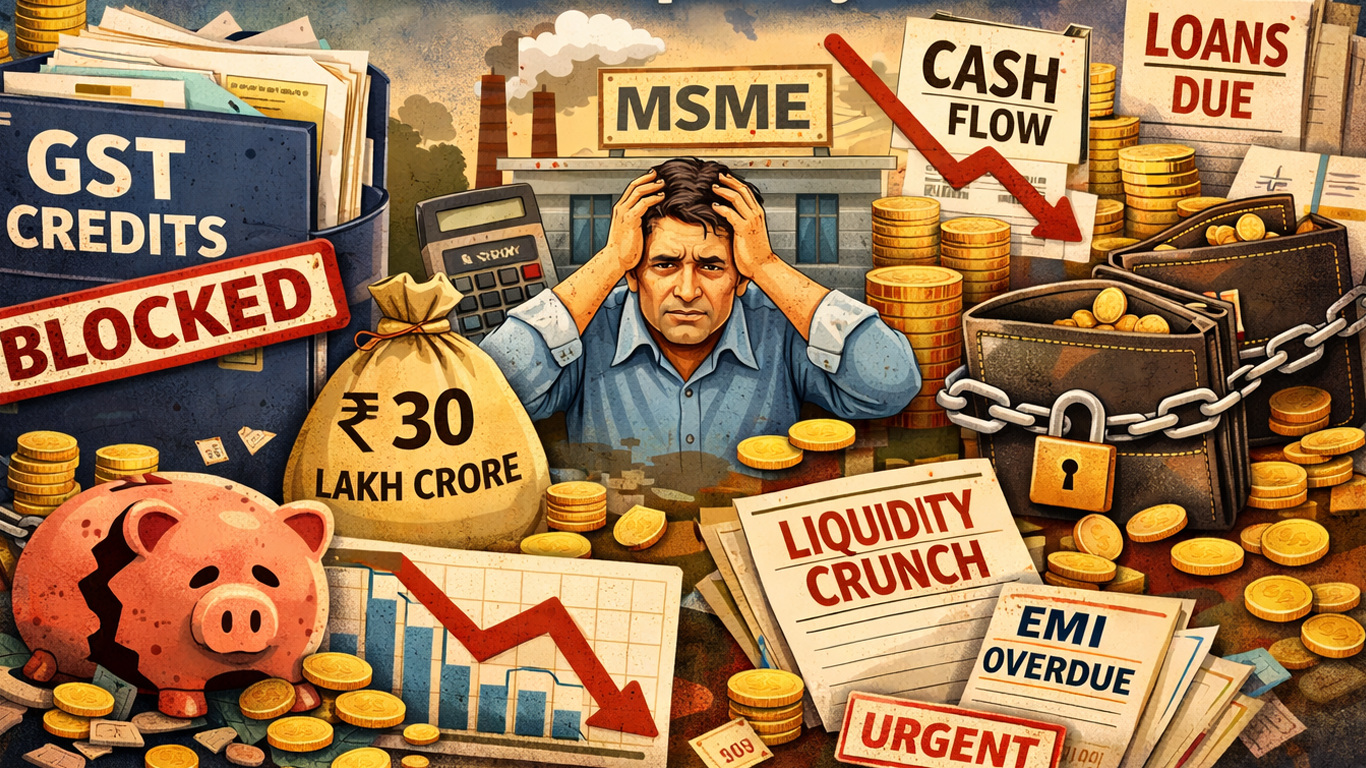
New Delhi, May 13 (KNN) A structural flaw in the Goods and Services Tax (GST) framework is locking up nearly Rs 30 lakh crore in working capital and pushing millions of small businesses into a deepening liquidity crisis, according to public policy think tank Empower India.
The organisation said the problem stems from the Inverted Duty Structure (IDS), a situation where GST on inputs is higher than the tax levied on finished goods, resulting in large amounts of unrefunded Input Tax Credit (ITC) being trapped for months.
Inverted Duty Structure Trapping MSME Working Capital
The issue has become more severe at a time when businesses are already grappling with rising input costs and supply chain disruptions triggered by the ongoing West Asia crisis.
According to Empower India, manufacturers paying 18 percent GST on raw materials but selling finished goods taxed at 5 percent face a persistent tax mismatch dependent on delayed refunds.
It said blocked input tax credits are worsening liquidity pressures for MSMEs, which contribute nearly 30 percent to GDP and employ over 110 million people, amid an estimated Rs 30 lakh crore credit gap.
September GST Changes Deepened Sectoral Stress
The think tank added that GST rate rationalisation in September 2025 further deepened inverted duty structures in sectors such as food processing, FMCG and pharmaceuticals, leaving billions locked in unusable tax credits and raising costs for small businesses.
K. Giri, Director General, Empower India, said India’s small businesses are being ‘slowly asphyxiated by a tax structure that punishes production,’ warning that trapped ITC has become an existential threat at a time when global uncertainties are mounting.
He said Prime Minister Narendra Modi’s recent call for economic prudence should be matched by policy measures that release capital back into the hands of job creators and manufacturers.
Food Processing, E-Commerce, Pharma Among Worst Hit
The burden is particularly acute in food processing, where finished goods are taxed at 5 percent while packaging, cold storage and logistics services attract 18 percent GST.
Small sellers operating on e-commerce platforms are also facing pressure, as they pay 18 percent GST on logistics, packaging and platform fees while selling products such as garments, food items and handicrafts taxed at lower rates.
The renewable energy sector has also been affected, with solar and wind equipment attracting lower output tax rates while key inputs such as steel, glass and engineering services continue to face higher tax slabs.
In the pharmaceutical sector, Pharmexcil has reportedly flagged concerns over reduced manufacturing capacity and supply disruptions linked to post-GST rate inversions.
Empower India Seeks Refund Reforms And Rate Rationalisation
Empower India pointed out that under Section 54(3) of the CGST Act, ITC refunds are currently allowed only for input goods and not for input services or capital goods, a major concern for service-heavy sectors such as e-commerce and food processing.
To address the issue, the organisation has called for expanding input tax credit refunds to cover input services and capital goods, revising net ITC calculations, rationalising GST rates in heavily affected sectors, accelerating automated refunds for MSMEs and creating a mechanism to prevent future duty distortions.
It warned that prolonged delays could trigger factory closures, job losses and broader economic setbacks.
(KNN Bureau)






 Loading...