India-Egypt Trade Talks to Begin Within 90 Days, Industry Seeks Better Market Access for MSMEs
Updated: Nov 20, 2026 02:20:45pm

India-Egypt Trade Talks to Begin Within 90 Days, Industry Seeks Better Market Access for MSMEs
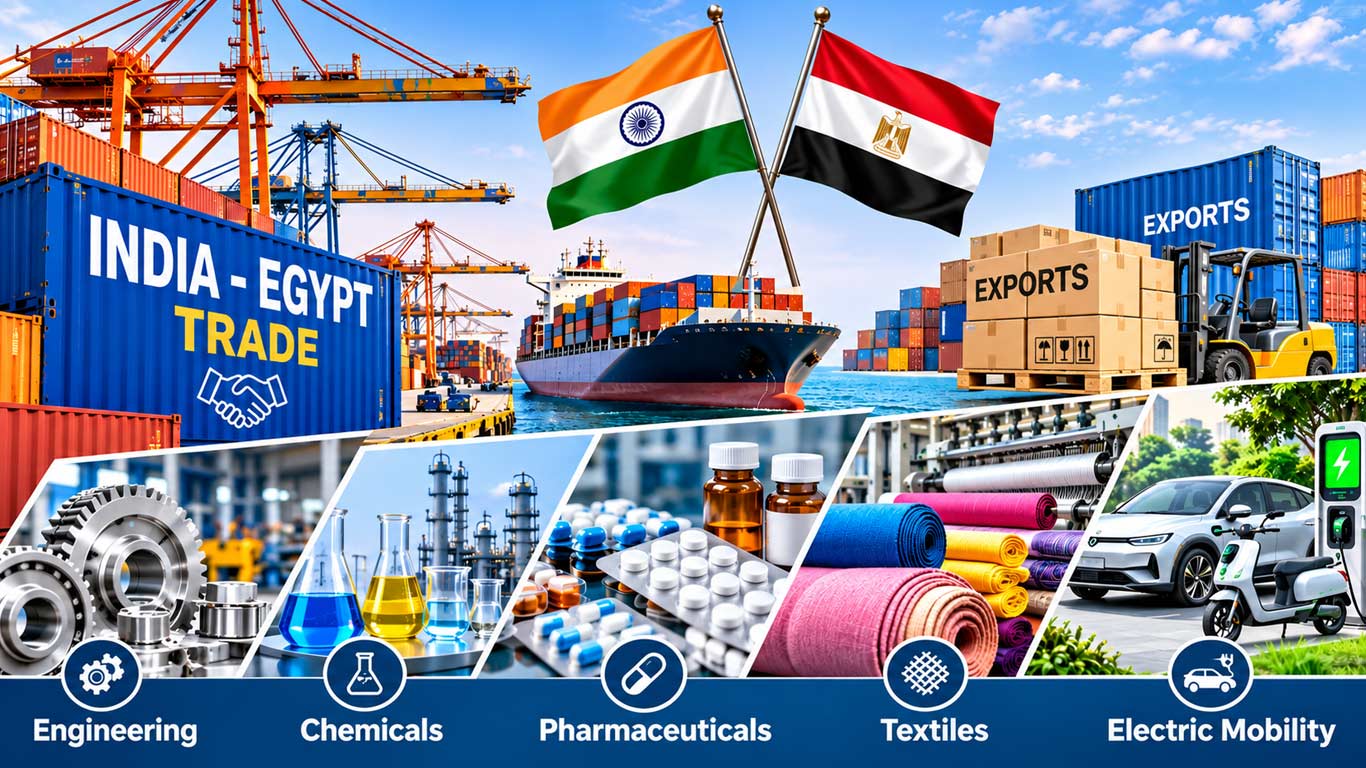
New Delhi, Nov 20 (KNN) India's proposed trade agreement with Egypt could create export opportunities across sectors such as engineering, chemicals, pharmaceuticals, textiles and electric mobility.
However, industry representatives say negotiations must address tariff and non-tariff barriers, payment delays and regulatory hurdles to improve market access, as reported by The Economic Times .
The two countries are expected to begin negotiations within 90 days following Commerce and Industry Minister Piyush Goyal's visit to Egypt. A joint working group will examine the framework for a possible Preferential Trade Agreement (PTA), Free Trade Agreement (FTA) or Comprehensive Economic Partnership Agreement (CEPA).
Bilateral merchandise trade increased 35 percent to around USD6.5 billion in FY26, while both countries have set a target of USD 12 billion. India's exports to Egypt rose 13.6 percent to USD 3.9 billion during the year and grew 67.4 percent to USD 2.4 billion in the first five months of FY27.
Engineering and Chemicals Among Key Opportunities
Engineering exports to Egypt increased from USD 761.3 million in FY24 to USD 990 million in FY26. They rose more than 50 percent to USD 722 million in the first half of FY27, according to the Engineering Export Promotion Council (EEPC) India.
EEPC India Chairman Pankaj Chadha said the agreement could help exporters diversify markets and expand their product portfolios. However, he highlighted foreign exchange shortages and delayed payment realisation as major challenges. He called for rupee-based trade settlement to be considered during negotiations.
Chemical exporters see opportunities in agrochemicals, speciality chemicals, dyes, pigments and construction chemicals. However, higher import duties, product approvals and advance cargo information requirements affect their competitiveness against suppliers from the European Union, Turkey and Arab countries.
Pharmaceuticals and Textiles Seek Better Market Access
India's pharmaceutical exports to Egypt grew 23.47 percent to USD 132.89 million during April-October FY27. Pharmexcil Chairman Namit Joshi called for tariff concessions on formulations, vaccines and biological products, along with recognition of Indian Good Manufacturing Practices certifications and simpler product registration.
In textiles, industry representatives see greater opportunities in cotton yarn and fabrics than finished garments, given Egypt's established garment manufacturing sector. They also suggested exploring manufacturing partnerships using Egyptian cotton and India's value-addition capabilities.
New Opportunities in EVs and Digital Infrastructure
The proposed agreement could also support cooperation in electric vehicle charging equipment, renewable energy, cloud computing and artificial intelligence infrastructure.
Industry representatives said lower tariffs on EV charging components could reduce deployment costs in Egypt. Opportunities may also emerge for Indian technology companies through Egypt's proposed sovereign AI data centre project, which is planned to begin with 20 MW capacity and scale up to 200 MW.
MSMEs Seek Simpler Regulations and Lower Costs
Industry representatives stressed that preferential tariffs alone may not be enough to improve India's competitiveness against China. They called for simpler customs procedures, faster product approvals, mutual recognition of standards, better payment mechanisms and lower logistics costs.
These issues are particularly important for MSMEs, which often face greater difficulties in managing certification costs, delayed payments and expensive freight.
The negotiations will therefore be important in determining whether the proposed agreement can translate growing bilateral trade into sustained export opportunities for Indian manufacturers.
(KNN Bureau)






 Loading...