Credit squeeze looms before MSME sector
Updated: Jul 27, 2015 12:38:51pm

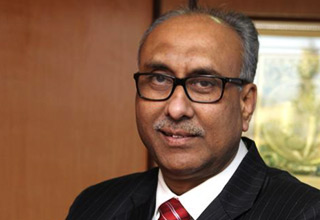
New Delhi, July 27 (KNN) In the event of banks being forced to conserve capital or to reduce their RWAs, the MSME borrowers are likely be the first to be jettisoned, said RBI Deputy Governor S S Mundra while deliberating upon the consequences of new international supervisory framework.
“This may be catastrophic for the MSME sector as they have virtually no access to the alternate formal sources of finance,” he said while addressing at the Banque de France – Reserve Bank of India (RBI) Joint Conference at Paris on July 20.
It is obvious that the new regulatory and supervisory framework that we are putting in place now have some unintended consequences that are likely to entail additional economic costs, he said.
An underlying tension around the trade-off between financial stability and economic growth persists despite impact assessment studies showing results to the contrary, Mundra added.
While deliberating on the impact of reforms on Finance to MSMEs, Mundra said, “The MSME sector plays a very important role in emerging markets and especially in India. The MSMEs contribute nearly 8 percent of the country’s GDP, 45 percent of the manufacturing output and 40 percent of the exports. Currently, there are approximately 47 mn enterprises in the MSME Sector providing employment opportunities to 106 mn people across the country. These small enterprises rely very heavily on the bank finance for their credit needs.”
“As the SMEs neither have sufficiently long credit history nor any external credit rating, they typically languish at the highest level of risk spectrum requiring banks to hold more capital against these exposures.
In the event of banks being forced to conserve capital or to reduce their RWAs, the MSME borrowers are likely be the first to be jettisoned. This may be catastrophic for the MSME sector as they have virtually no access to the alternate formal sources of finance,” he said.
He emphasised that the international standards setting bodies need to recognize that the political mandates given to respective regulatory and supervisory bodies are sometimes not in alignment with the internationally agreed reform measures.
“A case in point is the European Commission’s statement on the Basel Regulatory Consistency Assessment of Basel III implementation. The Commission stated that the diversity of banks in terms of size, complexity and legal form necessitates a degree of additional flexibility for supervisors to reflect local specificities. This was in response to findings of the BCBS as regards use of concessionary risk weights to the small and medium-sized enterprise (SME) exposures for customers located in both the EU and abroad,” he said.
“Hence, as I have argued earlier, since each jurisdiction is at different stage of economic and political development, the supervisory authorities must be accorded a greater degree of freedom to fine-tune the regulations in keeping with the jurisdictional needs,” he said. (KNN Bureau)
“This may be catastrophic for the MSME sector as they have virtually no access to the alternate formal sources of finance,” he said while addressing at the Banque de France – Reserve Bank of India (RBI) Joint Conference at Paris on July 20.
It is obvious that the new regulatory and supervisory framework that we are putting in place now have some unintended consequences that are likely to entail additional economic costs, he said.
An underlying tension around the trade-off between financial stability and economic growth persists despite impact assessment studies showing results to the contrary, Mundra added.
While deliberating on the impact of reforms on Finance to MSMEs, Mundra said, “The MSME sector plays a very important role in emerging markets and especially in India. The MSMEs contribute nearly 8 percent of the country’s GDP, 45 percent of the manufacturing output and 40 percent of the exports. Currently, there are approximately 47 mn enterprises in the MSME Sector providing employment opportunities to 106 mn people across the country. These small enterprises rely very heavily on the bank finance for their credit needs.”
“As the SMEs neither have sufficiently long credit history nor any external credit rating, they typically languish at the highest level of risk spectrum requiring banks to hold more capital against these exposures.
In the event of banks being forced to conserve capital or to reduce their RWAs, the MSME borrowers are likely be the first to be jettisoned. This may be catastrophic for the MSME sector as they have virtually no access to the alternate formal sources of finance,” he said.
He emphasised that the international standards setting bodies need to recognize that the political mandates given to respective regulatory and supervisory bodies are sometimes not in alignment with the internationally agreed reform measures.
“A case in point is the European Commission’s statement on the Basel Regulatory Consistency Assessment of Basel III implementation. The Commission stated that the diversity of banks in terms of size, complexity and legal form necessitates a degree of additional flexibility for supervisors to reflect local specificities. This was in response to findings of the BCBS as regards use of concessionary risk weights to the small and medium-sized enterprise (SME) exposures for customers located in both the EU and abroad,” he said.
“Hence, as I have argued earlier, since each jurisdiction is at different stage of economic and political development, the supervisory authorities must be accorded a greater degree of freedom to fine-tune the regulations in keeping with the jurisdictional needs,” he said. (KNN Bureau)






 Loading...