India, Germany Hold Bilateral Talks to Deepen Telecom and Digital Cooperation
Updated: Feb 19, 2026 04:02:46pm


India, Germany Hold Bilateral Talks to Deepen Telecom and Digital Cooperation
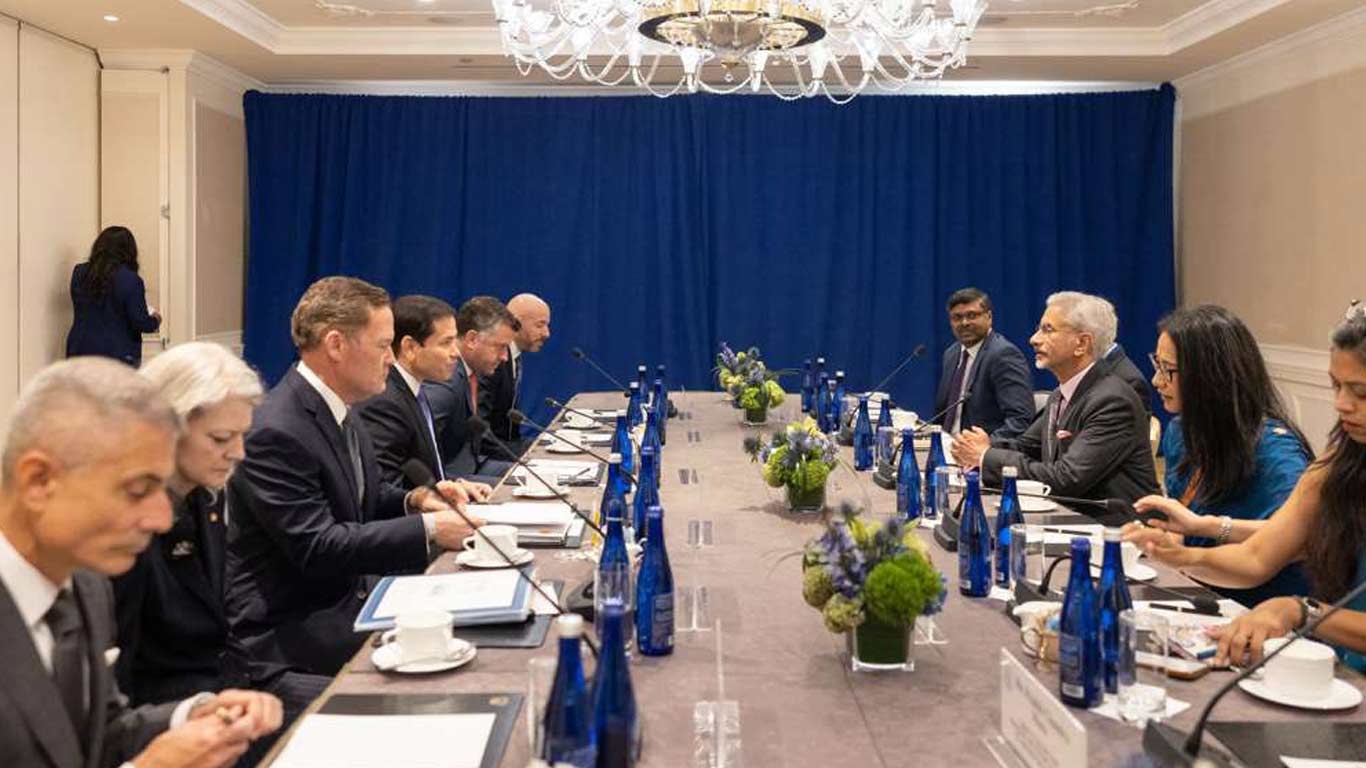
New Delhi, Feb 19 (KNN) Union Minister for Communications Jyotiraditya M. Scindia held a meeting with Germany’s Federal Minister for Digital Transformation and Government Modernization Karsten Wildberger to advance cooperation in telecommunications and digital transformation under the Indo-German Strategic Partnership.
The discussions took place in the backdrop of the Joint Declaration of Intent (JDI) signed during the India–Germany Summit on January 10, 2026, which provides a forward-looking and non-binding framework for structured collaboration in telecom and digital governance.
Both sides described the JDI as a significant milestone reflecting shared values of openness, trust, innovation and resilience in digital ecosystems. The framework envisages policy dialogue, exchange of best practices, scientific and technical cooperation, and formulation of joint work plans.
Focus on Structured Implementation
Scindia said the partnership must move from intent to structured, outcome-based action. Citing India’s digital strides, he noted over 1.23 billion telecom subscribers, nearly one billion internet users and 5G coverage across about 99.9 percent of districts, supported by data tariffs averaging USD 0.10 per GB.
He also highlighted India’s Digital Public Infrastructure, including UPI, which handles around 250 billion transactions annually and has been adopted by several partner nations.
Wildberger expressed appreciation for India’s technological advancements and conveyed Germany’s interest in structured collaboration in advanced telecom systems, secure networks and digital governance.
He shared Germany’s progress in quantum encryption and secure information transport, including a demonstration of quantum communication over a 35 km link for 11 consecutive days. He also stressed the importance of early engagement on 6G technologies.
Roadmap Under Joint Declaration
The two ministers discussed convening the first high-level meeting under the JDI framework to finalise an initial two-year work plan. The proposed roadmap would identify priority areas, define timelines, assign stakeholders and establish periodic review mechanisms to ensure effective implementation.
Both countries reaffirmed cooperation across emerging domains such as 5G and 5G-Advanced, early 6G standardisation efforts, network modernisation, trusted telecom architectures and supply chain resilience. Areas such as secure and sovereign 6G networks, AI at the edge, industry-grade network slicing and scalable deployment models were also highlighted.
They also emphasised coordinated engagement in international platforms including the International Telecommunication Union (ITU) to promote interoperable and secure global telecom standards.
Strengthening Research and Innovation Ties
Institutional collaboration between research and innovation bodies was identified as a key pillar of the partnership. Ongoing cooperation between the Centre for Development of Telematics (C-DOT) and Germany’s Fraunhofer Heinrich-Hertz Institute (HHI) in advanced telecom R&D, quantum communications, artificial intelligence and next-generation networks was acknowledged as a model for future engagement.
Both sides recognised 6G, Open RAN, quantum communication, AI in telecom and cybersecurity as priority areas for collaboration through industry–academia partnerships, best practice exchange and capacity building.
The Indian side sought Germany’s support for India’s candidature of M. Revathi for Director of the Radiocommunication Bureau at the ITU, for India’s re-election to the ITU Council for 2027–2030, and for India’s proposal to host the ITU Plenipotentiary Conference in 2030.
(KNN Bureau)









 Loading...


