India–UK CETA to Boost Coimbatore’s Exports Across Textile, Jewellery, and MSMEs
Updated: Jul 26, 2025 03:00:25pm

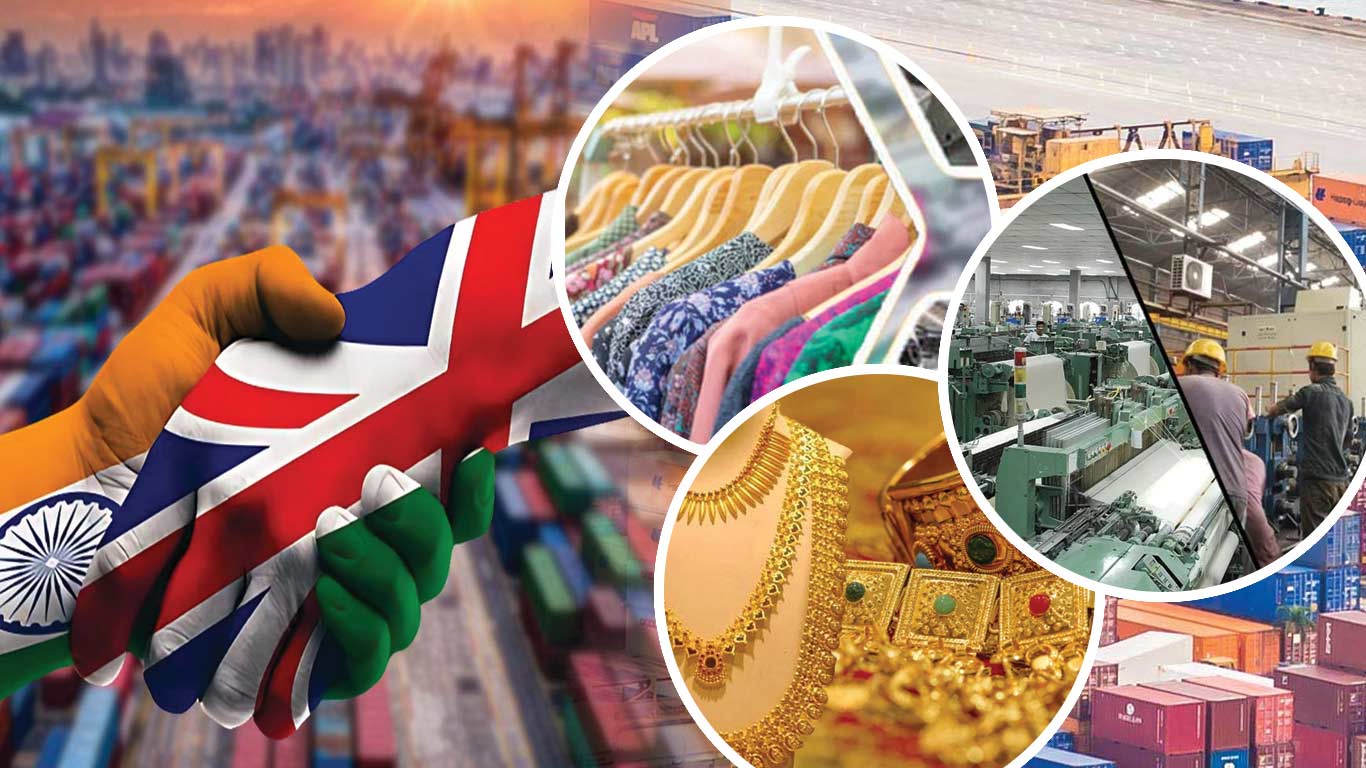
India–UK CETA to Boost Coimbatore’s Exports Across Textile, Jewellery, and MSMEs
New Delhi, Jul 26 (KNN) The recently signed India–UK Comprehensive Economic and Trade Agreement (CETA) is expected to significantly benefit Coimbatore’s export-driven industries.
Local industry leaders believe the pact will open up greater opportunities for textile, jewellery, and MSME sectors by eliminating import duties and simplifying trade procedures.
Coimbatore and nearby Tiruppur are major hubs for textile manufacturing and exports. Under the new agreement, duties on garments and home textiles—previously ranging from 10% to 12%—have been eliminated.
This brings Indian exporters at par with competitors like Bangladesh and Pakistan, who already enjoyed duty-free access to the UK.
Textile industry associations in Tamil Nadu, such as the Southern India Mills’ Association (SIMA), anticipate a rise in export orders for cotton knitwear, towels, and home furnishings.
The region’s jewellery sector is also poised for growth. With around 3,000 manufacturing units and more than 40,000 skilled goldsmiths, Coimbatore is a key jewellery production centre.
The UK’s earlier import duties of 2.5% to 4% on Indian jewellery have now been reduced to zero, which is expected to boost gold and diamond jewellery exports.
In addition to textiles and jewellery, CETA is set to benefit a wide range of industries in Coimbatore’s MSME sector. These include leather, engineering goods, electric machinery, auto components, and food processing units.
By covering nearly 99% of India’s exports to the UK, the agreement offers tariff elimination, simplified customs processes, and access to UK government procurement tenders—available for the first time to Indian firms.
Overall, the trade pact is being seen as a game-changer for Coimbatore’s economy. Experts estimate that bilateral trade between India and the UK could double by 2030, and local exporters are already preparing to scale up production to meet the expected surge in demand.
(KNN Bureau)










 Loading...