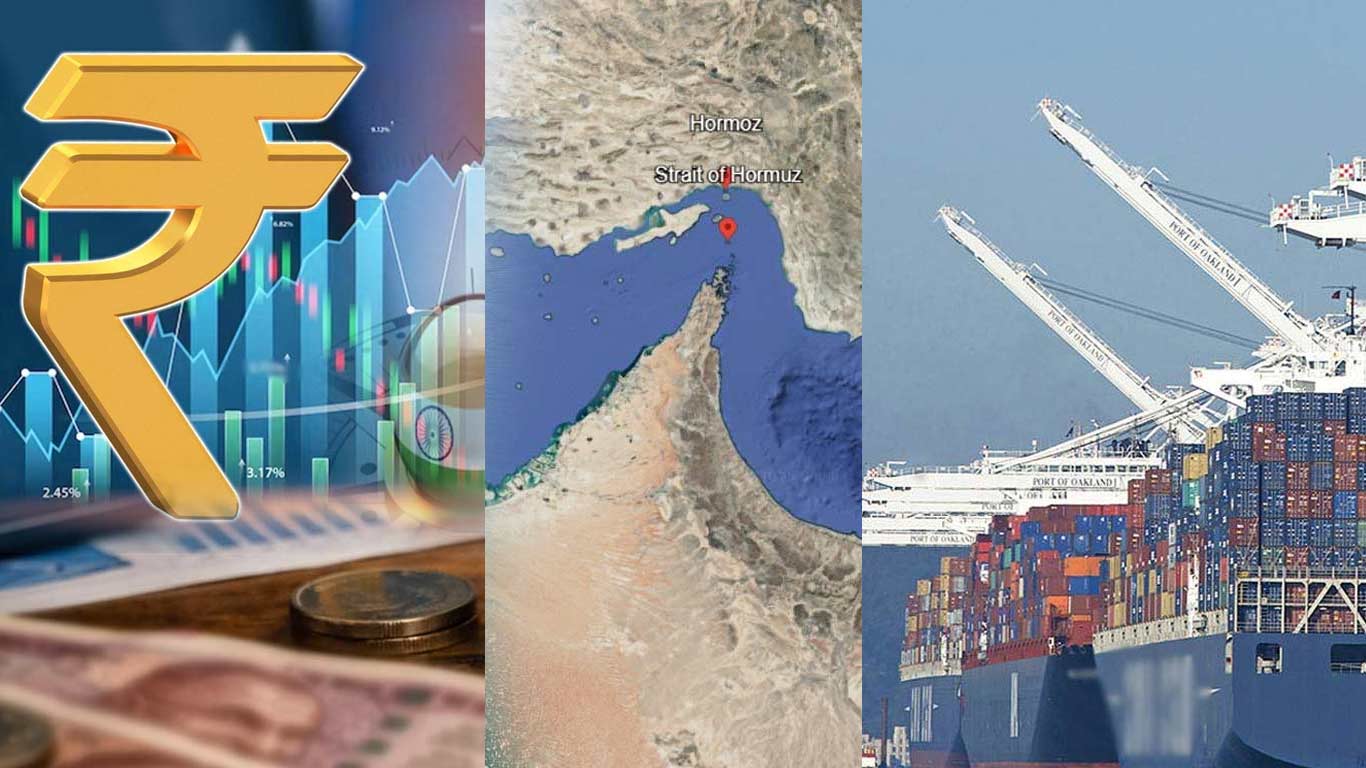
Strait of Hormuz Reopening Seen To Stabilise Rupee And Cut Import Costs For India
Updated: Jun 16, 2026 04:11:38pm

Strait of Hormuz Reopening Seen To Stabilise Rupee And Cut Import Costs For India
New Delhi, Jun 16 (KNN) The announcement of a peace deal between the United States and Iran to end their 107-day conflict and reopen the Strait of Hormuz has been welcomed by Indian exporters and economists, who expect it to ease pressure on India's energy import bill, stabilise the rupee and revive trade with the West Asia region.
The agreement is set to be formally signed on June 19 in Switzerland.
Relief for India's Energy Dependence
Global Trade Research Initiative (GTRI) Founder Ajay Srivastava said, "For India, the agreement brings immediate economic relief as the conflict has exposed India's dependence on West Asia, from where it sources roughly 50 per cent of its crude oil imports, around 70 per cent of its LPG supplies and nearly 90 per cent of its LNG imports," PTI reported.
The conflict, which began on February 28 following joint US-Israel military operations against Iran over its nuclear programme, disrupted shipping through the Gulf, drove crude prices above USD 100 per barrel and forced Indian refiners to seek costlier alternative supplies from distant markets.
The economic think tank said the reopening of the Strait of Hormuz is expected to stabilise energy markets, ease oil and gas prices, reduce inflationary pressures, strengthen the rupee and improve India's growth outlook.
Ships have been rerouting via the Cape of Good Hope, encircling Africa, significantly increasing delivery times and pushing up insurance and freight costs.
Outlook
Industry bodies including Federation of Indian Export Organisations (FIEO) and exporters said the peace deal, if successfully implemented, would normalise exports, ease inflationary concerns, support rupee stability and open up new business opportunities.
FIEO President S C Ralhan said, "For India, this would reduce pressure on the import bill, normalise exports, support rupee stability, ease inflationary concerns, and create a more conducive environment for trade and economic growth."
(KNN Bureau)








 Loading...