Tamil Nadu MSMEs Hit By Raw Material Inflation, Logistics Challenges And Fuel Shortages
Updated: Jun 01, 2026 01:28:49pm

Tamil Nadu MSMEs Hit By Raw Material Inflation, Logistics Challenges And Fuel Shortages
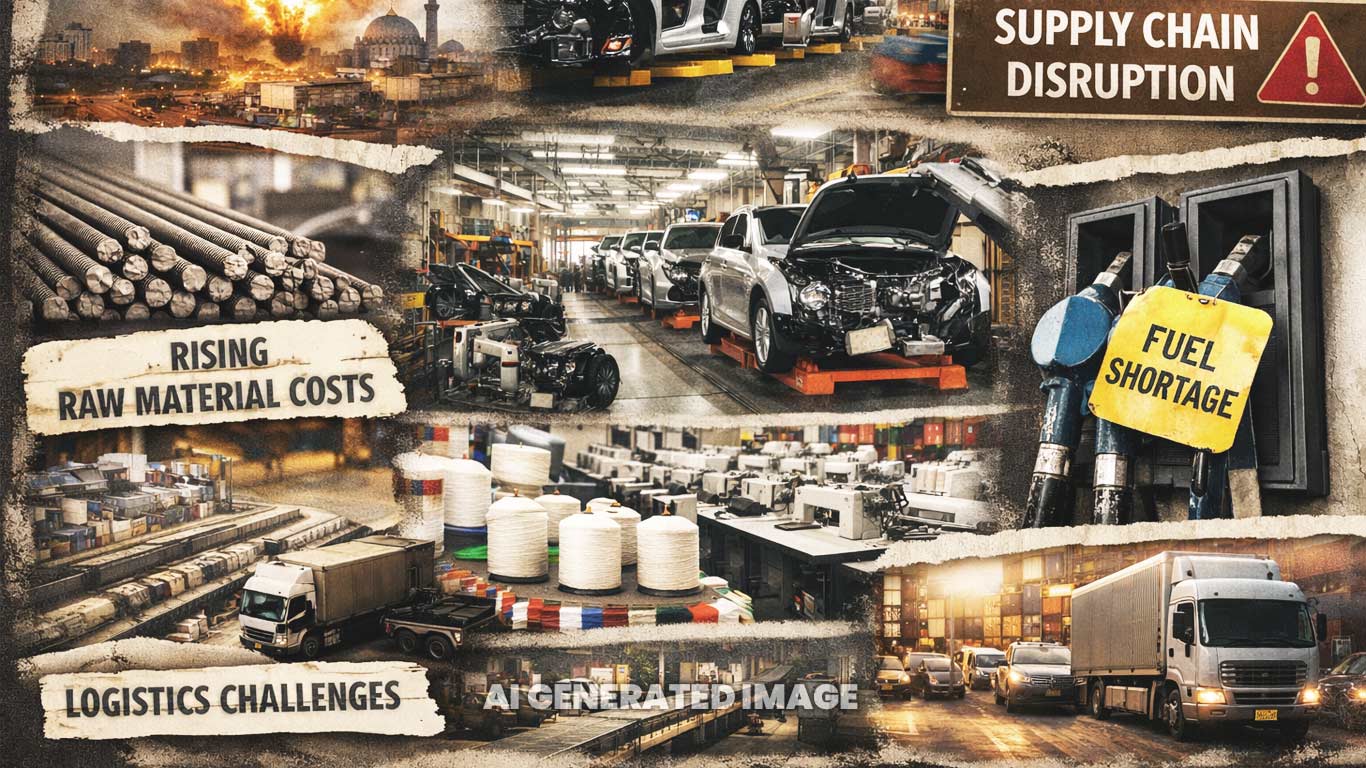
Chennai, Jun 1 (KNN) Tamil Nadu's micro, small and medium enterprises (MSMEs) are facing mounting pressure from the ongoing West Asia conflict, with rising raw material costs, supply chain disruptions, logistics challenges, and fuel shortages impacting production across key sectors.
Rising Input Costs And Logistics Challenges Hit Manufacturers
The Ambattur Industrial Estate Manufacturers' Association said logistics and delivery costs have increased by 25–30 percent due to higher freight rates, shipping delays, fuel price volatility and supply-chain disruptions, reported the Times Of India.
Association President G. Ravichandran noted that input costs have risen sharply, with tungsten carbide prices up nearly 300 percent and plastic raw materials becoming 50–60 percent more expensive. He called for power tariff concessions and lower diesel prices to ease cost pressures.
Rising prices of industrial metals such as copper and aluminium have also increased working capital requirements, further squeezing MSME margins.
Industry Seeks Policy Support To Ease Liquidity Stress
S. Vasudevan, President of the Tamil Nadu Small and Tiny Industries Association (TANSTIA), described the ongoing situation as the most severe disruption faced by MSMEs since the pandemic.
He noted that businesses have endured a series of shocks since 2020, including Covid-19, the Russia-Ukraine conflict, the Red Sea crisis, US tariff measures and now the West Asia conflict.
Calling the current situation the worst since Covid, Vasudevan urged the government to provide a six-month moratorium under ECLGS 5.0 to help MSMEs cope with liquidity pressures.
LPG Shortages Impact Production In Coimbatore
In the Coimbatore region, LPG shortages have emerged as a major concern. M. Karthikeyan, President of the Coimbatore District Small Industries Association (CODISSIA), said industries are receiving only about 20 percent of their monthly LPG requirement.
"Capacity utilisation has fallen from 70 percent in January to around 50 percent over the past three months," he said, adding that the disruption has impacted production worth nearly Rs 15,000 crore, including exports valued at around Rs 5,000 crore.
MSME Leaders Call For Stronger Supply Chain Resilience
Meanwhile, MSME leaders have called for stronger resilience measures, with chairman, MSME panel, Andhra Chamber of Commerce M. K. Anand proposing district-level supply chain intelligence cells, logistics monitoring systems, export advisory desks and crisis forecasting dashboards.
He also urged MSMEs to diversify exports to ASEAN, Africa, Australia and Latin America to reduce dependence on traditional markets.
Industry stakeholders said targeted policy support and strategic investments could help Tamil Nadu’s MSME sector emerge stronger despite current challenges.
Tirupur Industry Sees Growth Opportunity Despite Global Uncertainty
While trade disruptions have hit the industry, some new opportunities are also emerging. Raja M Shanmugam, former president of the Tirupur Exporters Association and a Board of Trade member, said the changing global trade landscape presents an opportunity for Tirupur’s knitwear industry to expand.
He proposed setting up a second garment manufacturing cluster in Tirupur with investments of around Rs 10,000 crore, largely for housing infrastructure.
Noting that Tirupur generates about Rs 40,000 crore each from exports and domestic sales and accounts for nearly 65 percent of India’s knitwear exports, he said production could increase to Rs 2 lakh crore if the state government supports the new cluster. He also highlighted that nearly 99 percent of Tirupur’s units are MSMEs.
Footwear Sector Eyes Export Gains From Shifting Trade Dynamics
The footwear sector is also looking to capitalise on emerging opportunities. An industry executive said that reduced US reciprocal tariffs on Indian goods could encourage Asian footwear manufacturers to establish production facilities in India.
"While the impact may not be immediate for MSMEs, it will help existing players attract new overseas customers and strengthen Tamil Nadu's leadership in leather and non-leather footwear exports," he sai
Tamil Nadu accounts for around 40-45 percent of India's leather and non-leather footwear exports.
(KNN Bureau)







 Loading...