Delayed Payments Stretch MSME Cash Cycles, Strain Working Capital: Report
Updated: Jun 29, 2026 04:09:22pm

Delayed Payments Stretch MSME Cash Cycles, Strain Working Capital: Report
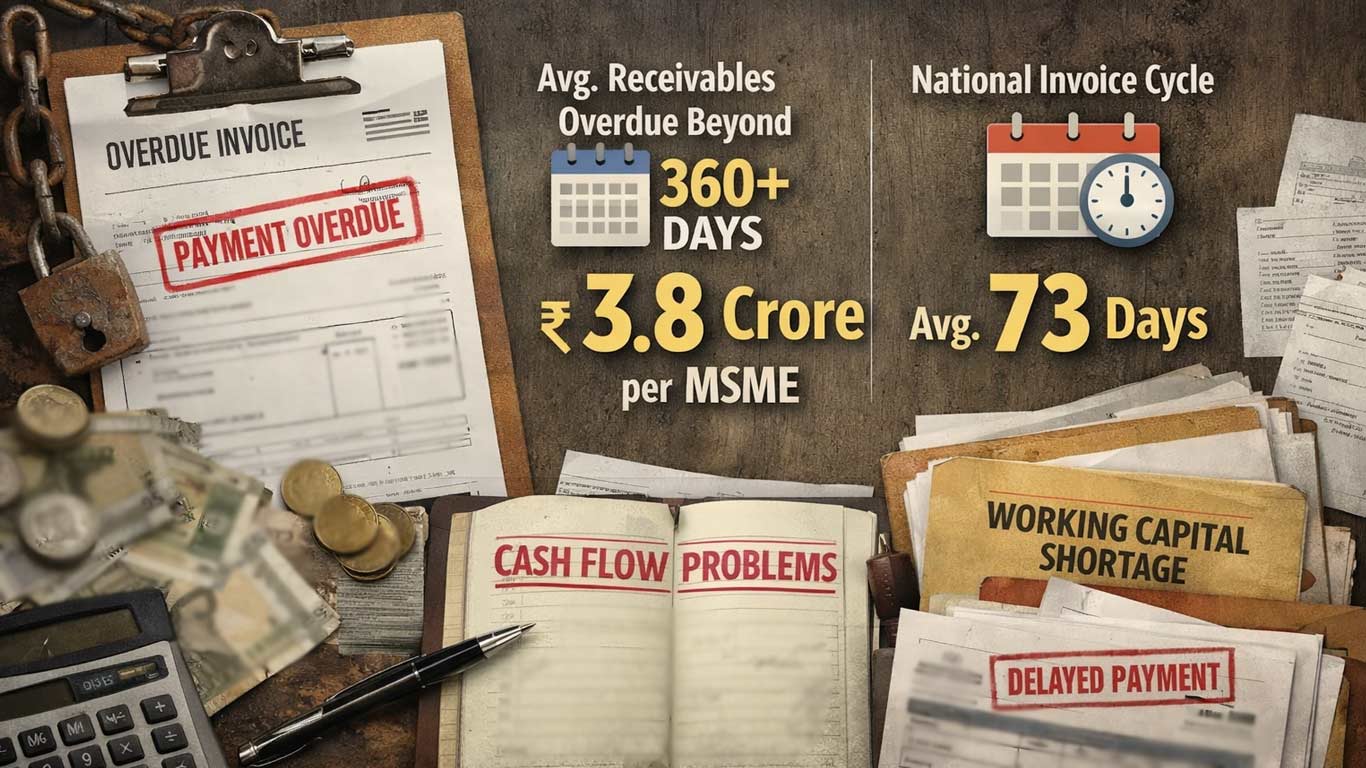
New Delhi, Jun 29 (KNN) Delayed payments are straining working capital at India’s small businesses, with average receivables overdue beyond 360 days at about Rs 3.8 crore per firm and the national invoice cycle stretching to 73 days, according to the Indian SME Receivables Report 2026 by credit risk and collections platform Recordent.
The report, based on data drawn from approximately 1.1 lakh micro, small and medium enterprises (MSMEs) and over one million transactions, found that 82.6 per cent of invoices are issued with credit periods of zero to 30 days — underscoring that payment delays persist not due to extended credit terms offered by small businesses, but because of structural weaknesses in collections and payment discipline among buyers.
Regulatory guidelines mandate payment to MSMEs within 45 days, yet actual settlement timelines continue to breach this threshold by a wide margin, the report noted.
The 73-day average payment cycle reflects a significant gap between invoicing and cash realisation, effectively locking up capital that MSMEs could otherwise deploy for operations or growth.
The scale of the problem carries broader economic implications. MSMEs contribute approximately 30 per cent to India's GDP, account for 48 per cent of the country's exports, and remain the second-largest source of employment after agriculture.
Recordent identified late payments as a primary constraint on MSME liquidity, growth, and financial stability, adding that improved receivables management and stronger payment discipline among counterparties could unlock liquidity for small firms without requiring recourse to additional borrowing.
(KNN Bureau)










 Loading...