FISME–Mahindra University Meet Highlight Trade Shifts And EU Carbon Norm Impact On MSMEs
Updated: Jul 17, 2026 05:37:20pm

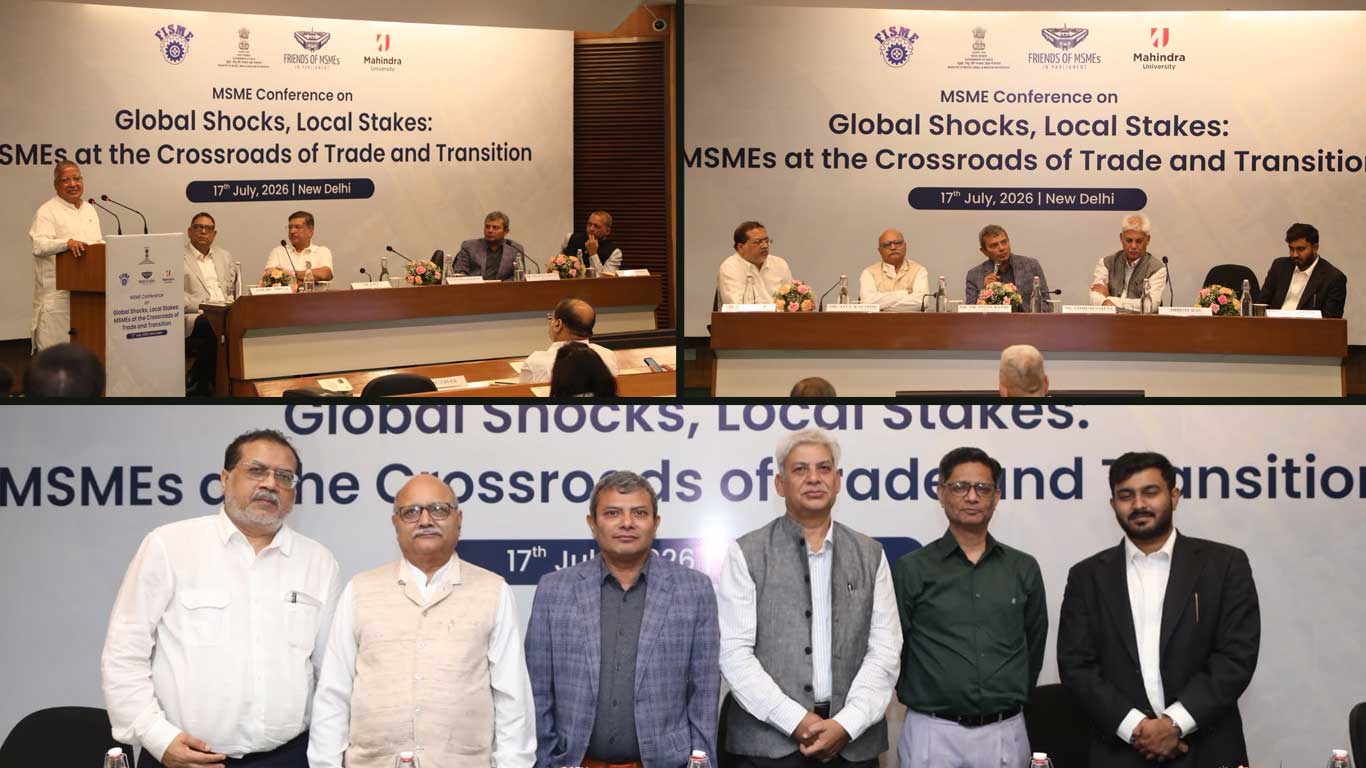
FISME–Mahindra University Meet Highlight Trade Shifts And EU Carbon Norm Impact On MSMEs
New Delhi, Jul 17 (KNN) The Federation of Indian Micro and Small & Medium Enterprises (FISME) in association with ‘Friends of MSMEs in the Parliament’, in collaboration with Economic Policy Centre (EPC), Mahindra University, organised a national conference on Friday to examine the challenges and opportunities confronting Indian MSMEs in an increasingly uncertain global economic environment.
The conference on the theme ‘Global Shocks, Local Stakes: MSMEs at the Crossroads of Trade and Transition’ brought together policymakers, industry leaders, academics, and MSME stakeholders, focusing on enhancing the competitiveness of Indian enterprises amid rapid technological advancements, evolving trade policies, and growing sustainability requirements.
Mahindra University underscored that India's MSME sector, which plays a critical role in exports, manufacturing output, and employment generation, is increasingly operating at the intersection of global disruptions and domestic economic resilience.
Global Trade Shifts Pose New Challenges For MSMEs
FISME highlighted the need for greater policy support, capacity-building initiatives, and stronger linkages between industry and research institutions to help MSMEs navigate the changing global landscape, particularly the impact of rising geopolitical tensions, supply chain realignments, and protectionist trade measures on Indian MSMEs.
Participants discussed the implications of evolving United States tariff policies, noting that higher or unpredictable tariffs could affect export competitiveness in sectors such as textiles and auto components. Such developments may also disrupt supply chains and increase compliance costs for firms integrated into global value chains.
At the same time, experts observed that changing global trade alignments could create new opportunities for Indian manufacturers to capture market share, provided they are able to meet international quality, scale and delivery requirements.
EU Carbon Rules Drive Need For Green Transition
Another major focus area was the European Union's Carbon Border Adjustment Mechanism (CBAM) and related sustainability regulations, which are expected to have significant implications for Indian exporters.
Speakers noted that carbon-intensive sectors could face additional costs in accessing European markets, while many MSMEs may struggle with the technical and financial requirements associated with carbon measurement, reporting and emissions reduction.
However, the conference emphasised that these regulations should also be viewed as catalysts for innovation, energy efficiency and the adoption of cleaner technologies, helping Indian enterprises improve their long-term competitiveness.
(KNN Bureau)






 Loading...


