Lok Sabha Passes MSME Amendment Bill 2026 To Tackle Payment Delays And Boost Liquidity
Updated: Aug 08, 2026 01:56:59pm

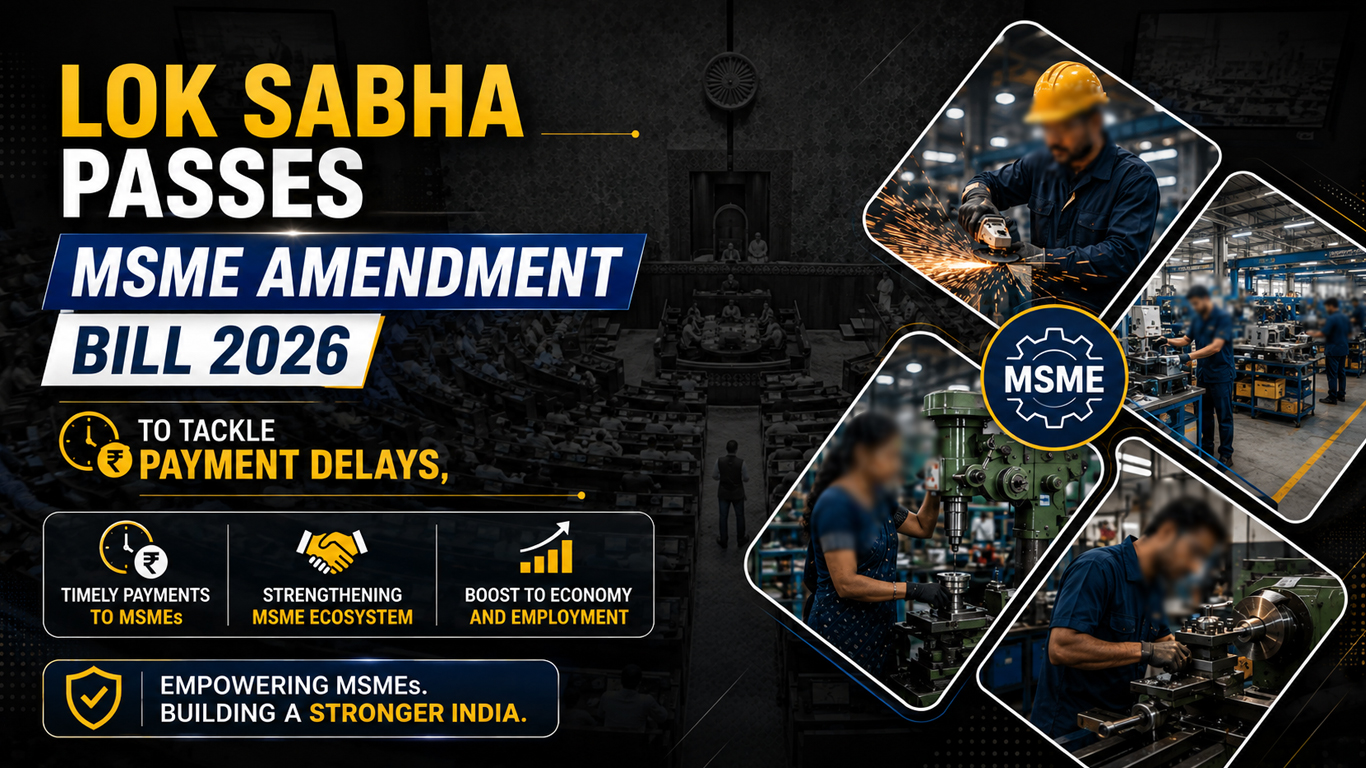
Lok Sabha Passes MSME Amendment Bill 2026 To Tackle Payment Delays And Boost Liquidity
New Delhi, Aug 8 (KNN) The Lok Sabha on Friday passed the Micro, Small and Medium Enterprises Development (Amendment) Bill, 2026, without debate amid continued protests by Opposition members.
The legislation had earlier been approved by the Rajya Sabha on August 3, completing its passage in Parliament.
The Bill was cleared during a brief 16-minute sitting after the House reconvened following an adjournment. Proceedings were marked by disruptions during Zero Hour, and the Lok Sabha was later adjourned till Monday.
Focus on Delayed Payments and Dispute Resolution
The amendment seeks to address long-standing delays in payments to micro, small and medium enterprises (MSMEs). It introduces structured timelines to ensure faster resolution of disputes and strengthens mechanisms for enforcing settlement agreements.
Under the new provisions, mediation in payment disputes must be completed within 90 days, followed by arbitration within 30 days if required. Final awards are to be issued within 90 days after completion of proceedings.
A key provision allows courts to direct buyers to deposit at least 50 per cent of the awarded amount with MSME suppliers if an appeal against the order remains pending for more than six months.
Measures to Improve Liquidity
The legislation includes steps aimed at easing liquidity pressures in the sector. It mandates central public sector enterprises (CPSEs) to route invoice settlements through the Trade Receivables Discounting System (TReDS), a platform designed to facilitate timely payments.
It also enables recovery of dues as arrears of land revenue through district authorities, strengthening enforcement of arbitral awards and mediated settlements.
Regulatory and Structural Changes
The amendments formalise the Udyam Registration system as a permanent, voluntary digital platform and incorporate classification criteria based on investment and turnover into the law.
They also provide flexibility to state governments in setting up and managing Micro and Small Enterprises Facilitation Councils (MSEFCs) to improve dispute resolution capacity.
Additionally, the Bill introduces decriminalisation measures, replacing certain penal provisions with graded civil penalties to promote a more business-friendly regulatory environment.
Sector Significance
MSMEs remain a key pillar of the economy, contributing around 31 per cent to India’s GDP, 36 per cent to manufacturing output, and 41 per cent to exports. The sector employs over 40 crore people.
According to government data, outstanding credit to MSMEs has risen from about Rs 10 lakh crore in 2014–15 to over Rs 38.35 lakh crore, reflecting increased access to finance in recent years.
Next Steps
The amendments will come into effect once formally notified. The changes are expected to strengthen the legal framework for MSMEs while aiming to improve ease of doing business and ensure timely payments within the sector.
(KNN Bureau)










 Loading...