MSEs Battle Rs 20,000 Crore In Pending Payments, Samadhaan Portal Data Reveals
Updated: Mar 22, 2024 04:51:59pm

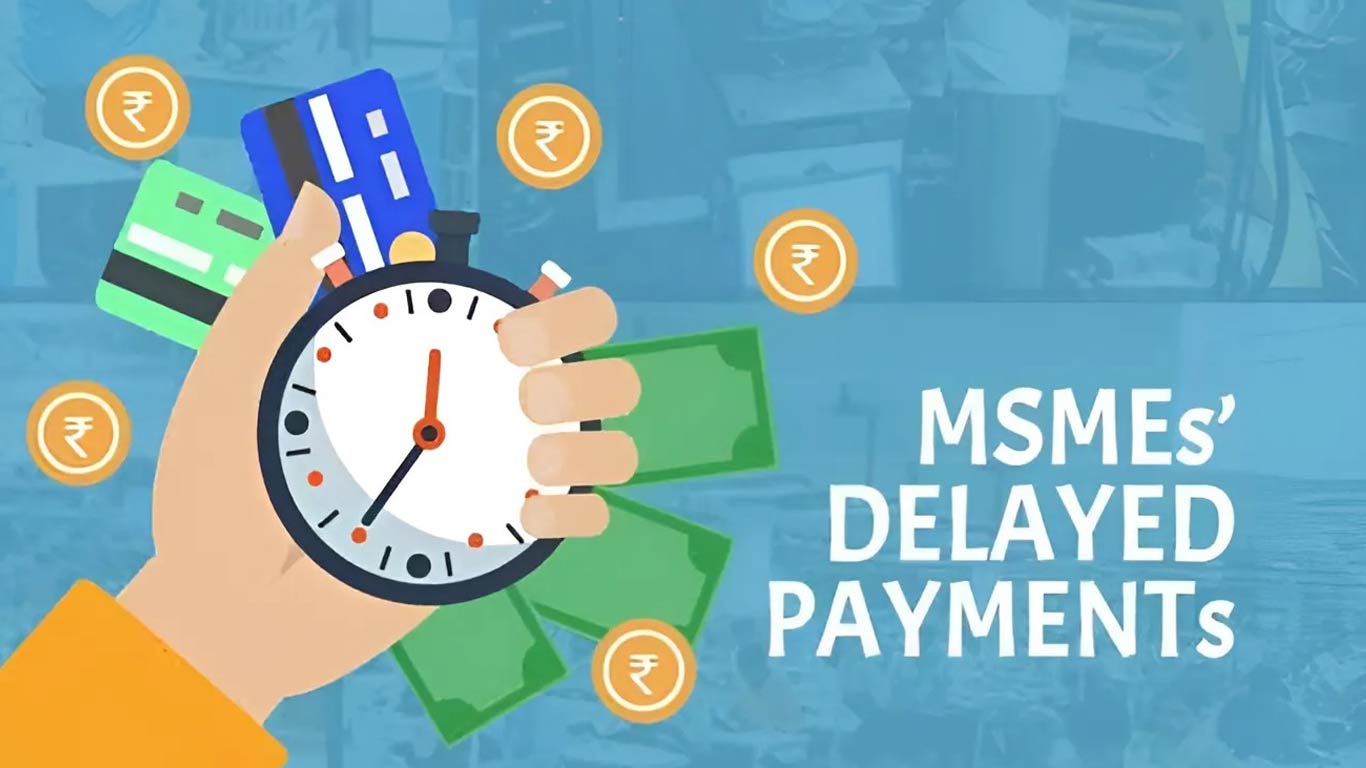
MSEs Battle Rs 20,000 Crore In Pending Payments, Samadhaan Portal Data Reveals
New Delhi, Mar 22 (KNN) The cumulative amount entangled in pending applications and cases filed by micro and small enterprises (MSEs) against delayed payments from their customers has surpassed Rs 20,000 crore.
According to statistics from the delayed payment monitoring portal, Samadhaan, by the MSME Ministry, a staggering Rs 20,413 crore remains trapped in 82,215 pending delayed payment applications since the portal's inception in October 2017.
Among the significant figures reported, the portal has received a total of 1.80 lakh applications, representing a substantial Rs 41,804 crore.
However, only 34,991 cases, amounting to Rs 6,112 crore, have been disposed of to date.
Typically, an application reviewed by the council undergoes conversion into a case under various stages of hearing. Conversely, 46,438 applications, totalling Rs 9,218 crore, have been rejected thus far.
The outstanding amount involved in pending applications and cases includes Rs 3,094 crore against various state governments, Rs 2,201 crore against different central public sector enterprises, Rs 1,679 crore against multiple state public sector enterprises, Rs 1,964 crore against proprietorship entities, and other miscellaneous entities.
An important provision to highlight is clause h under Section 43B of the Income Tax Act, scheduled to become effective on April 1, 2024.
This provision is designed to address delayed payments by prohibiting buyers from claiming expenses on invoices from MSEs unless they are settled within 45 days (with an existing agreement) or within 15 days if there is no agreement in place.
Previously, in January 2019, the government introduced the half-yearly MSME return form or MSME-1 form for buyers who default on payments beyond 45 days.
Failure to submit this form incurs a penalty of Rs 20,000 by the company and every involved party. Subsequent defaults attract a daily fine of Rs 1,000, up to a maximum of Rs 3 lakh.
(KNN Bureau)









 Loading...