MSME Margins May Fall Up To 100 Bps In FY27 Due To Rising Input Costs: Crisil
Updated: Jun 03, 2026 01:18:08pm

MSME Margins May Fall Up To 100 Bps In FY27 Due To Rising Input Costs: Crisil
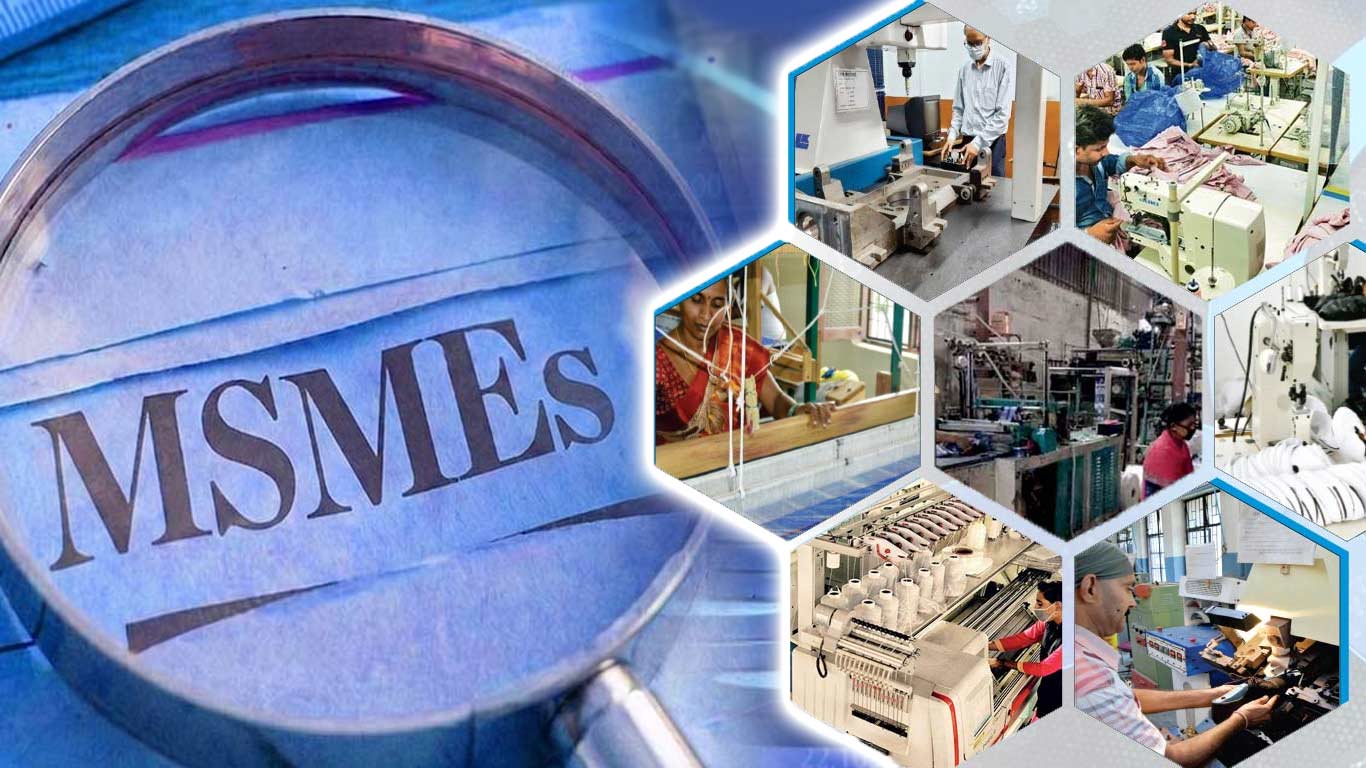
New Delhi, Jun 3 (KNN) Micro, small and medium enterprises (MSMEs) are expected to face slower revenue growth and margin pressures in FY27 due to the ongoing West Asia crisis, according to Crisil Intelligence.
The report projects MSME revenue growth to moderate to 7.5-8.5 percent in FY27, down by 100 basis points from FY26 levels, while EBITDA margins are expected to decline by 50-100 basis points to 5-5.5 percent.
Crisil's biannual report covers 69 sectors and 147 industrial clusters with an aggregate revenue base of around Rs 75 trillion, representing nearly 20-25 per cent of India's GDP and two-thirds of the MSME sector.
The report noted that the projected slowdown would have been sharper if not for the domestic gems and jewellery market, which is witnessing value-led growth amid rising gold prices.
Dual Impact On MSMEs
According to Crisil, MSMEs are facing a dual challenge from the West Asia conflict, disruptions in raw material supplies and rising energy and commodity costs, alongside trade-related pressures on margins.
The report identified three vulnerable categories: firms reliant on energy-based inputs, energy-linked derivatives and trade-dependent businesses.
Gas-intensive industries are among the worst affected. Revenue growth in Gujarat’s Morbi ceramic cluster is expected to slow to 1-3 percent in FY27 from 9-11 percent in FY26, while margins may decline sharply.
In Firozabad’s glass sector, production has reportedly fallen by 40 percent, with MSME revenue growth also projected at just 1–3 percent.
Chemical, Textile MSMEs Under Pressure
The report also highlighted mounting pressure on sectors reliant on energy-linked derivatives. Crisil said chemical MSMEs in Vadodara, which depend heavily on imported methanol from West Asia, could see margins shrink by 150-250 basis points to 3-5 percent in FY27.
Dyes and pigments manufacturers in Ahmedabad are facing similar challenges as rising input costs have only been partially passed on to customers. Textile MSMEs in Surat are also grappling with higher prices of polyester yarn and fibre, putting further pressure on profitability.
Trade Disruptions Affect Pharma, Gems Sector
Among sectors impacted by trade disruptions, pharmaceutical MSMEs are facing shortages of active pharmaceutical ingredients (APIs), resulting in higher input costs.
The report estimates that smaller pharmaceutical firms may witness margin declines of 100-200 basis points to 5-7 per cent in FY27.
In Surat's gems and jewellery sector, where over a quarter of exports are destined for West Asia, MSMEs operating on thin margins of 2-3 per cent could see margins shrink by an additional 100-150 basis points amid weaker demand and pricing pressures.
Higher Costs To Affect Other Sectors
The report also flagged rising diesel prices as a concern for road construction MSMEs, where fuel accounts for 8-10 per cent of overall costs. Margins in the sector are expected to decline by 50-100 basis points to 8-10 per cent.
Similarly, increasing packaging costs are likely to affect packaged food MSMEs, reducing margins to 6-6.5 per cent in FY27.
Credit Support Scheme Announced
To support businesses affected by the crisis, the Union Cabinet has approved ECLGS 5.0 with an outlay of Rs 181 billion, targeting additional credit support of Rs 2.55 trillion. The scheme is expected to benefit over 11 million businesses, or about 14 percent of MSMEs registered on the Udyam portal.
However, Crisil said its success will depend on timely implementation, efficient delivery and wider access for eligible enterprises.
(KNN Bureau)









 Loading...