Govt Approves BHAVYA-Rasayan Scheme For Three Chemical Parks Worth Rs 3,030 Cr
Updated: Jul 25, 2026 04:06:26pm

Govt Approves BHAVYA-Rasayan Scheme For Three Chemical Parks Worth Rs 3,030 Cr
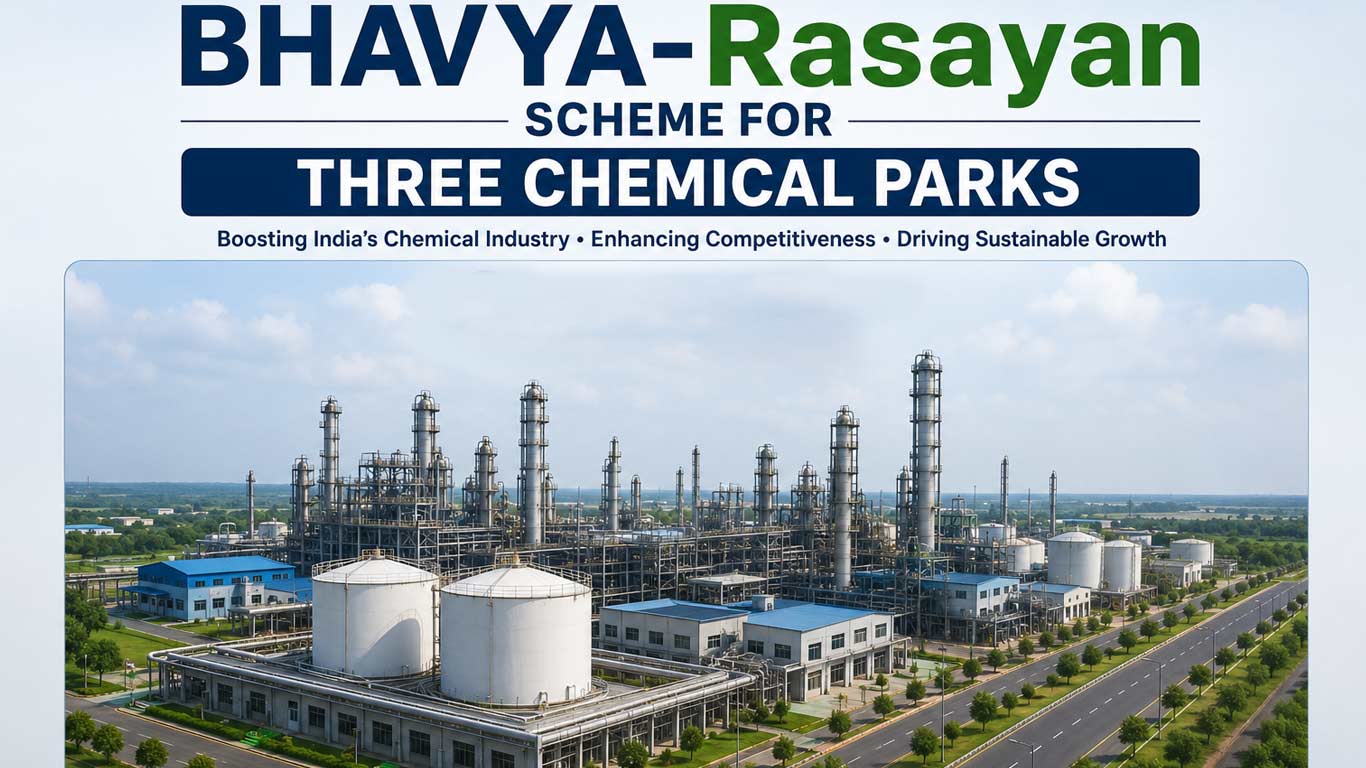
New Delhi, Jul 25 (KNN) The Union Cabinet, chaired by Prime Minister Modi, has approved the Bharat Audyogik Vikas Yojana Rasayan (BHAVYA-Rasayan Scheme) for setting up three dedicated Chemical Parks in the country.
The Scheme, announced in the Union Budget for FY 2026-27, will run for five years, from FY 2026-27 to FY 2030-31.
The Scheme carries a total financial outlay of Rs 3,030 crore, of which Rs 3,000 crore is earmarked for establishing Common Infrastructure Facilities and Basic Utilities within the parks, and Rs 30 crore for administrative expenditure.
Under the Scheme, the Centre will provide a grant of up to Rs 1,000 crore per park, subject to a minimum contribution of Rs 500 crore by the concerned State Government.
Park Development
The three Chemical Parks will be developed by State Governments under the Challenge Route. Each park will require a minimum contiguous area of 8 sq km (at least 2,000 acres) of encumbrance-free land and will offer plug-and-play infrastructure for the chemical industry, including a Common Effluent Treatment Plant, a Treatment, Storage and Disposal Facility, water supply and distribution systems, solvent recovery and distillation facilities, steam generation and distribution networks, an interconnected pipeline network, and logistics and warehousing facilities.
Expected Benefits
The Scheme is expected to promote development of the chemical industry across the value chain, including upstream, downstream and ancillary industries, enabling more efficient use of resources and lower logistics costs. Shared common infrastructure is expected to enhance cost competitiveness and help Indian industry integrate further into global value chains, boosting exports and import substitution.
The Scheme also aims to support environmentally sustainable growth of the sector through centralised facilities such as effluent treatment and hazardous waste management infrastructure, ensuring better compliance with environmental regulations.
Development of the chemical sector is expected to have a cascading effect on downstream industries such as agriculture, textiles, pharmaceuticals, nutraceuticals, construction, automobile and electronics, contributing to employment generation and the broader goal of Viksit Bharat @2047.
(KNN Bureau)








 Loading...


