India EMS Market May Cross USD 150 Bn By 2030, Driven By Domestic Demand & Policy Support: KPMG Report
Updated: Jun 08, 2026 05:24:23pm

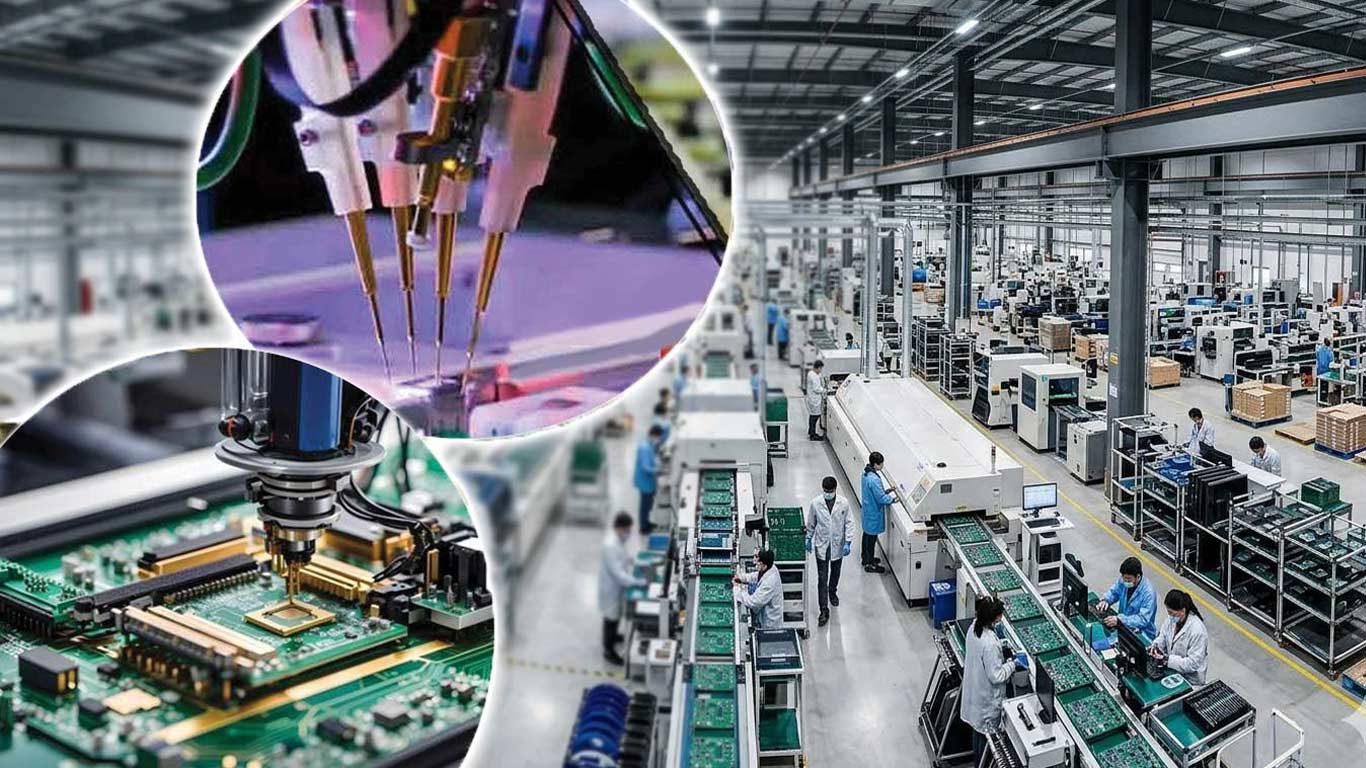
India EMS Market May Cross USD 150 Bn By 2030, Driven By Domestic Demand & Policy Support: KPMG Report
New Delhi, Jun 8 (KNN) India's Electronic Manufacturing Services (EMS) sector has grown sharply over the past five years but faces a structural ceiling unless it moves beyond assembly into deeper, design-led manufacturing, according to a new report by KPMG in India released on Sunday.
The report, titled India's EMS Opportunity: From Assembly Hub to Integrated Manufacturing Powerhouse, finds that while the country has built considerable scale, its participation in higher-value activities — such as component manufacturing, product design, and intellectual property — remains limited.
Rapid Growth, but a ‘Scale Without Depth’ Problem
India's EMS market has grown from approximately USD 10–12 billion in FY2020 to USD 40–45 billion in FY2025, and is projected to exceed USD 150 billion by FY2030, driven by domestic demand, government policy support, and the global China+1 supply chain diversification trend, the report noted.
India currently accounts for roughly 5–6 per cent of global EMS manufacturing — a figure the report describes as indicative of significant untapped headroom. Globally, the EMS market is estimated at USD 640–650 billion in 2025 and is expected to cross USD 1 trillion by the early 2030s.
However, the report cautions that this growth reflects a "scale without depth" paradox. India leads in high-volume assembly, particularly in mobile phones and consumer electronics, but its footprint in design, components, and IP ownership is thin.
Import Dependency Remains a Critical Vulnerability
A central concern flagged in the report is India's heavy reliance on imported components. Across critical electronics inputs, import dependency ranges from 80 per cent to over 95 per cent, significantly constraining domestic value addition, margins, and ecosystem maturity.
The report warns that this vulnerability will become more acute as policy incentives — including the approximately USD 19.5 billion in cumulative government support directed at the electronics manufacturing ecosystem — begin to taper.
Higher-Value Segments Offer Long-Term Advantage
KPMG's report urges India to prioritise segments beyond consumer electronics. Automotive, industrial electronics, and aerospace and defence are identified as areas where engineering intensity, precision manufacturing, and certification requirements create more durable competitive advantages.
Rohan Rao, Partner and Lead for Electric Mobility, KPMG in India, said, “India’s EMS sector has reached a pivotal moment where the foundations of scale are firmly in place, but the next phase of growth will be defined by depth. As global supply chains reconfigure towards resilience and multi node manufacturing, India has a time bound opportunity to move beyond assembly led growth and build integrated, design driven capabilities.”
He emphasised the need for sustained investment in component ecosystems, engineering capabilities, and supply chain sophistication.
Raghavan Viswanathan of KPMG in India noted that the long-term value will come from capability-led, not capacity-led, growth, with higher-complexity segments like automotive and aerospace driving durable advantage, adding that India’s global competitiveness will depend on where it competes, not just how much it builds.
Realising India’s EMS potential
The report emphasised that the next five to ten years will be critical. Realising India’s full EMS potential will require coordinated action by the government, manufacturers, and global original equipment manufacturers (OEMs), with a focus on localising components, building engineering and design capabilities, developing a skilled workforce, and deepening integration across the electronics value chain.
(KNN Bureau)







 Loading...


