India Inc Revenues Rise 22% In Q1 FY27, But Oil Sector Weighs On Profitability: ICRA
Updated: Aug 14, 2026 04:53:11pm

India Inc Revenues Rise 22% In Q1 FY27, But Oil Sector Weighs On Profitability: ICRA
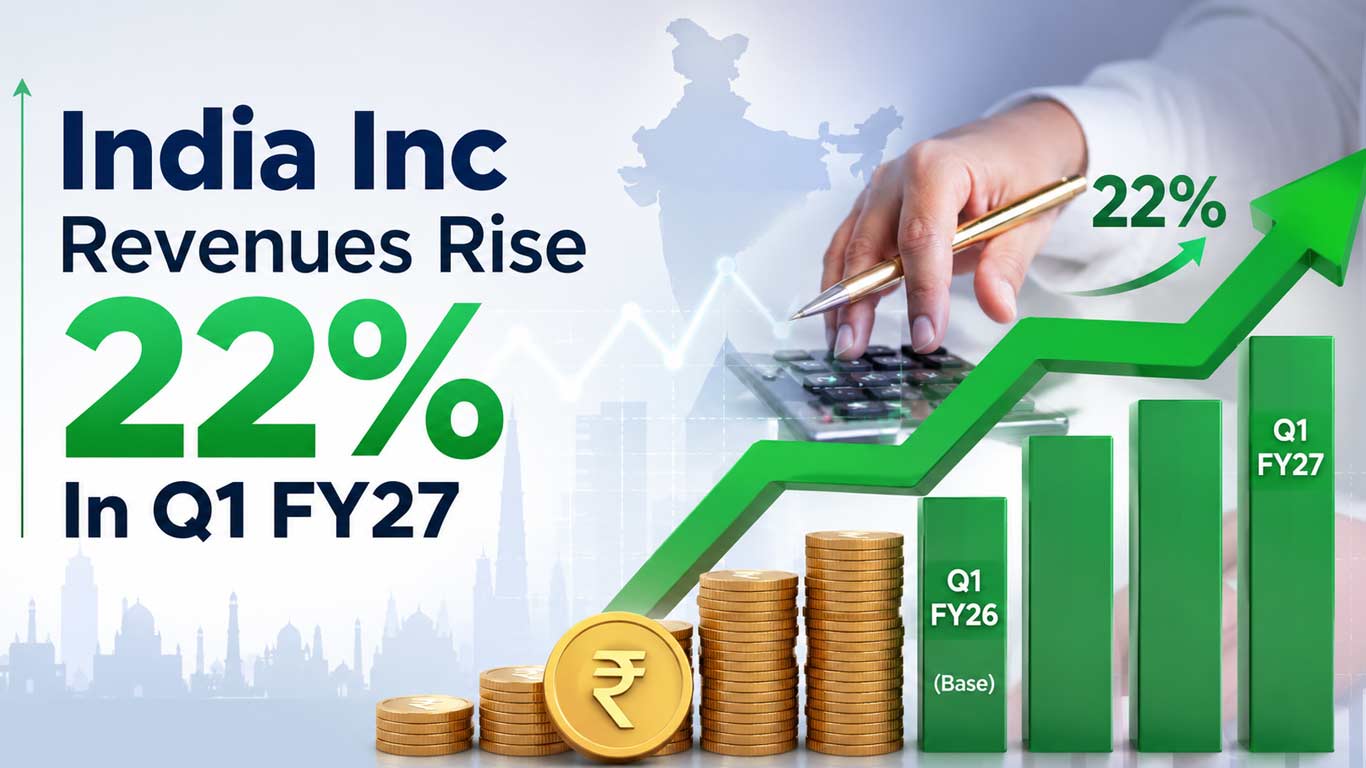
New Delhi, Aug 14 (KNN) Aggregate revenues of 838 listed Indian companies grew 22 per cent year-on-year (YoY) in the first quarter of FY27, accelerating from 13 per cent growth in the March quarter, according to a review by rating agency ICRA.
The growth was supported by higher commodity and bullion prices, resilient consumption and continued demand in the automobile sector following GST rate cuts implemented last year. However, profitability remained under pressure, mainly due to weakness in the oil-refining sector.
Oil Sector Drags on Profitability
Aggregate operating profit margin (OPM) contracted by more than 200 basis points YoY in Q1 FY27, while net profits remained broadly flat. Elevated crude prices and under-recoveries on LPG and petroleum products weighed on the performance of oil refiners.
Excluding the oil and gas sector, OPM remained stable at around 19 per cent, while net profits increased by more than 20 per cent YoY.
ICRA's sample excludes financial sector entities and companies with annual revenues below Rs 50 crore.
Consumption Sectors Lead Growth
ICRA said consumption-led sectors were among the strongest performers during the quarter. Automobile original equipment manufacturers (OEMs) recorded the highest revenue growth, while FMCG, consumer durables, apparel, grocery retail, jewellery retail and quick-service restaurants also reported healthy performance.
Passenger vehicle OEMs recorded revenue growth of more than 25 per cent YoY, although their EBITDA margins declined by around 200 basis points as companies absorbed part of the increase in raw material, energy, labour and freight costs rather than passing the full burden on to consumers.
In contrast, several FMCG and electrical and electronics companies passed on most of the higher input costs, helping protect margins.
Commodity-linked sectors, particularly metals and non-ferrous metals, benefited from firmer global prices, while the chemicals sector showed early signs of recovery after a prolonged period of weakness.
IT, Export Sectors Remain Weak
The IT services sector remained a key area of weakness, with constant-currency revenue growth subdued amid cautious global technology spending.
Revenue growth also lagged in domestic cyclical sectors such as cement and sugar and in export-oriented industries including textiles and auto components.
Oil refining and aviation faced particular margin pressure due to elevated and volatile crude prices. The sharp depreciation of the rupee against the US dollar also affected some companies through higher import costs and foreign-exchange losses.
Investment Cycle Provides Support
The investment cycle remained a positive factor during the quarter. Central government capital expenditure increased 24 per cent YoY to Rs 3.4 trillion in Q1 FY27, accounting for around 28 per cent of the full-year budgeted target.
Spending was concentrated in areas including railways, defence and capital transfers to states. New project announcements reached a multi-quarter high, driven by sectors such as data centres, electronics manufacturing and nuclear power.
Private-sector investment remained selective, with activity concentrated in defence, electric mobility and the data-centre value chain.
Corporate Balance Sheets Remain Resilient
ICRA said corporate balance sheets and credit metrics remain relatively comfortable. Around two-thirds of the 116 sectors covered in its sample reported an improvement in their interest coverage ratios in Q1 FY27 compared with the year-ago quarter.
ICRA Senior Vice President and Group Head-Corporate Ratings Jitin Makkar said concerns over a potential demand and cost shock at the start of the quarter had a limited overall impact, with consumption-led sectors supporting growth.
“Looking ahead, renewed geopolitical tensions in West Asia, the consequent volatility in crude oil and commodity prices, and an uncertain global trade environment will remain key monitorables. Nevertheless, healthy balance sheets and comfortable credit metrics of Indian corporates provide a meaningful cushion against potential earnings volatility and near-term external shocks”, Makkar added.
(KNN Bureau)









 Loading...


